I had heard it was the most dramatic and raw of the islands, shaped entirely by fire and time. That immediately spoke to me.
I’ve visited other volcanic islands before, like Iceland, with its black sand beaches, rugged coastlines, and endless lava fields. But something about Lanzarote felt different. More minimal, more abstract, and incredibly photogenic.
In this guide, I’m sharing five of my favorite locations to photograph in Lanzarote. Of course, there are many more worth exploring, but these spots stayed with me long after the trip. What I loved about Lanzarote was the variety: seascapes with jagged rocks, wide valleys of frozen lava, colorful volcanoes, and dreamy beaches like Famara.
Whether you’re chasing dramatic skies, minimalist compositions, or raw textures, Lanzarote offers something special. Especially for landscape photographers looking to explore new ways of seeing.
Quick guide: 5 landscapes to photograph in Lanzarote
Here are five stunning spots that combine texture, light, and raw emotion — perfect for landscape photography lovers:
➜ Sendero Volcán del Cuervo : sunset light over dramatic lava fields
➜ A northern sea cave : a seascape framed at sunrise
➜ Famara beach : golden cliffs mirrored on the wet sand
➜ La Geria Vineyards : graphic blue hour composition
➜ Los Hervideros : crashing waves and secret sea caves
Whether you’re planning a full itinerary or just want inspiration for your next shoot, this list is designed to spark creativity and help you slow down.
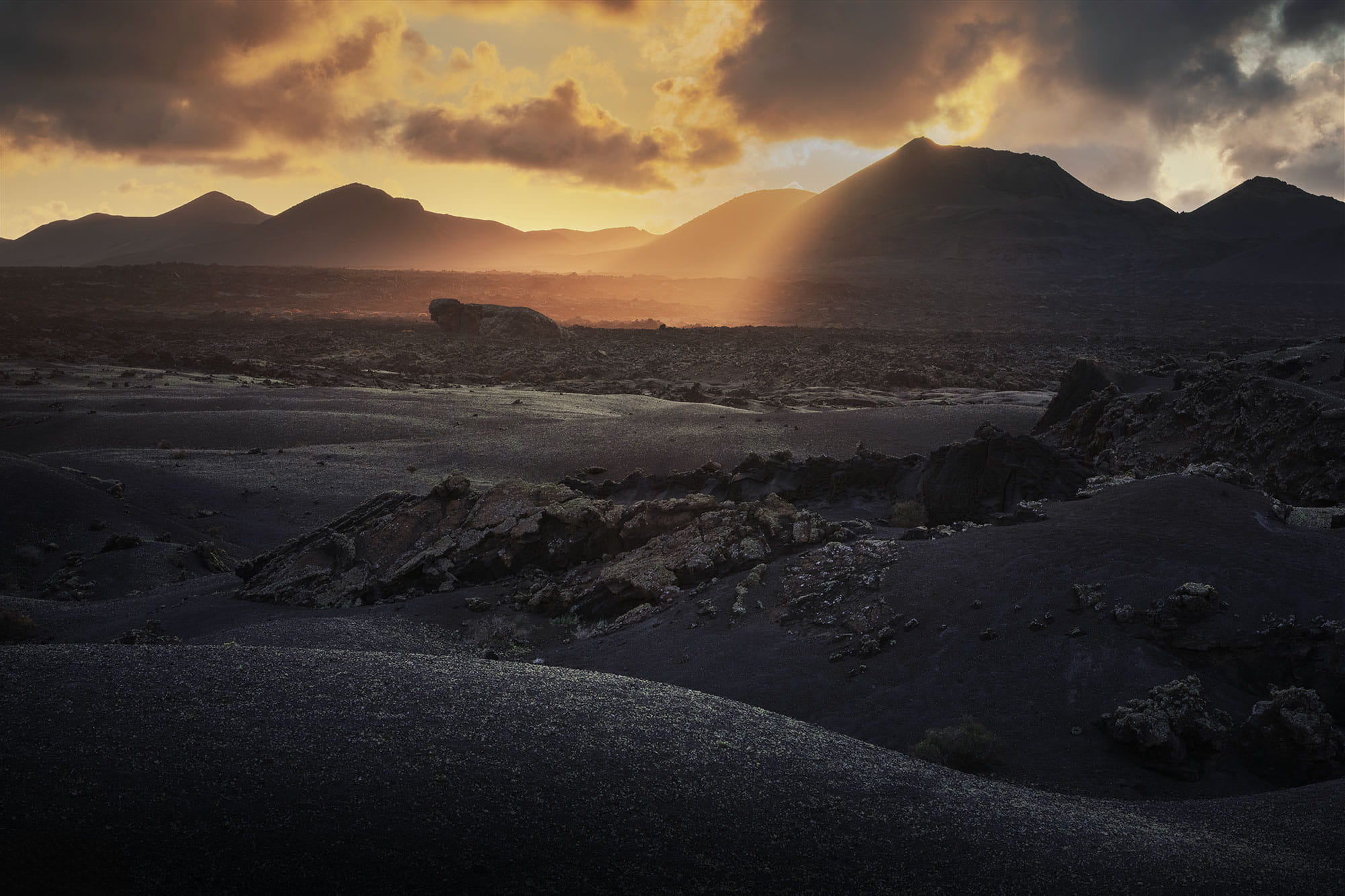
Sunset at Sendero Volcán del Cuervo
📍 Parque Natural de los Volcanes
If you love wide, open spaces and dramatic volcanic textures, Sendero Volcán del Cuervo is a must-see. This easy trail leads you through a surreal landscape of solidified lava, red craters, and black sand, right in the heart of Lanzarote’s volcanic park.
For me, this was one of the spots I was most excited to see, so I made it a priority. I arrived about three hours before sunset to have enough time to walk the trail, visit the caldera, and scout a few compositions along the way. I was hoping for light rays piercing through the clouds or maybe a colorful sky. But of course, you never know. So I tried to find different options for different types of light.
In the end, the compositions I liked the most were near the parking lot! I went back there about 45 minutes before sunset and set up my tripod. You should know that Lanzarote is very protective of its natural areas, so it’s important to stay on the marked paths at all times.
I chose a foreground made of small lava hills, with the volcano range in the background. The clouds opened up just enough to let the light rays shine over the landscape. It was magical.
Best time to photograph
In my opinion, sunset is ideal. I haven’t seen the location at sunrise, but it might offer a softer light. At sunset, the sun sets behind the volcanoes, creating a backlit scene with dramatic contrast, dark lava textures, and soft rays in the distance.
Access and tips
The trail is flat and easy, about 4 km round trip. Park your car at the Volcán del Cuervo parking area (linked below), and follow the marked path to the crater.
You can go inside the crater, but for photography, I preferred staying near the parking lot to capture the broader volcanic range.
➜ Car park
✅ Bring water and wear closed shoes. The terrain is rough and dusty.
✅Take your time : it’s a place to slow down and enjoy how the light transforms the land.
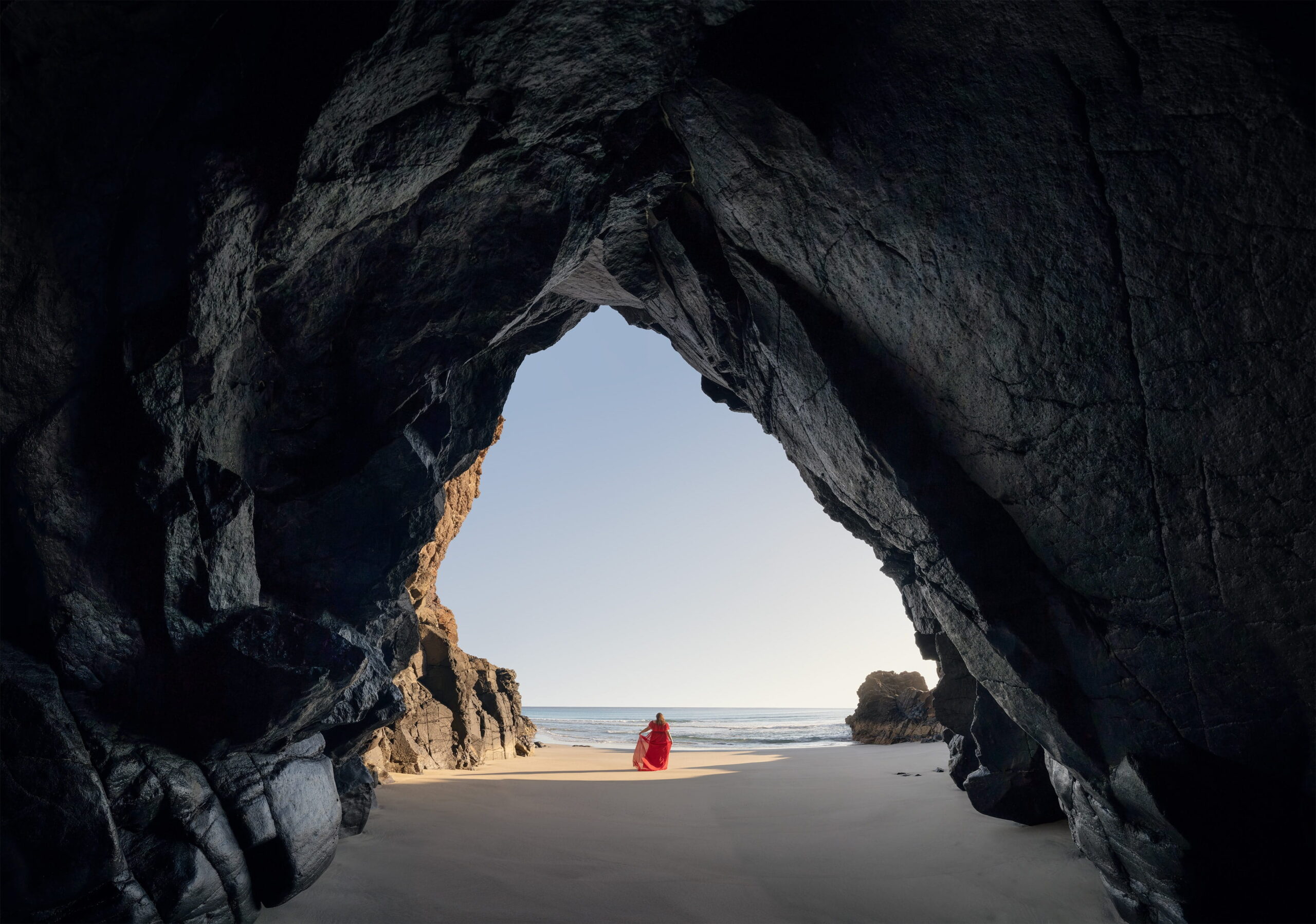
Framing the Ocean Inside a Northern Sea Cave
📍 North of Lanzarote
Somewhere on the northern coast of Lanzarote, there is a small sea cave that opens directly onto the ocean. I had seen a few images before my trip and imagined something vast and dramatic. But when I finally found it, I was surprised, it was small, intimate, and absolutely beautiful.
I arrived at sunrise to catch the low tide and soft light. My idea was to create a panoramic self-portrait in my red dress, framed by the cave’s silhouette. That image was one of my main goals during the trip, so I planned it early on, just in case I needed a second chance.
When the light begins to graze the volcanic rocks, it creates long shadows and deep contrast. At that hour, with the beach still untouched and silent, the atmosphere felt sacred. I had the cave to myself for about 40 minutes, just enough time to set up my panorama of over 50 images before the first visitors arrived.
Best time to photograph
Low tide is essential. The cave is only accessible for a short window. Sunrise works beautifully if you want solitude and soft light. Make sure to check tide charts and arrive early to scout the area calmly.
Access and tips
Out of respect for the fragility of this spot, I’ve chosen not to share its exact location. There’s no marked path, and the terrain can be sharp and slippery. Wear solid shoes, watch the tide, and always be mindful of the ocean’s strength.
✅ Arrive at least 30 minutes before sunrise to scout the area and set up your gear calmly.
✅ Bring a lens cloth, sea spray and humidity can fog up your lens quickly inside the cave.
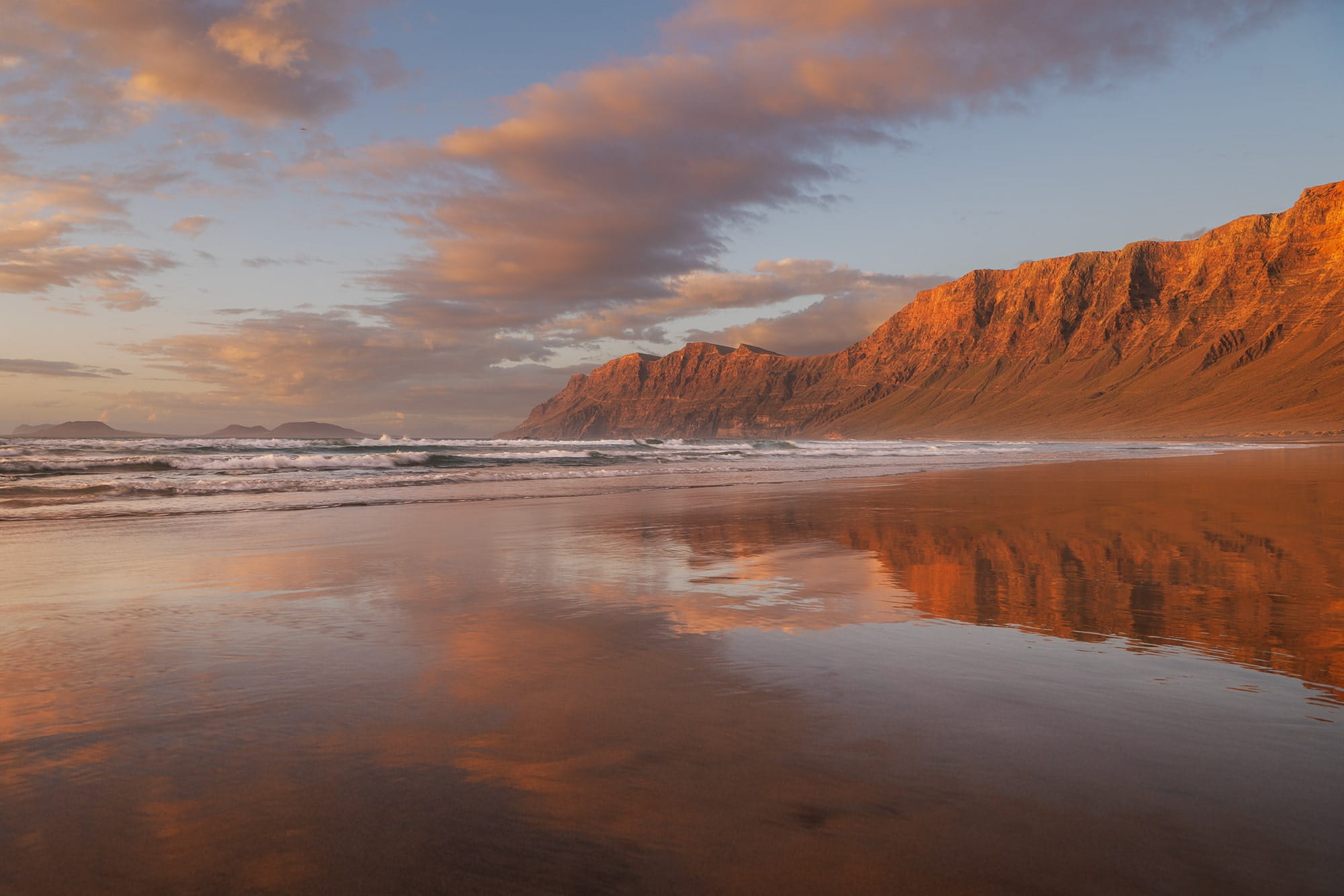
Golden reflections at Famara Beach
📍 Playa de Famara
Famara was one of the photos I was most looking forward to. I’ve always loved wide, open beaches, and this one is famous for the way it reflects the cliffs at sunset. That was exactly what I was hoping to capture: the golden cliffs glowing in the last light of day, mirrored on the wet sand.
I also wanted to include the small islands on the left side of the frame. They may seem like a minor detail, but I found they helped guide the viewer’s eye across the image, leading towards the dramatic backdrop of cliffs.
When I arrived, the beach was bathed in soft, golden light. The tide was low and slowly rising again, which created a perfect mirror on the sand. I took my time walking barefoot across the wet beach, watching how each wave left behind just enough water for the reflections to appear, then fade again. It was quiet, peaceful, and deeply rewarding.
Best time to photograph
Famara is beautiful at any time of day, but sunset adds something special. If you’re looking for warm tones and reflections, aim for low tide that’s just starting to rise again. That way, the sand is wet enough to create that mirror effect but not yet covered by the ocean.
Access and tips
This spot is very easy to reach. You can park along the beach and walk directly to the shore.
But keep in mind: Famara is a huge beach. Arrive early to scout the best angles and give yourself time to find the right composition. The light changes quickly at sunset.
➜ Car park
➜ Tide timetables
✅ Arrive at least one hour before sunset to explore the beach and plan your shot
✅ Bring a cloth or towel in case your gear (or your knees) get sandy while composing low-angle shots
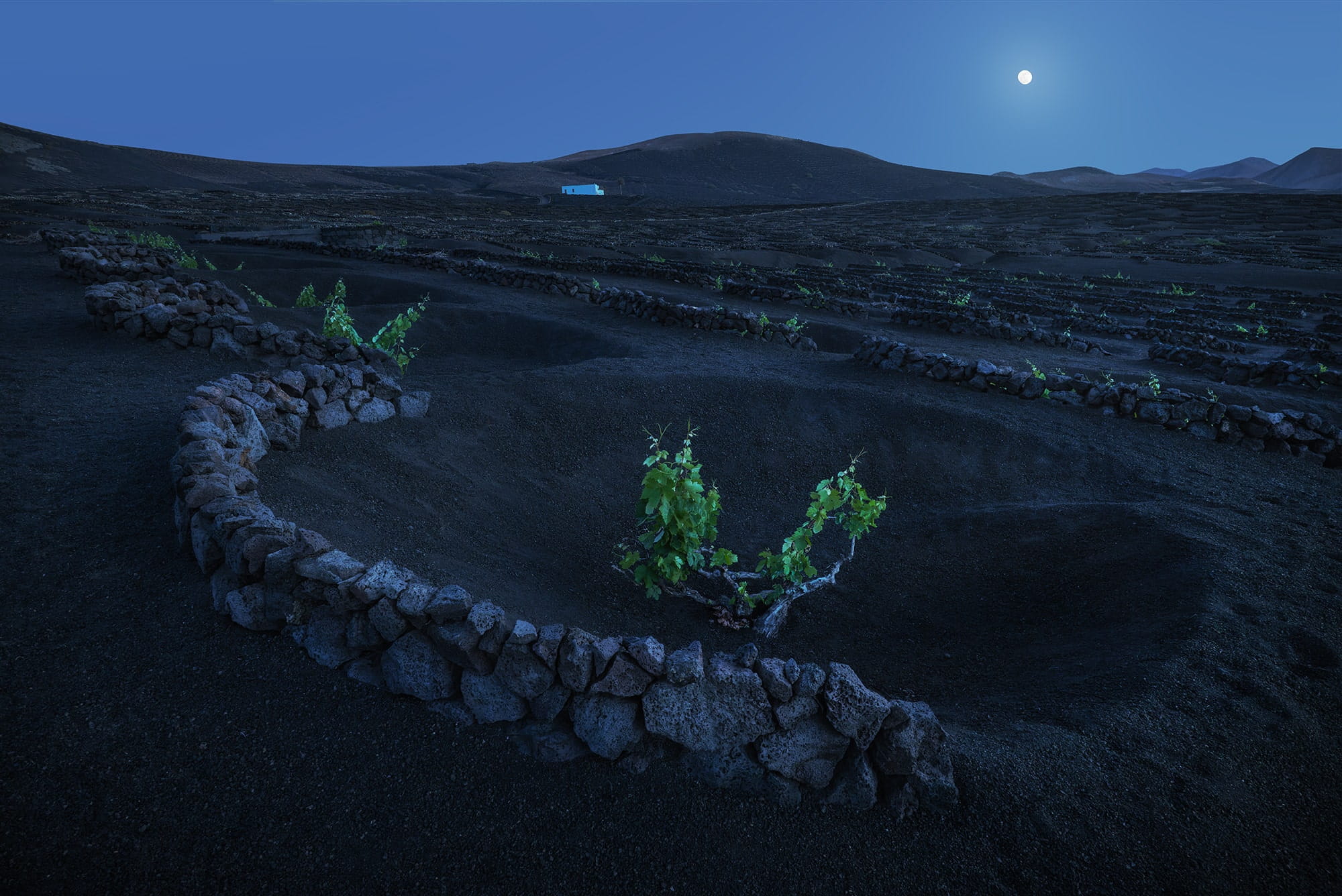
Blue hour in La Geria’s vineyards
📍 Near Bodegas Rubicón
Before my trip, I knew I wanted to create at least one blue hour image in Lanzarote. I was drawn to the circular stone walls of the vineyards in La Geria, each one protecting a single vine like a sculpture. I imagined a graphic, almost monochrome image, with only the bright green leaves as a contrast.
Finding the perfect spot was more challenging than expected. There are countless vineyards in Lanzarote, but I had a few criteria: a well-built wall with beautiful curves, a healthy vine, volcanoes in the background, and a clean, well-maintained environment.
So I spent part of the day scouting. I drove around, stopped at different spots, and looked for the composition I had in mind. In the end, the best place was right next to Bodegas Rubicón : simple, quiet, and just what I was looking for.
I returned after closing time, just before sunset. That gave me enough time to adjust my framing before the blue hour began. It took some experimenting with the tripod height to get the curve of the wall exactly how I imagined it, while making sure the vine stood out clearly against the dark stone.
Best time to photograph
La Geria’s vineyards are stunning all day long. Overcast days bring soft tones, and golden hour adds a beautiful side light. I chose blue hour for a more delicate, subdued mood, but it’s really up to your creative vision.
Access and tips
These vineyards are located just off the main road and are easy to reach. I parked near Bodegas Rubicón in a safe, open area, and photographed from a vineyard that was open and unfenced.
Out of respect for the land and the people who work it, I stayed on the access path and made sure not to touch or disturb anything.
➜ Car park
✅ Scout the area during the day to find your ideal wall and composition
✅ Use a tripod and take your time to refine the angle, the geometry is key in this kind of image
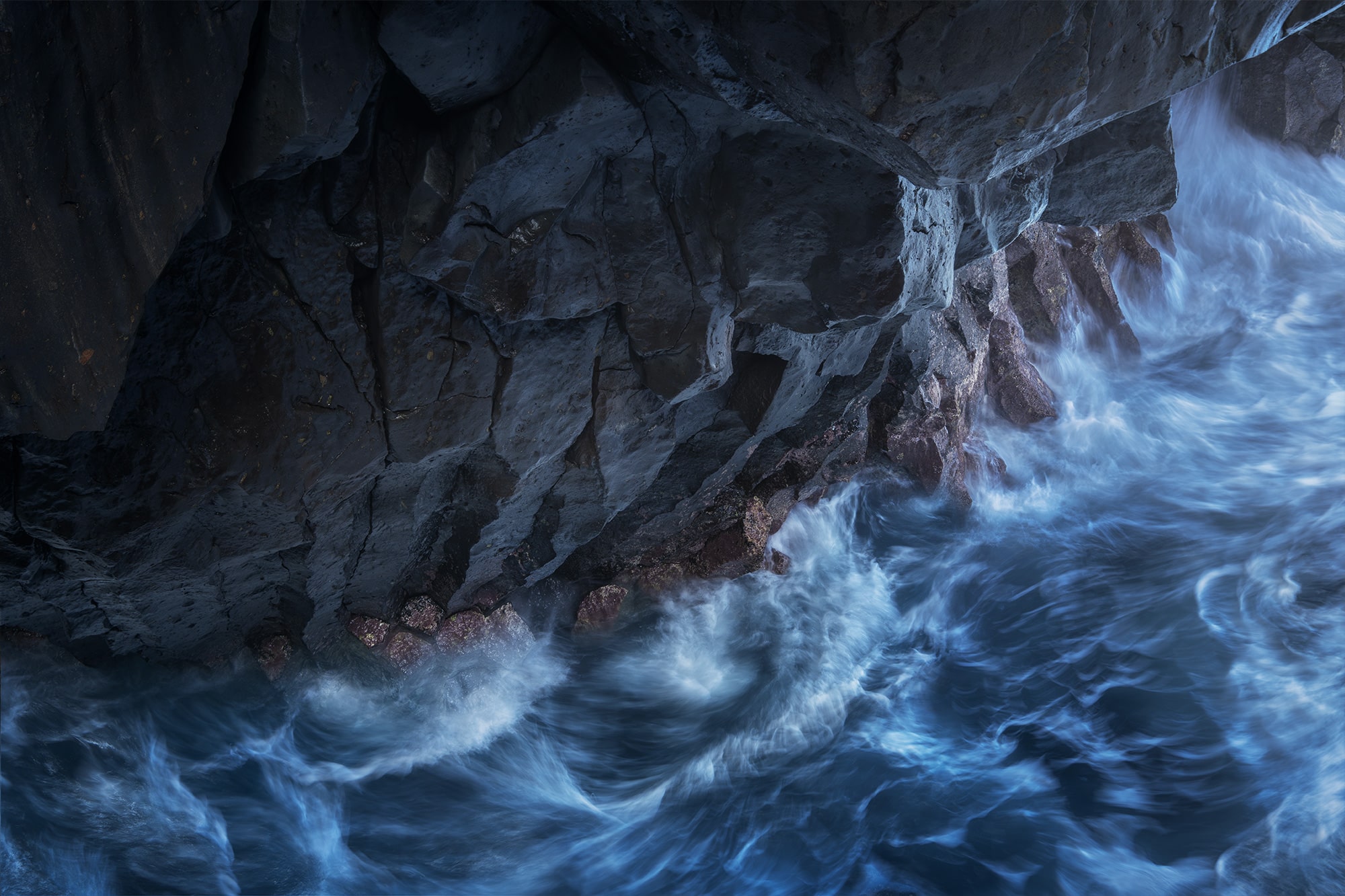
Crashing waves and secret caves at Los Hervideros
📍 Near El Golfo
This photograph came as a complete surprise. I had marked Los Hervideros as a place to visit and photograph, but I hadn’t realized there was a small path leading to a hidden viewpoint. From there, you can see a series of sea caves opening beneath the black volcanic cliffs, like a natural balcony carved into the rock.
On my first day on the island, I explored this area under calm conditions. The sea was gentle, and although the view was impressive, the atmosphere didn’t quite match what I had envisioned. A few days later, strong winds returned, and I had a hunch: it was time to go back.
This time, the ocean was wild and dramatic. Powerful waves crashed into the basalt cliffs, sending sprays of foam into the air. As the water receded, I caught glimpses of red tones in the rocks below. I quickly set up my tripod and tried a few long exposures to capture both the movement of the sea and the raw textures of the stone. It was intense, noisy, and mesmerizing, exactly the kind of unexpected moment I love.
Best time to photograph
For this kind of image, I recommend going when the sun is still low but not directly in your frame. Late morning worked well for me: the light was soft enough to reveal details without harsh glare. Avoid shooting when the sun is too high and bright, as it can create unbalanced highlights in the water.
I didn’t try sunset, but with rough seas, it could be equally stunning.
Access and tips
This spot is very easy to reach. Park at the main Los Hervideros lot, then follow the short concrete path across the road. After a few steps down, you’ll find a viewing platform facing the sea cave below.
➜ Car park
✅ Visit on a windy day for dramatic waves and sea spray
✅ Try long exposures to contrast the motion of the water with the jagged rocks
More than just landscapes
Lanzarote surprised me in more ways than I expected. It’s not just the colors or the geology, it’s the quiet strength of the land, the timeless shapes, the way the light touches even the roughest textures.
If you’re heading there with your camera, I hope these five spots will inspire you to slow down, look closer, and let the island speak to you in its own way. And if you’re curious to discover another side of the Canary Islands, you might also enjoy my Fuerteventura photography guide, featuring eight beautiful locations, from sand dunes and volcanic craters to wild coastlines.
And most of all, enjoy the moment. Happy shooting!
Published on November 29, 2025 by Jennifer Esseiva