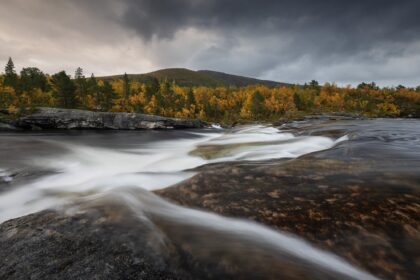
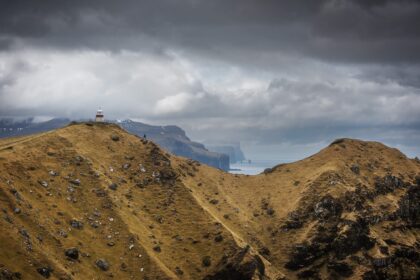
The Lofoten Islands are one of those places I could photograph again and again. After discovering them for the first time in autumn, I returned in winter to see how snow, changing weather and the soft Arctic light would transform landscapes I already knew.
This time, we travelled along the Norwegian Scenic Route Lofoten, which runs for 230 km between Å and Raftsundet, with several detours leading to beaches, fishing villages and coastal landscapes. Some locations were already favourites from my previous trip, while others were completely new discoveries.
In this guide, I’m sharing 12 of my favourite photography stops along the Lofoten Scenic Route in winter, from well-known places like Reine and Uttakleiv to spontaneous stops and quieter landscapes further north.
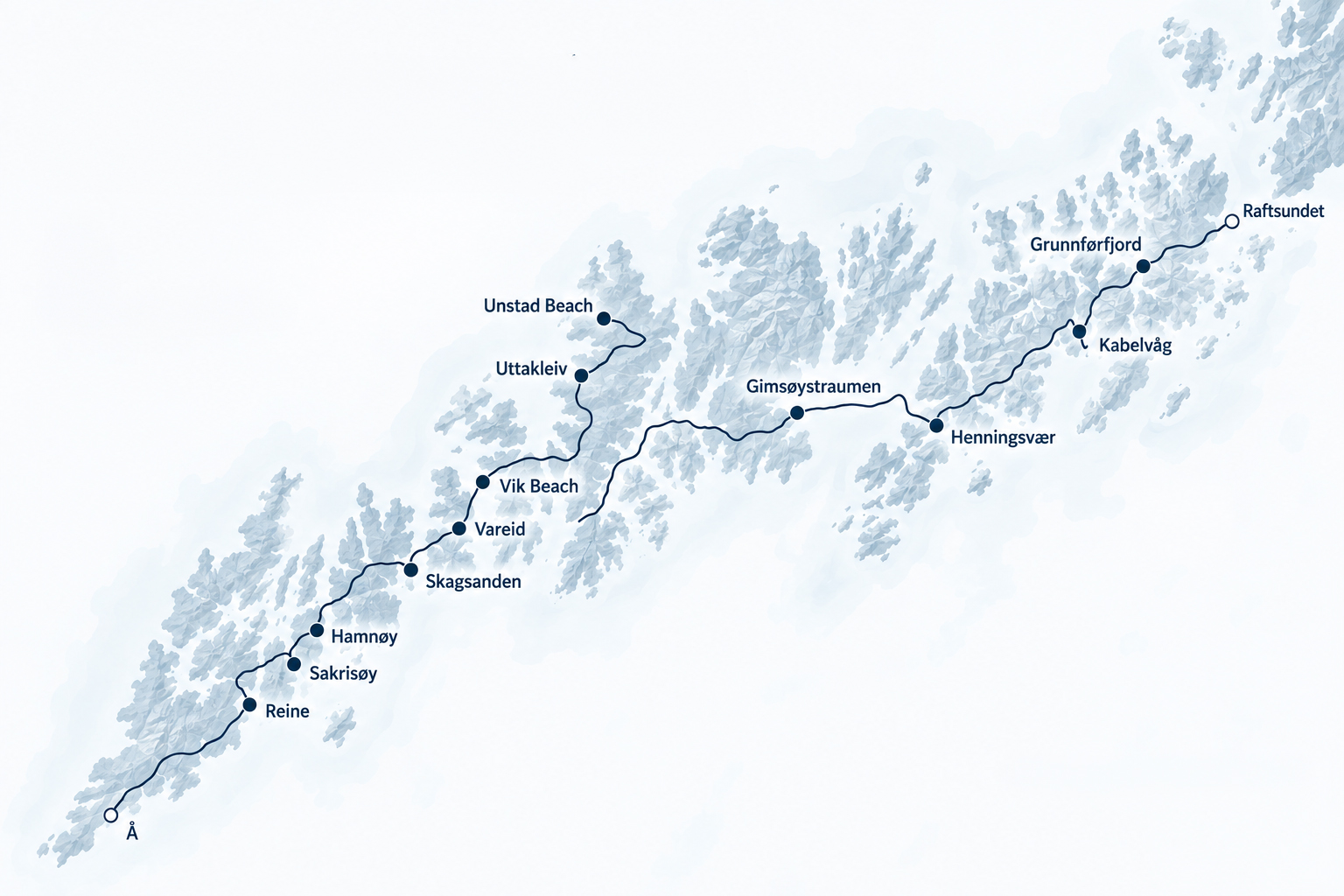
Quick recap: Lofoten Scenic Route in winter
Photography stops along the route :
➜ Reine
➜ Sakrisøy
➜ Hamnøy
➜ Skagsanden Beach
➜ Vareid
➜ Vik Beach
➜ Uttakleiv Beach
➜ Unstad Beach
➜ Gimsøystraumen
➜ Henningsvær
➜ Kabelvåg
➜ Grunnførfjord
Useful winter tips
➜ Bring microspikes: paths, beaches and parking areas can be icy
➜ Check the weather before driving, especially when storms or strong winds are forecast
➜ Check road conditions and closures before setting off
➜ Allow some flexibility in your itinerary: winter conditions can change very quickly
Useful links
➜ Norwegian Scenic Route Lofoten: official route information and map
➜ Vegvesen Trafikk: live road conditions, closures and webcams
➜ Norwegian drone map: check restrictions before every flight
➜ My Lofoten photography itinerary: for more locations and photography ideas
If you’re travelling between Bodø and the Lofoten Islands, I highly recommend adding a couple of days to explore this quieter part of Nordland. It became one of my favourite discoveries in Northern Norway.
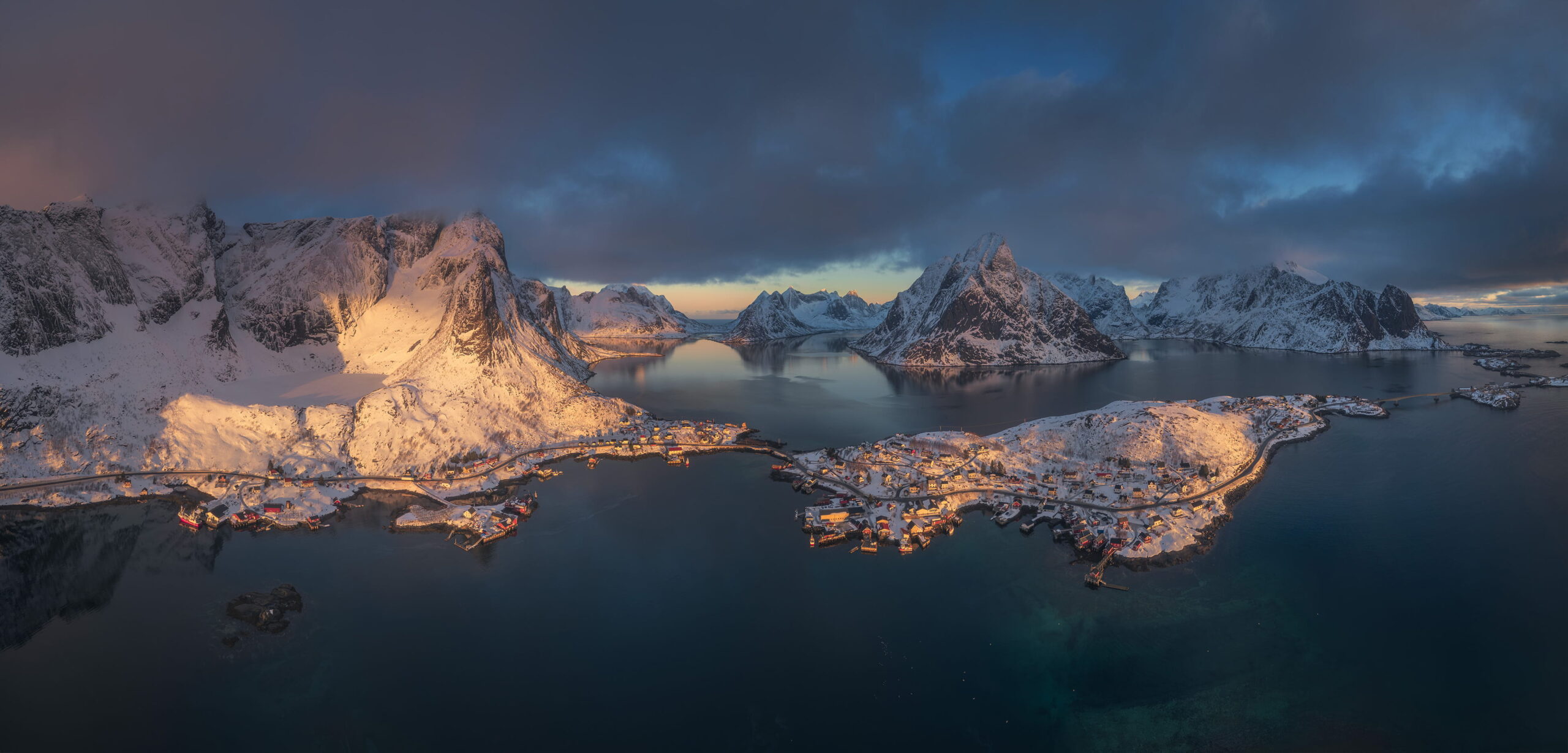
Shot with DJI Mini 3 Pro
Reine: a sunrise panorama above one of Lofoten’s most iconic villages
Reine is one of the most famous villages in the southern Lofoten Islands. Surrounded by dramatic mountains, a beautiful fjord and traditional red cabins along the shoreline, it really feels like the postcard image of Lofoten.
From the air, you can truly appreciate the incredible setting of the village between the sea and the mountains.
How to get there
Reine is located directly along the E10 and is very easy to reach while driving the Lofoten Scenic Route. Several parking areas are available around the village. I don’t have a specific parking location to share for this photograph, as I took off from private property where I was staying.
The story behind the image
I was lucky enough to stay with a friend who lives in the Lofoten Islands and discover the region with her. That morning, we had beautiful conditions with some sunshine and very little wind, perfect for flying the drone. Around sunrise, I sent it up and created a panorama to capture Reine, the fjord and the surrounding mountains in one wide composition.
Why I liked this spot for photography
✅ Incredible scale between village and mountains
✅ An iconic Lofoten fishing village
✅ A real, living fishing village
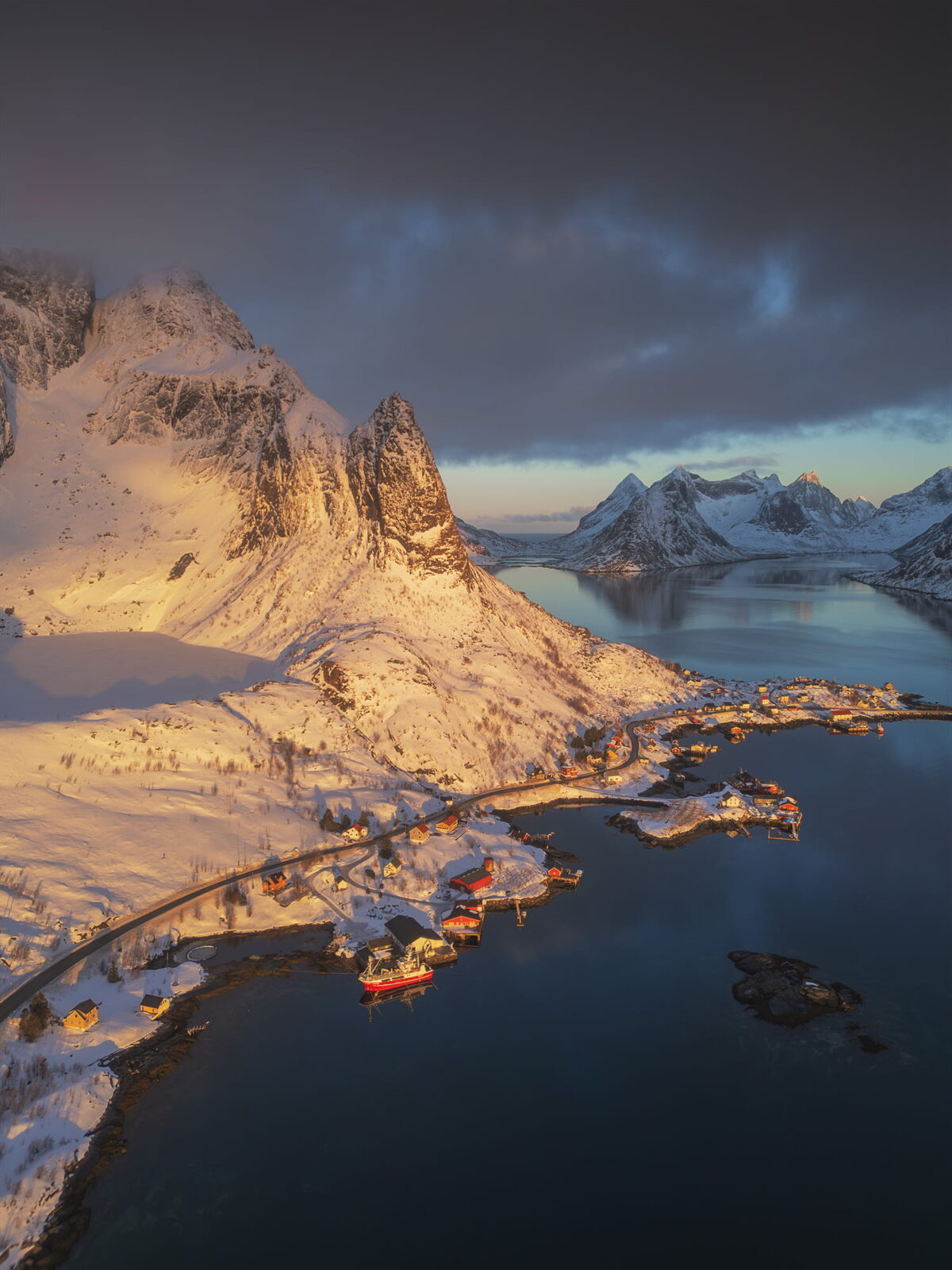
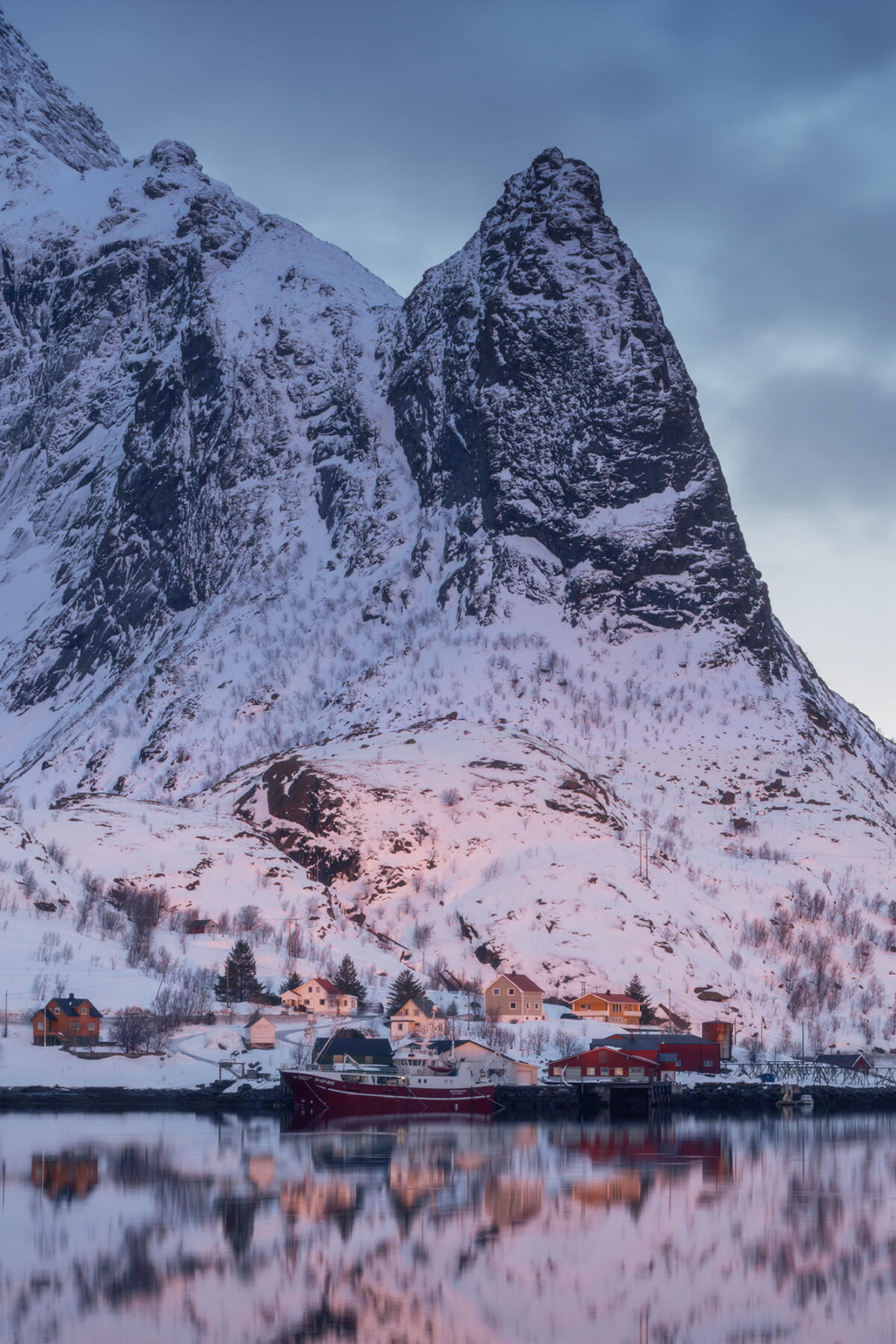
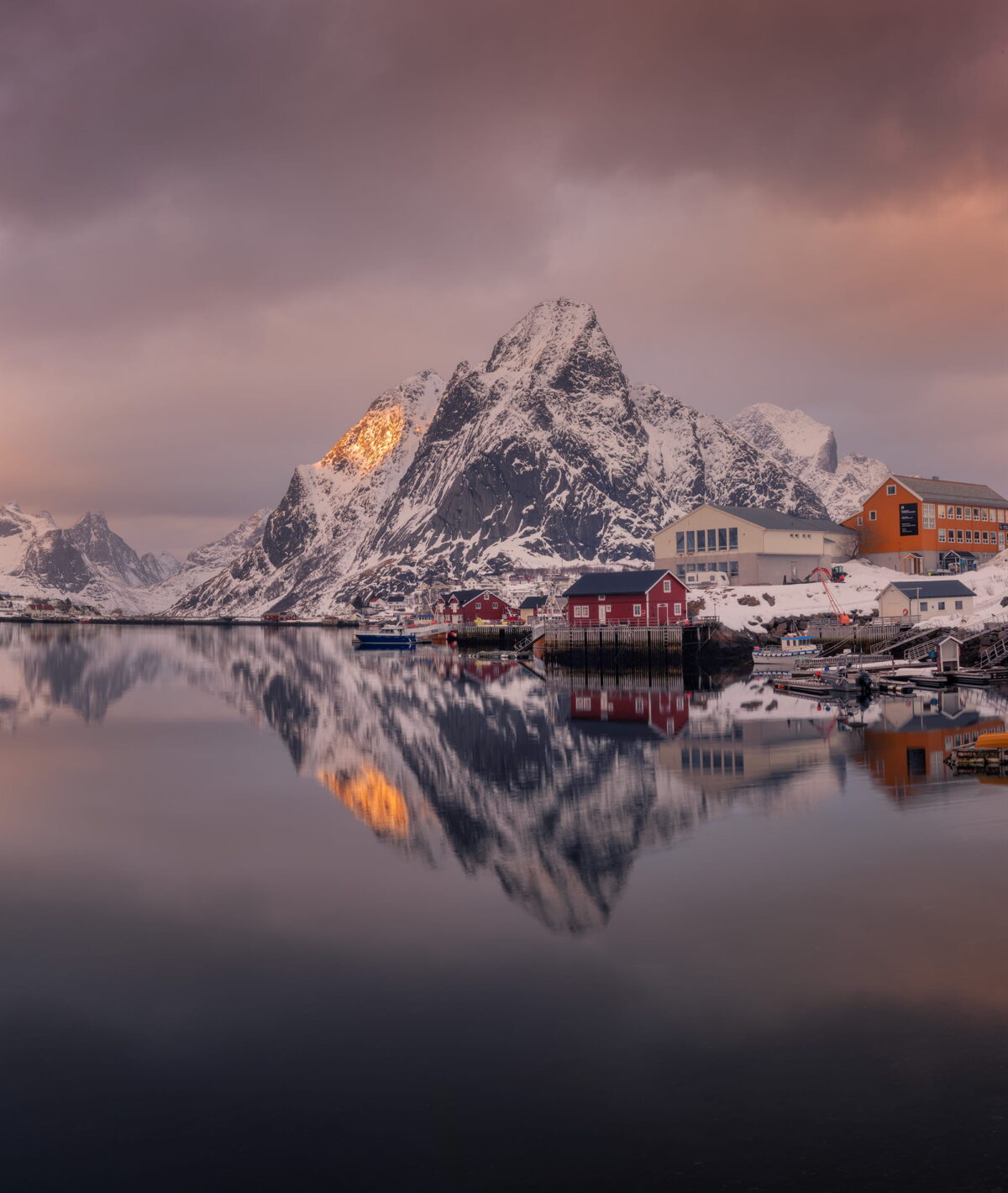
Other views around Reine
Reine offers endless photography possibilities, with its colourful fishing cabins, quiet fjord and spectacular mountains creating completely different compositions depending on the light and weather.
Shot with Nikon Z8 · 24-70mm
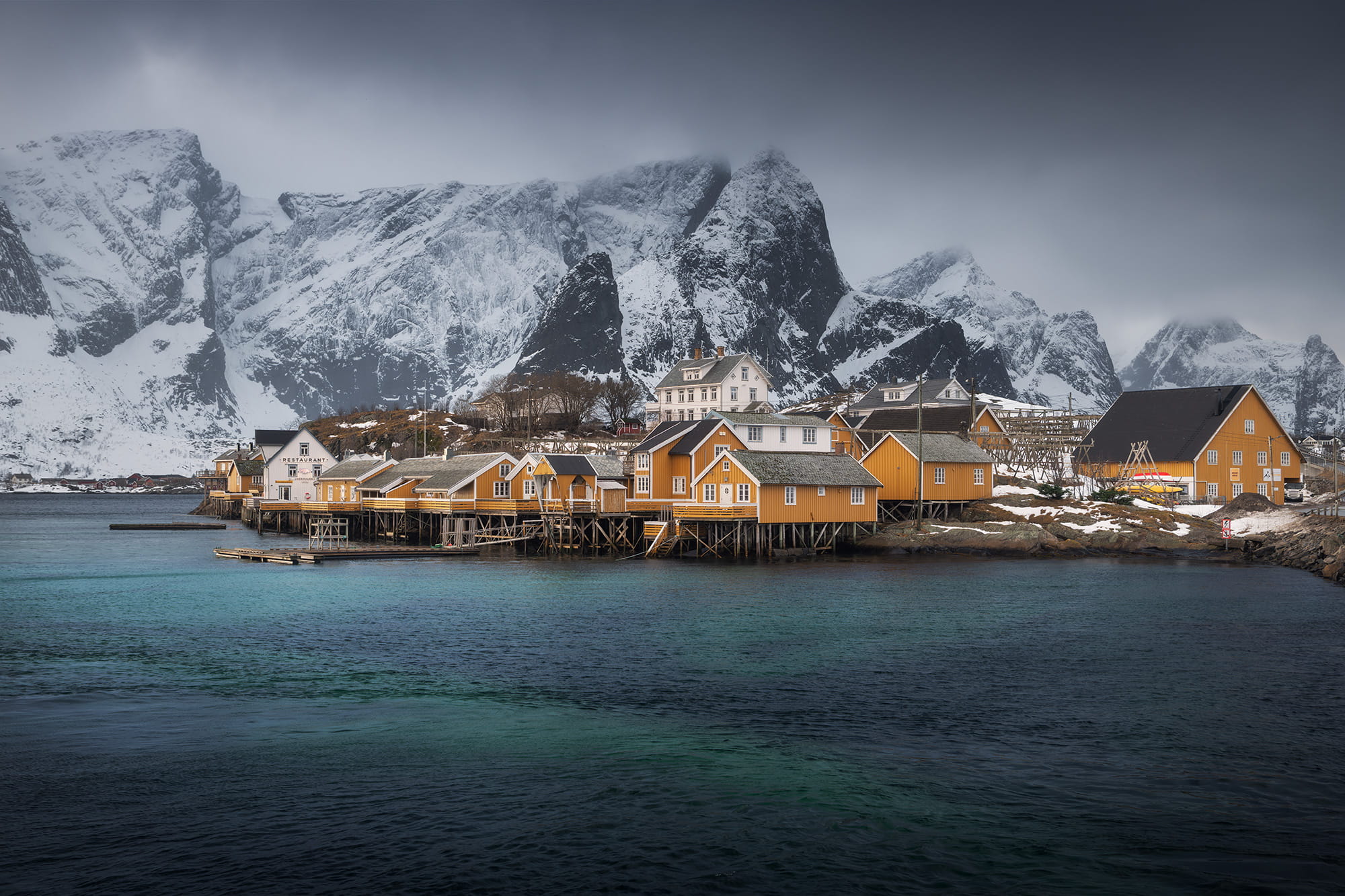
Sakrisøy: yellow cabins surrounded by turquoise water and snowy mountains
Sakrisøy is a small fishing village located between Reine and Hamnøy. It is easily recognizable by its traditional yellow cabins, which give the village a particularly warm and charming atmosphere. Despite being very popular with visitors, it remains one of my favourite villages in the Lofoten Islands.
How to get there
Sakrisøy is located directly along the E10, just a few minutes from Reine. There is a large parking area at the entrance of the village, next to Anita’s Sjømat.
The story behind the image
During my first trip to the Lofoten Islands in September, I didn’t spend much time exploring the small fishing villages, and I regretted it a little afterwards. This time, as I was staying in Reine, I had the opportunity to stop in Sakrisøy several times.
For this photograph, I took advantage of some late afternoon sunshine that was beautifully illuminating the yellow cabins. This is one of the classic views of Sakrisøy, but I still absolutely love it. The warm light on the houses, combined with the turquoise water and snow-covered mountains in the background, perfectly captures what I love about this little village in winter.
Why I liked this spot for photography
✅ Beautiful contrast between yellow cabins and turquoise water
✅ The only yellow fishing village in the area
✅ Epic mountains rising behind the village
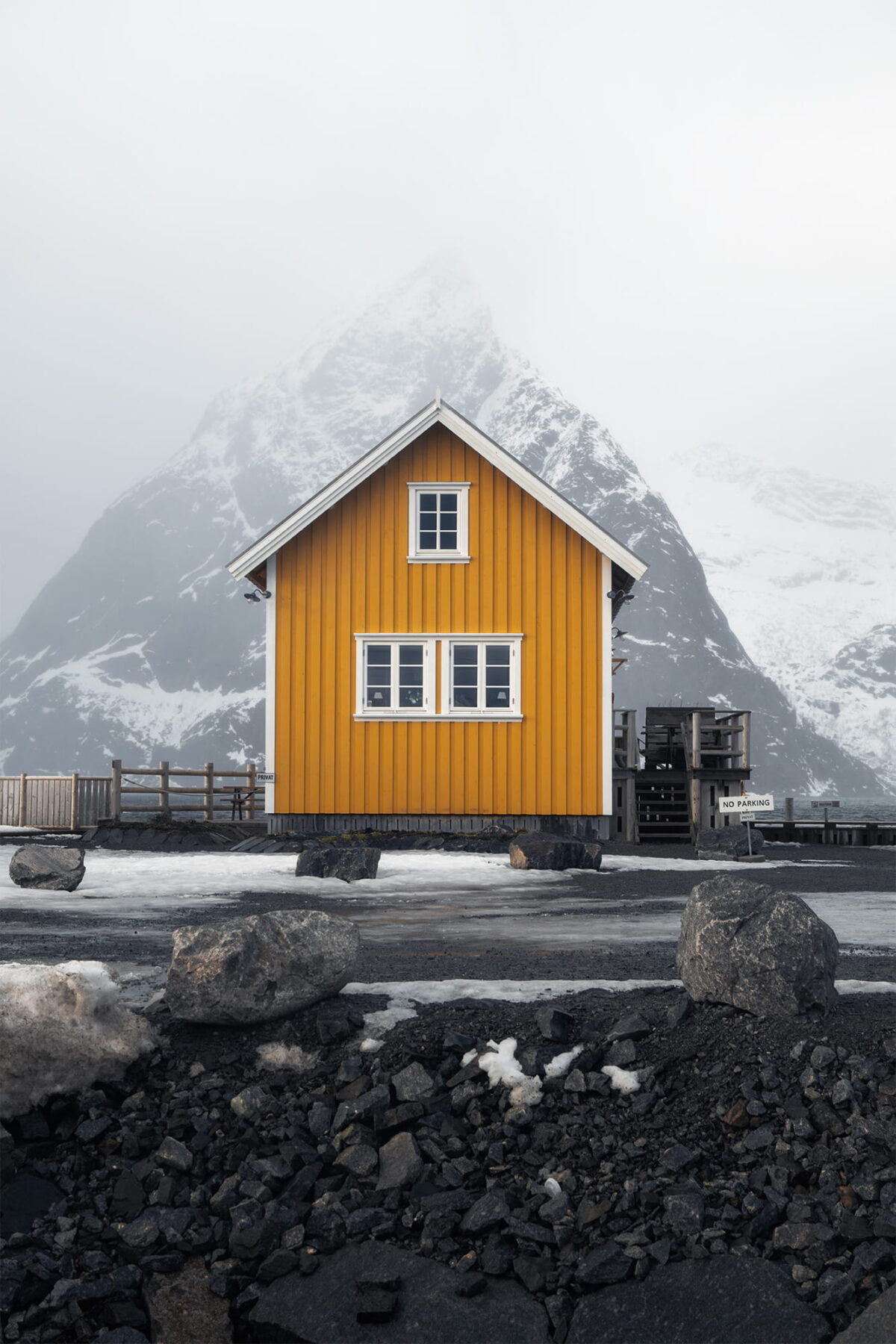
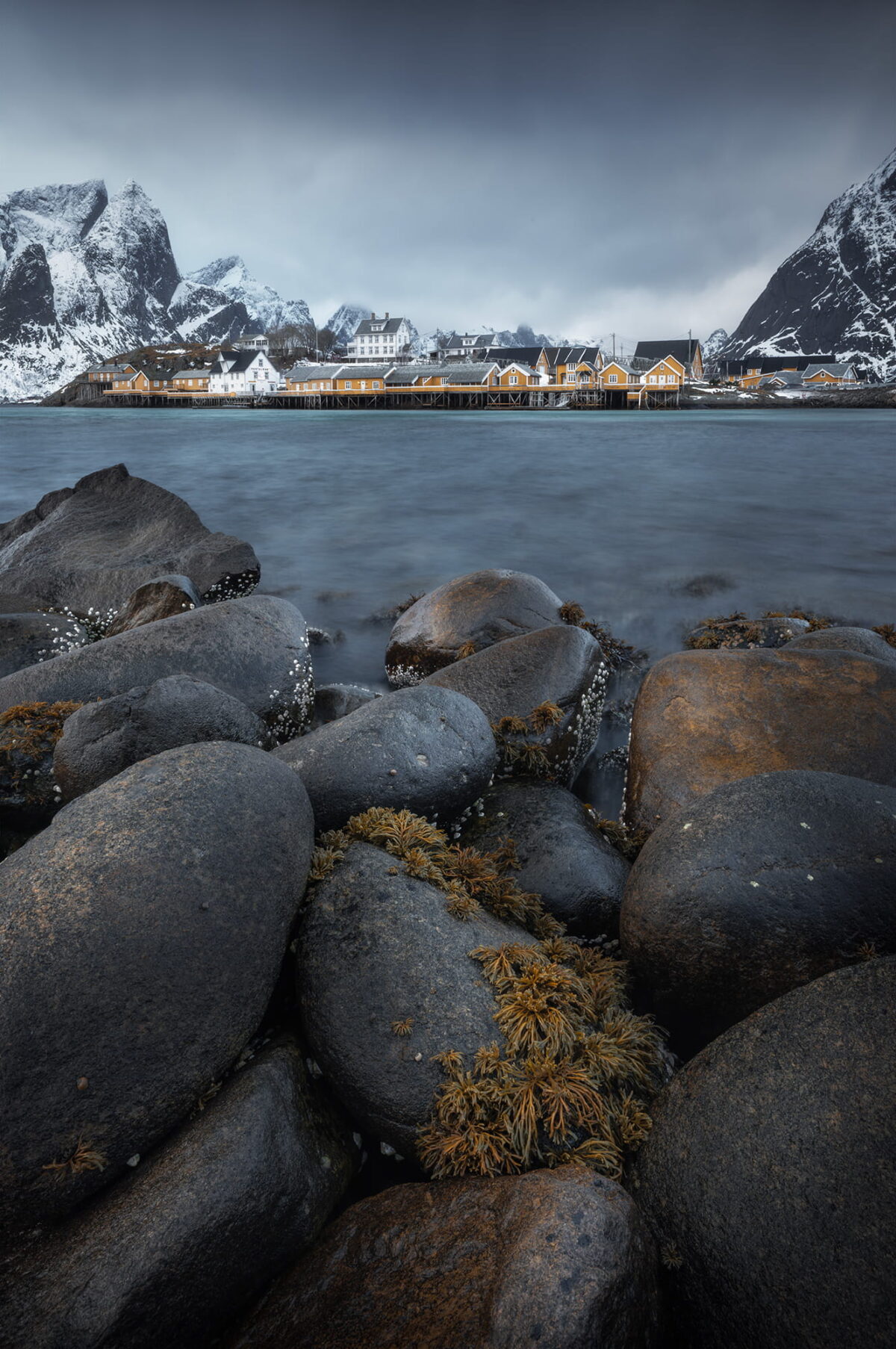
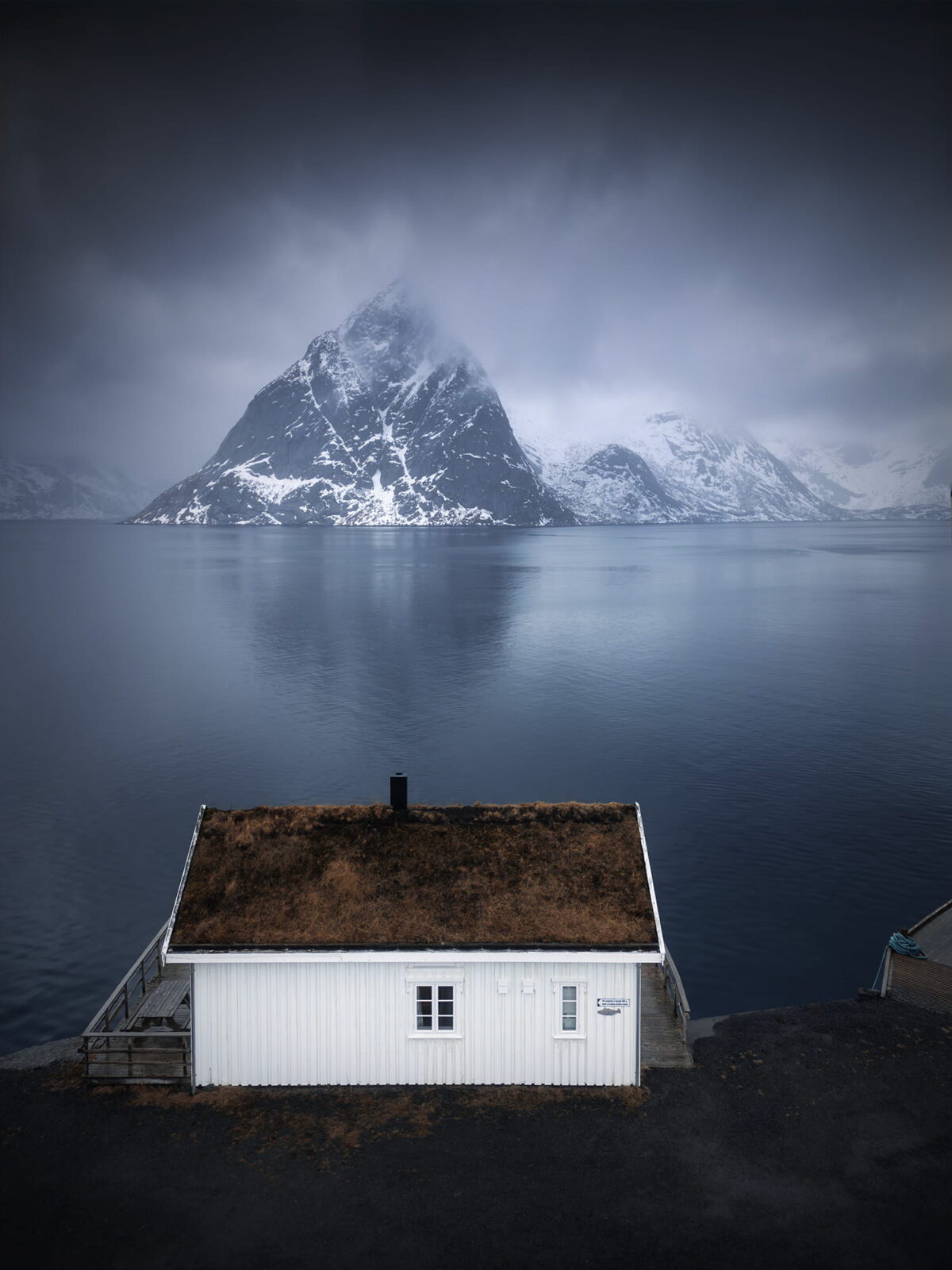
More photography possibilities around Sakrisøy
Beyond the classic views, Sakrisøy offers plenty of other photography possibilities, from colourful cabins and intimate village scenes to the dramatic mountains surrounding the island.
Shot with Nikon Z8 · 24-70mm
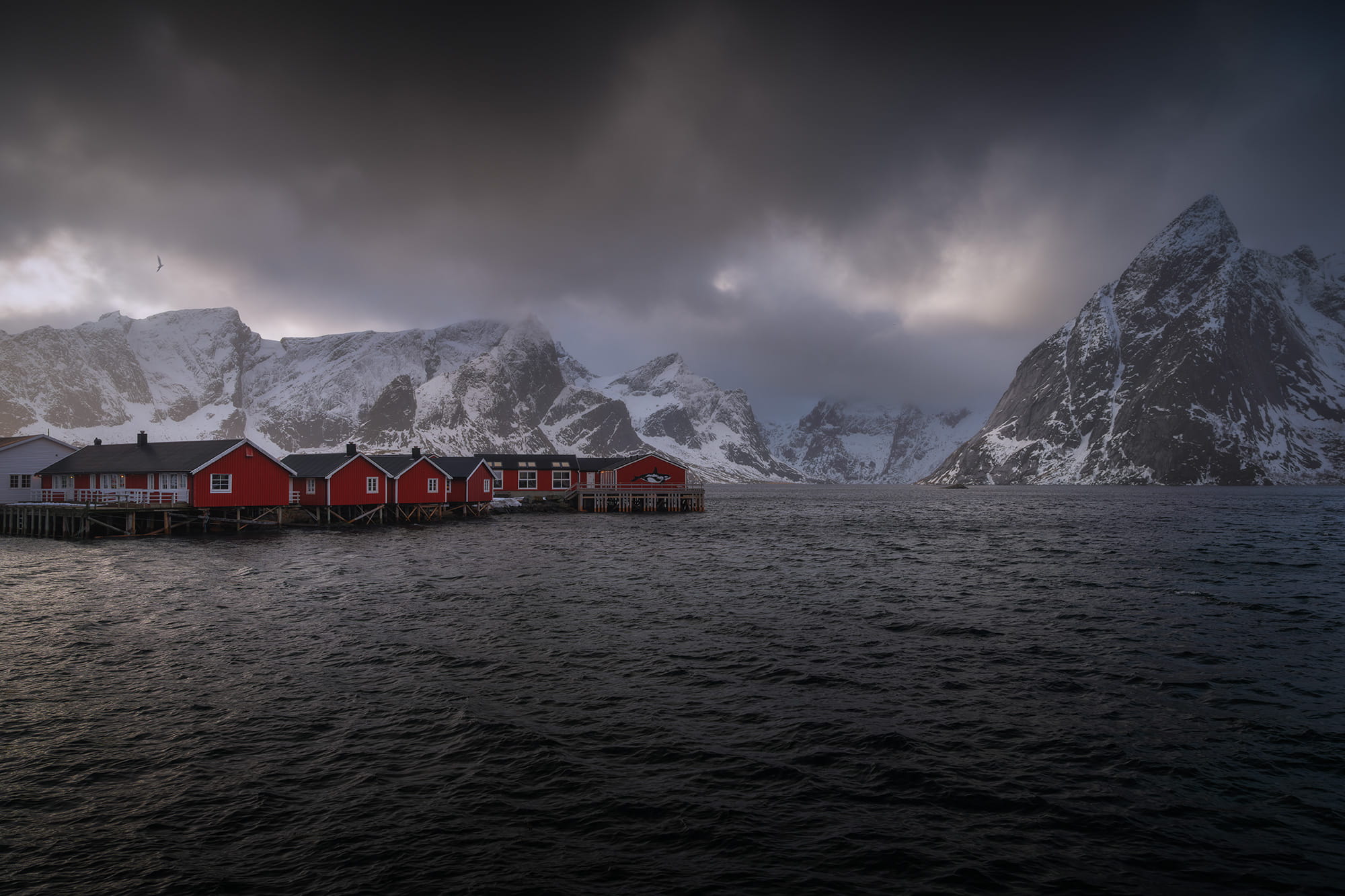
Hamnøy: capturing the wild side of the Lofoten Islands
Hamnøy is another of the most iconic fishing villages in the Lofoten Islands, with its traditional red cabins overlooking the fjord and dramatic mountains rising in the background. It is definitely a place worth visiting slowly and taking the time to explore.
How to get there
Hamnøy is located directly along the E10, only a few minutes from Sakrisøy and Reine. There is a small parking area just before the bridge, which is a convenient place to leave your car and explore the village on foot.
The story behind the image
For this photograph, I wanted to capture the raw and wild atmosphere of Hamnøy. That day, strong winds were making the sea particularly rough, while dramatic clouds were moving across the mountains with just enough light breaking through.
Rather than waiting for calmer conditions, I wanted the photograph to reflect exactly how the place felt in that moment: cold, windy and dramatic. I especially wanted to keep the movement and texture of the sea visible to give the image that true Arctic feeling.
Why I liked this spot for photography
✅ Traditional red fishing cabins
✅ Epic mountains rising behind the village
✅ The little orca painted on one of the cabins
Shot with Nikon Z8 · 24-70mm
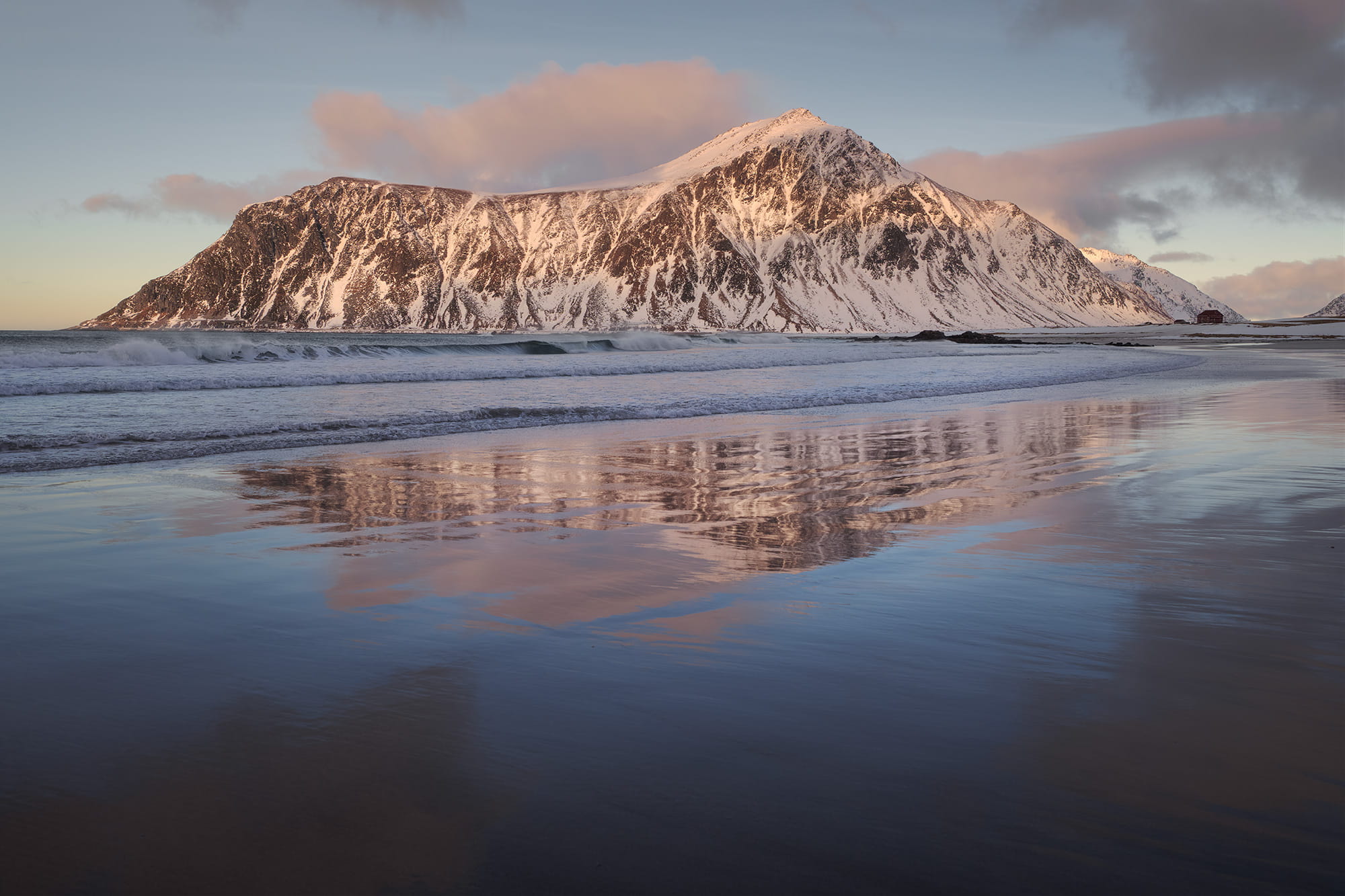
Skagsanden Beach: winter reflections and snowy mountains
Skagsanden Beach is located near Ramberg and Flakstad and is one of my favourite beaches in the Lofoten Islands. At low tide, black and white sand mix together in some areas of the beach, creating beautiful natural patterns that are especially interesting for photography.
How to get there
Access to Skagsanden Beach is very easy, with a large parking area right next to the beach. In winter, however, be careful as the path and surrounding areas can be completely covered in ice and surprisingly slippery.
The story behind the image
I had already fallen in love with Skagsanden during my first trip to the Lofoten Islands, so I really wanted to return in winter. We arrived shortly before sunset, when the soft light was adding beautiful warm tones to the snow-covered mountains.
What immediately caught my attention was the reflection on the wet sand. The mountain and the soft colours of the sky were beautifully reflected on the beach, creating a peaceful contrast between the warm evening light and the winter landscape.
Why I liked this spot for photography
✅ Beautiful black and white sand patterns at low tide
✅ Many different composition possibilities along the beach
Shot with Nikon Z8 · 70-200mm
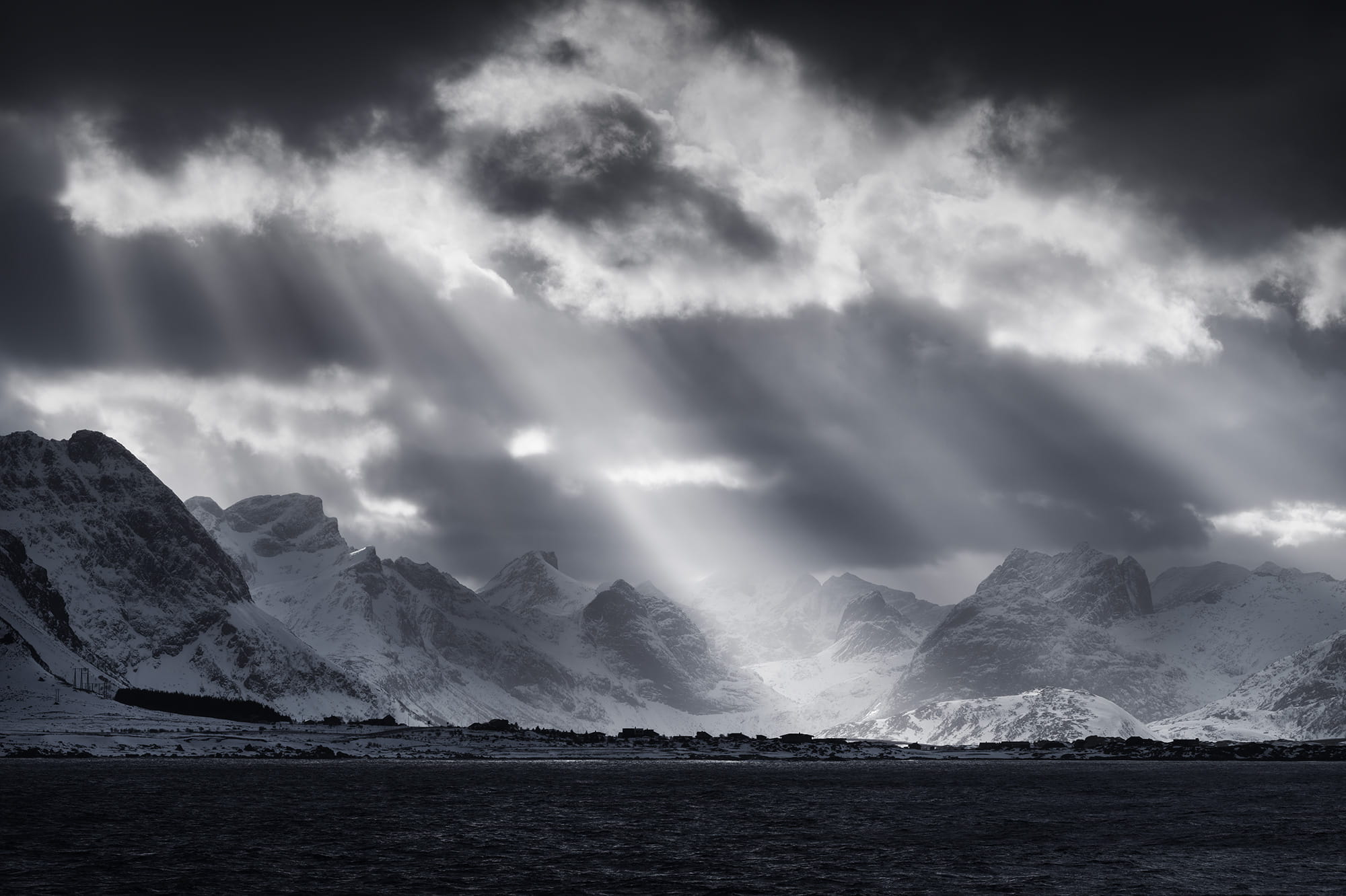
Vareid: exploring the wild Lofoten coastline
Vareid is a beautiful coastal area surrounded by some of the most impressive landscapes of the Lofoten Islands. From here, you can enjoy wide views over the sea and the mountains, with Skagsanden Beach and Ramberg visible further along the coast.
The area is quite large and offers plenty of photography possibilities, both at high and low tide. Rather than looking for one specific viewpoint, I think Vareid is a great place to explore and find your own compositions.
How to get there
Vareid is located directly along the E10. There are a few small areas where you can safely stop, but I didn’t find an official parking area near the places I photographed.
In winter, you may need to explore a little to find somewhere safe to park without blocking the road or risking getting stuck in the snow. For this reason, I prefer not to recommend one specific parking location here.
The story behind the image
The sky was very cloudy when we arrived around Vareid, but I had a feeling that some light might eventually break through. We found a small area where we could park safely, and while I was exploring the surroundings, rays of sunlight suddenly started breaking through the clouds and illuminating the distant mountains and the village of Ramberg.
This photograph was completely spontaneous and unexpected. It is a perfect example of why, in the Lofoten Islands, it can sometimes be worth following your instinct rather than planning every photograph. The weather changes incredibly quickly, and beautiful light can suddenly appear anywhere.
Why I liked this spot for photography
✅ Wide views over the sea and surrounding mountains
✅ Plenty of possibilities to explore and find your own compositions
✅ Beautiful foreground possibilities
Shot with Nikon Z8 · 14-24mm
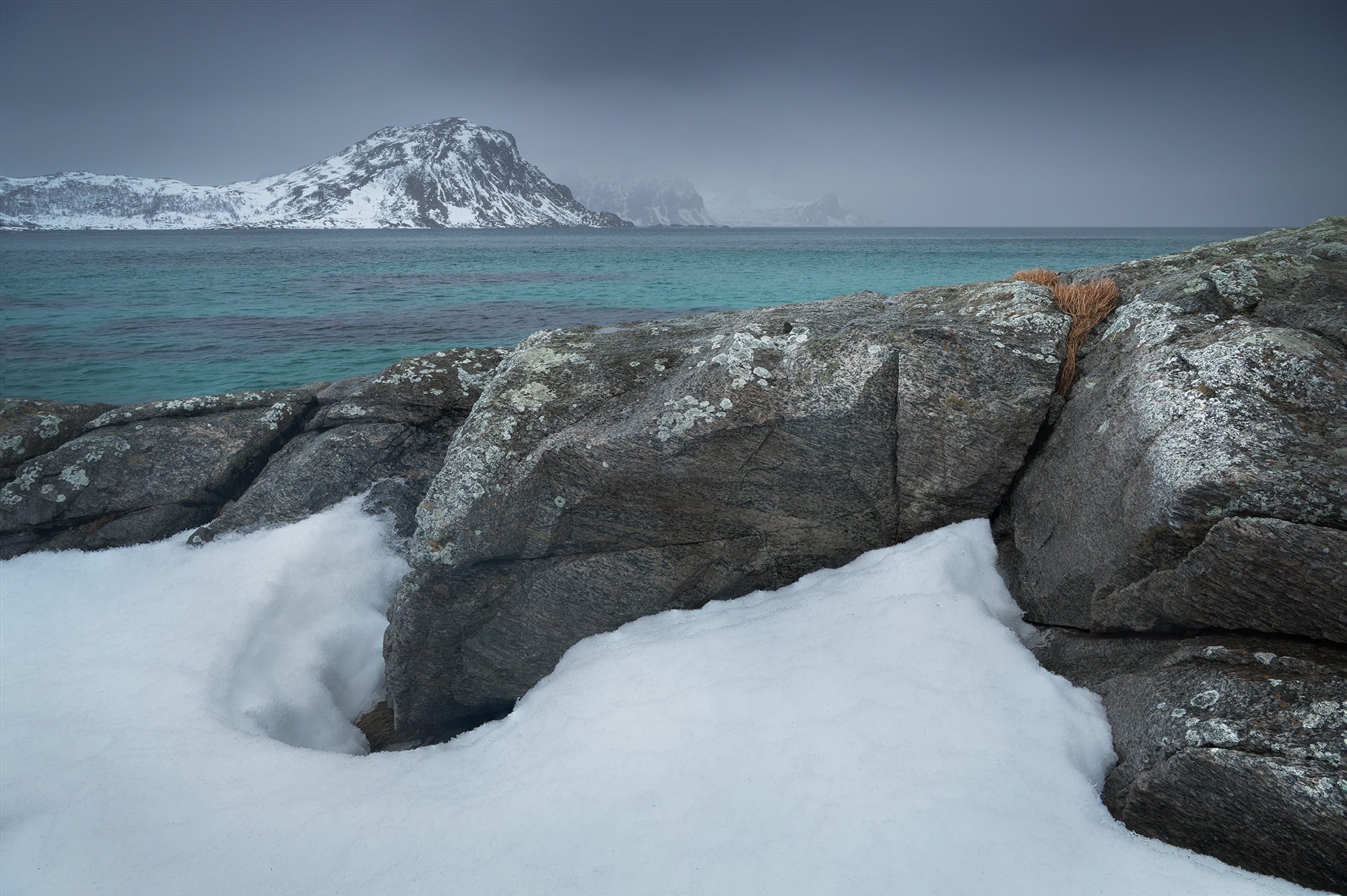
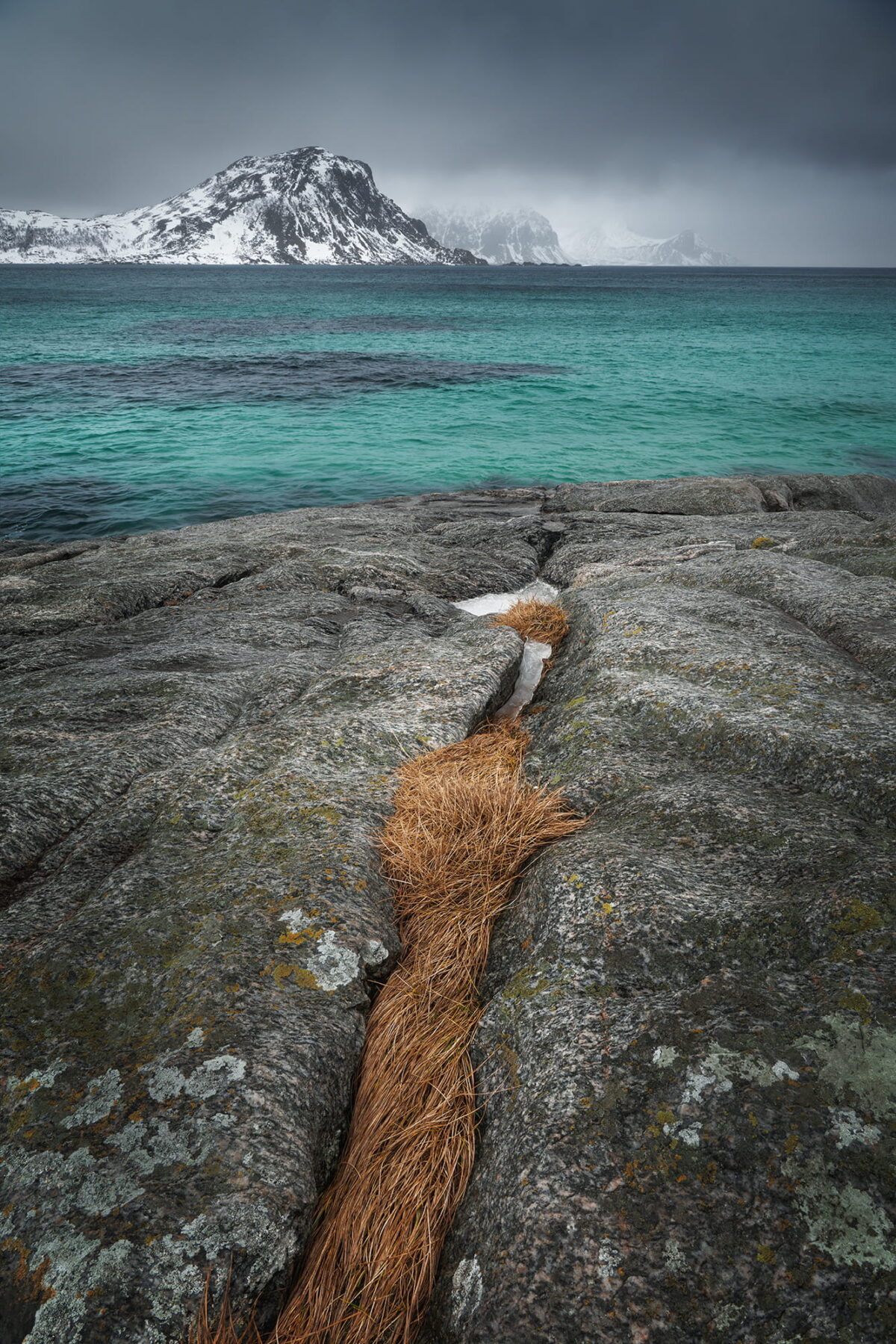
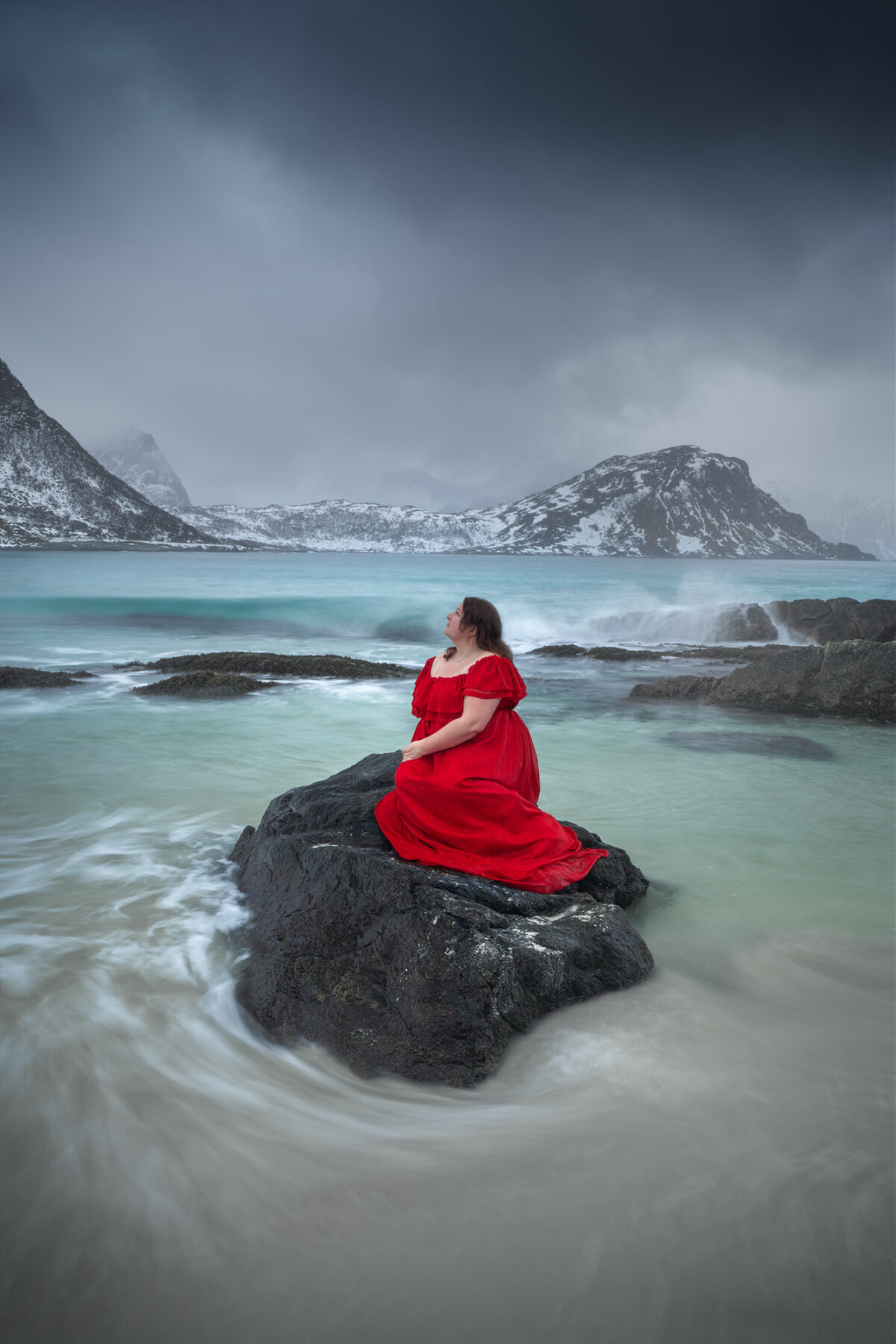
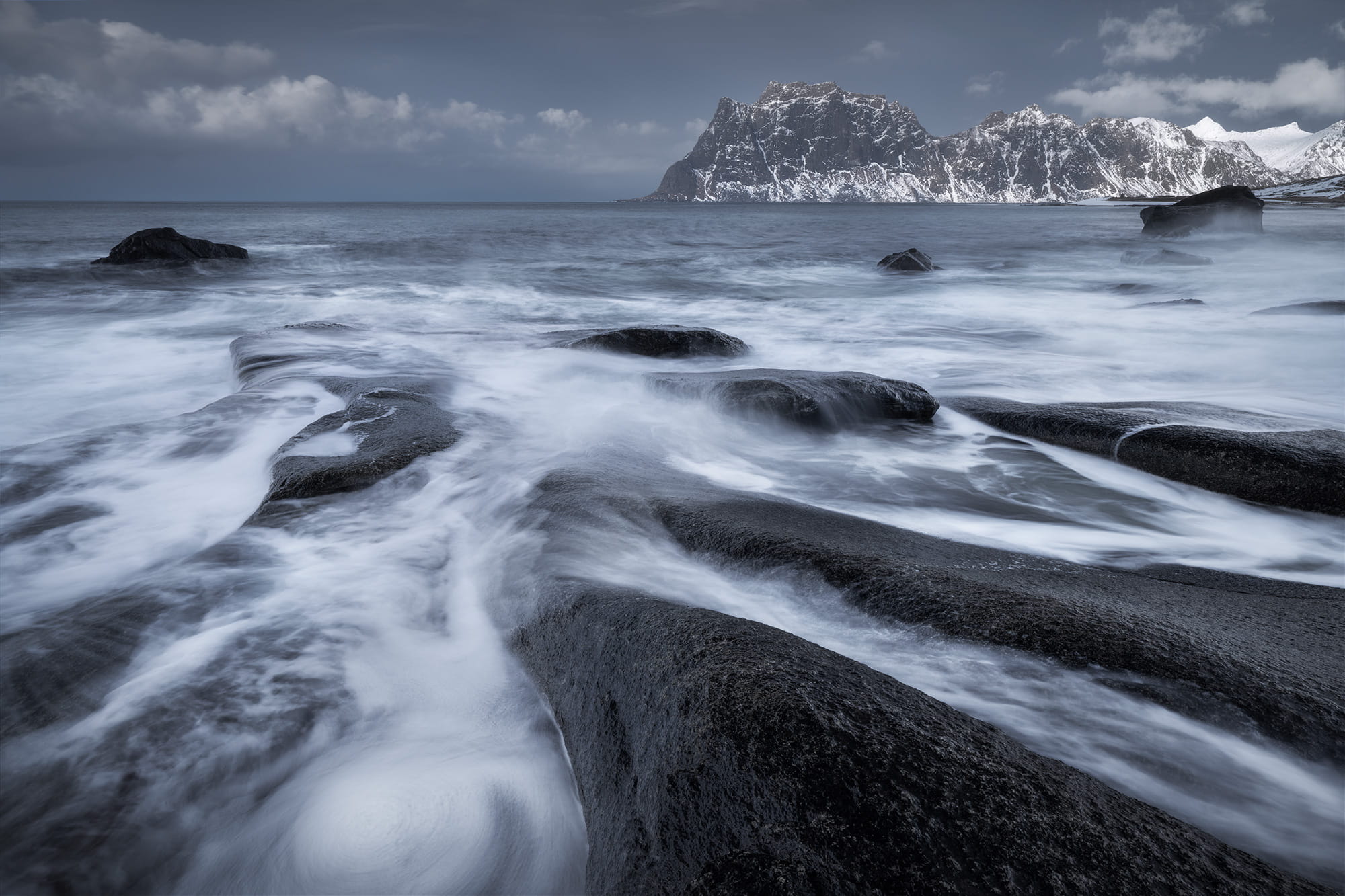
Vik Beach: turquoise water and dramatic winter landscapes
Vik Beach is located on Vestvågøya, close to Haukland Beach and Uttakleiv, on the western side of the Lofoten Islands. Surrounded by mountains and facing beautifully clear turquoise water, it is one of my favourite beaches in the archipelago. It feels particularly wild in winter, when snow covers the surrounding mountains and the weather can completely transform the atmosphere within minutes.
How to get there
Vik Beach is very easy to reach by car, with two small parking areas along the beach. I parked at the far end of the beach, in the direction of Uttakleiv, as I already knew I wanted to explore the rocky area nearby for my composition.
The story behind the image
I really wanted to return to Vik Beach during my second trip to the Lofoten Islands. I had already loved this place in autumn, especially for its wild atmosphere and the beautiful turquoise colour of the water.
This time, winter completely transformed the scene. With dramatic clouds above the mountains, fresh snow and that incredible turquoise water, the whole landscape felt almost epic. For this composition, I decided to use the snow-covered rocks in the foreground to lead the viewer’s eye towards the sea and the mountain in the background.
Why I liked this spot for photography
✅ Beautiful turquoise water
✅ Rocks and textures offering interesting foreground possibilities
✅ Very different atmospheres depending on the weather and season
Shot with Nikon Z8 · 14-24mm
Uttakleiv Beach: capturing the movement of the sea
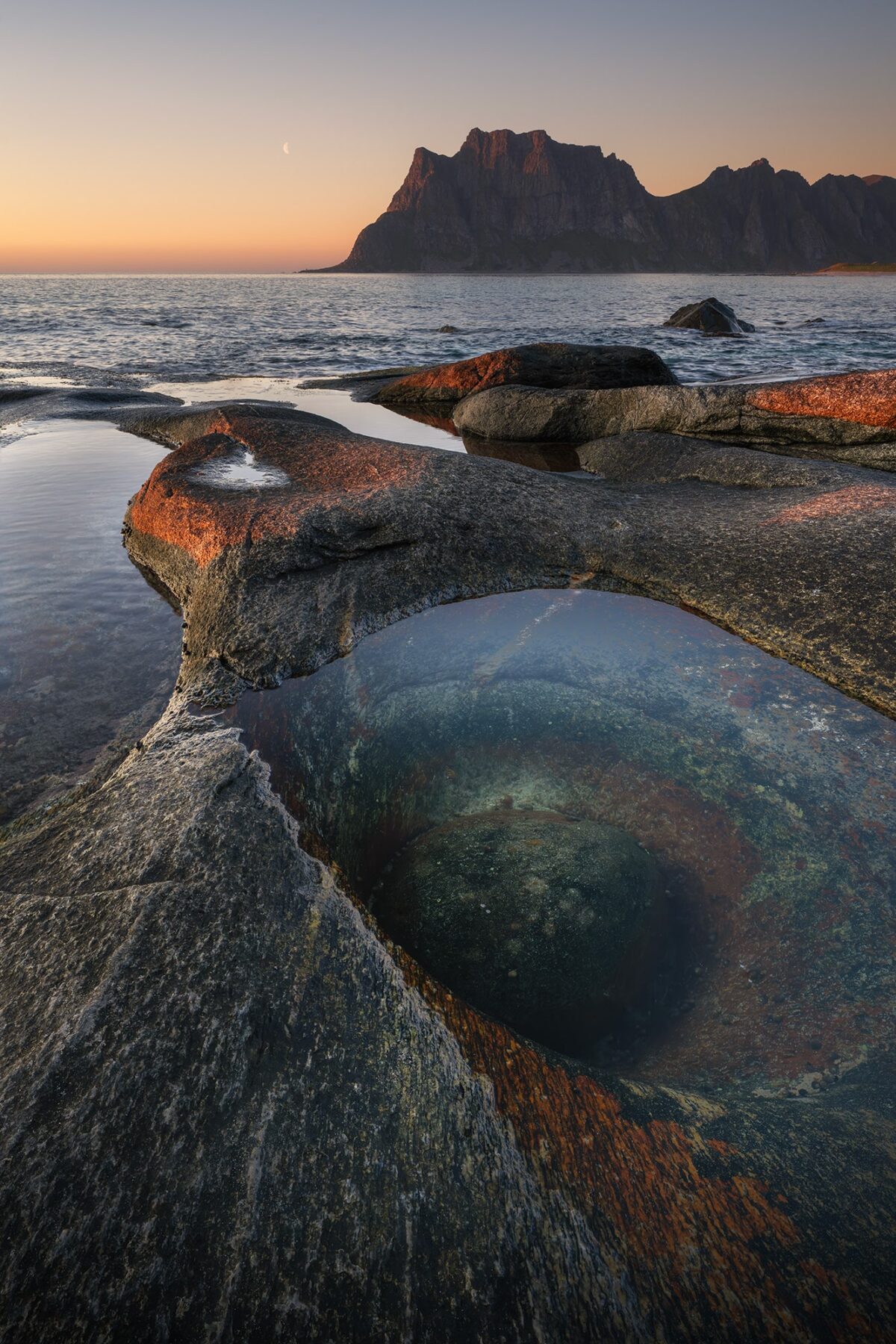
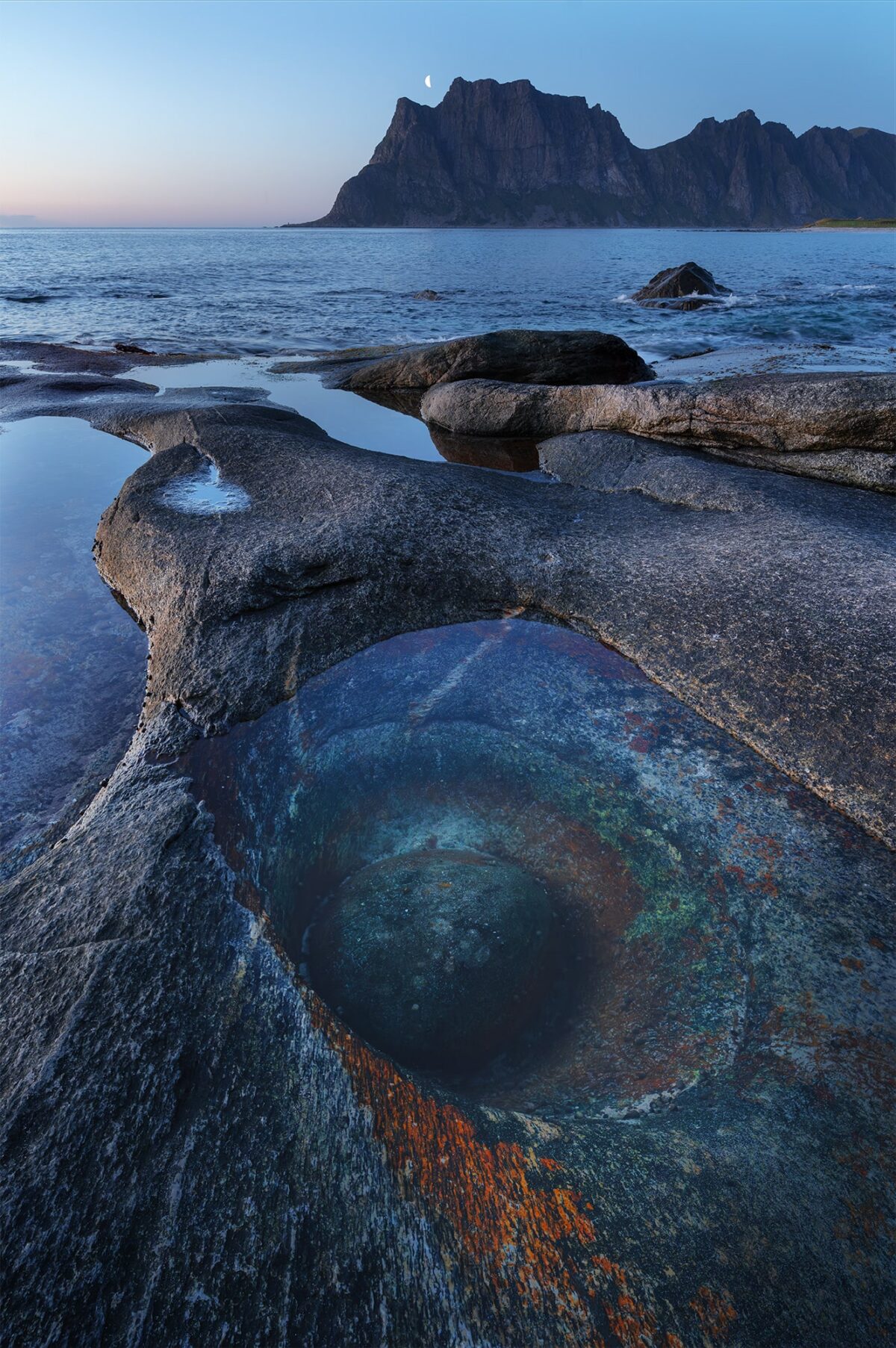
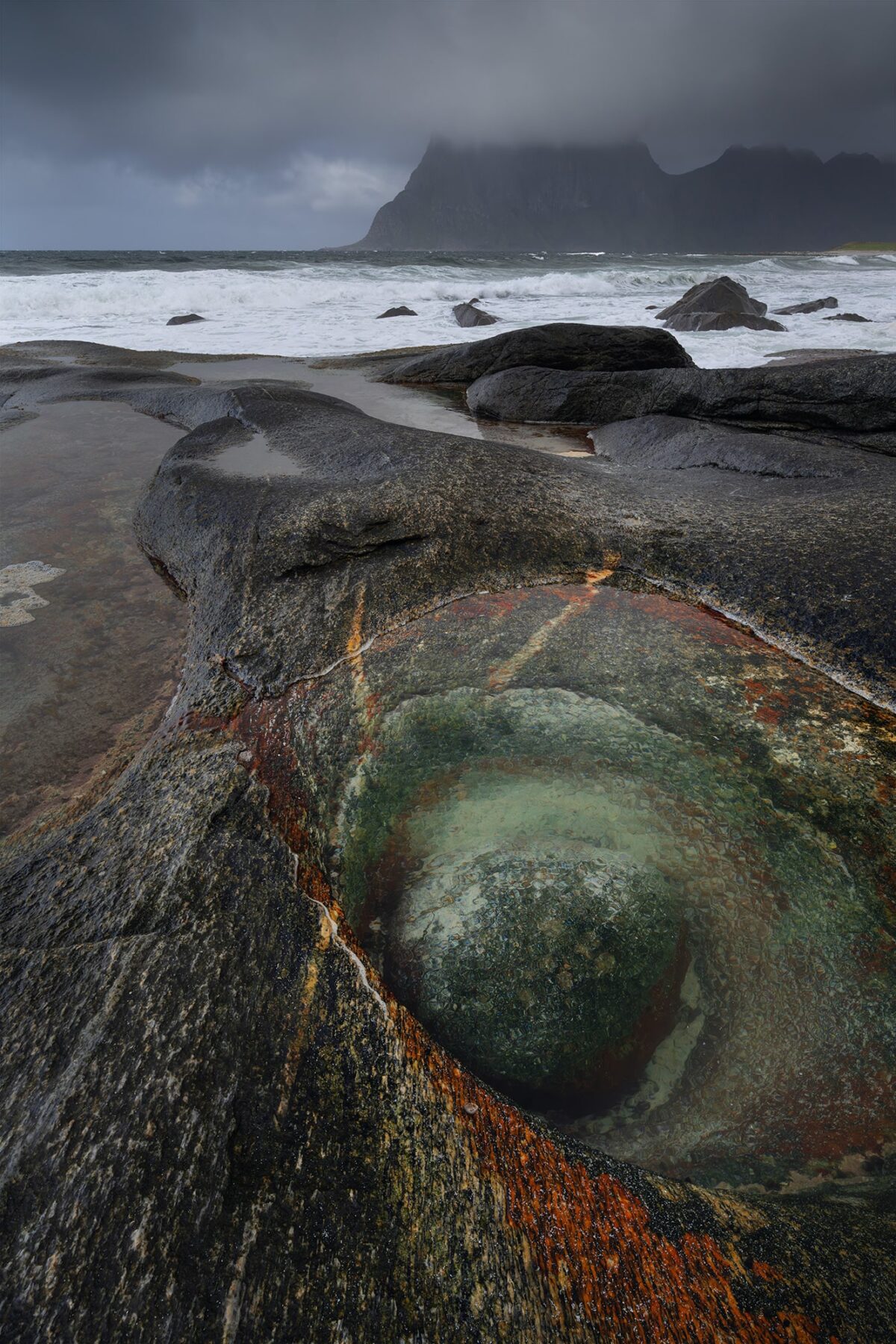
Uttakleiv is one of the most famous beaches in the Lofoten Islands, surrounded by dramatic mountains and known for its rocky coastline and the famous Dragon’s Eye. I had already photographed this location during my first trip in autumn, but I really wanted to see how different it would look in winter.
With snow covering the mountains and constantly changing weather, the atmosphere felt completely different and much wilder than during my previous visit.
How to get there
Uttakleiv Beach is very easy to reach by car and has a large paid parking area directly next to the beach. From there, you can easily explore the beach and the rocky coastline on foot.
The story behind the image
I really wanted to return to Uttakleiv during my winter trip, and a day alternating between rain, wind and sunshine felt like the perfect opportunity. I arrived at high tide, which meant that the Dragon’s Eye was inaccessible, so instead of trying to recreate a photograph from my previous visit, I decided to explore the rocky coastline.
The sea was quite rough, and I used a slightly longer exposure to capture the movement of the waves around the rocks. I loved seeing how different this famous Lofoten beach felt in winter, especially with the snowy mountains and much colder tones of the landscape.
Why I liked this spot for photography
✅ Beautiful rocky foregrounds and mountain views
✅ Great opportunities for capturing movement in the waves
✅ Completely different atmospheres depending on the season and weather
Uttakleiv in different conditions
I photographed the Dragon’s Eye several times during my September trip, and each visit offered a completely different atmosphere. From warm sunset light to blue hour and dramatic stormy weather, Uttakleiv is a perfect example of how quickly the landscape can change in the Lofoten Islands.
Shot with Nikon Z8 · 14-24mm
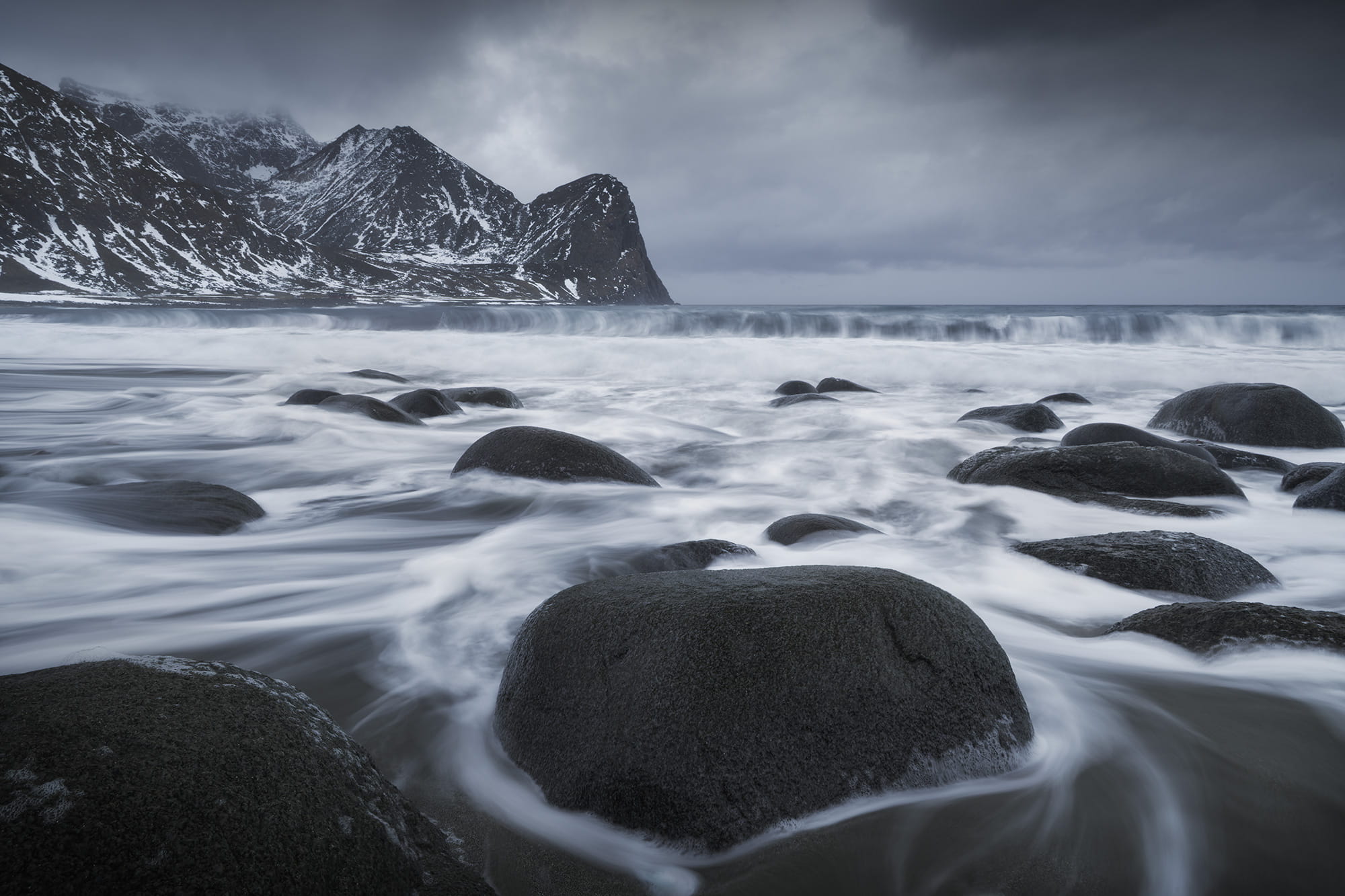
Unstad Beach: rocks, waves and moody winter weather
Unstad Beach is surrounded by steep mountains and is probably best known as one of the most famous surfing beaches in the Lofoten Islands. In winter, the combination of snow-covered mountains, dark rocks and rough sea creates a particularly wild atmosphere.
The beach offers plenty of possibilities for photography, especially when the sea is active and the waves interact with the large rocks scattered along the shoreline.
How to get there
Unstad Beach is easy to reach by car, with parking available close to the beach. From there, you can walk along the shoreline and explore different compositions around the rocks.
The story behind the image
I had loved Unstad Beach during my first trip in autumn and really wanted to return in winter. As we were staying in Reine, however, it was quite a long drive just to get there. Towards the end of our trip, we were heading north to spend a night in Henningsvær, so it was the perfect opportunity to stop at Unstad along the way.
The weather was moody and the sea quite rough, so I decided to use a longer exposure and focus on the large rocks along the shoreline. I loved how the moving water created soft lines around them, with the snowy mountains and grey sky completing the wild winter atmosphere.
Why I liked this spot for photography
✅ Large rocks offering strong foreground possibilities
✅ Great conditions for experimenting with longer exposures
✅ Wild coastal atmosphere
Shot with DJI Mini 3 Pro (in September)
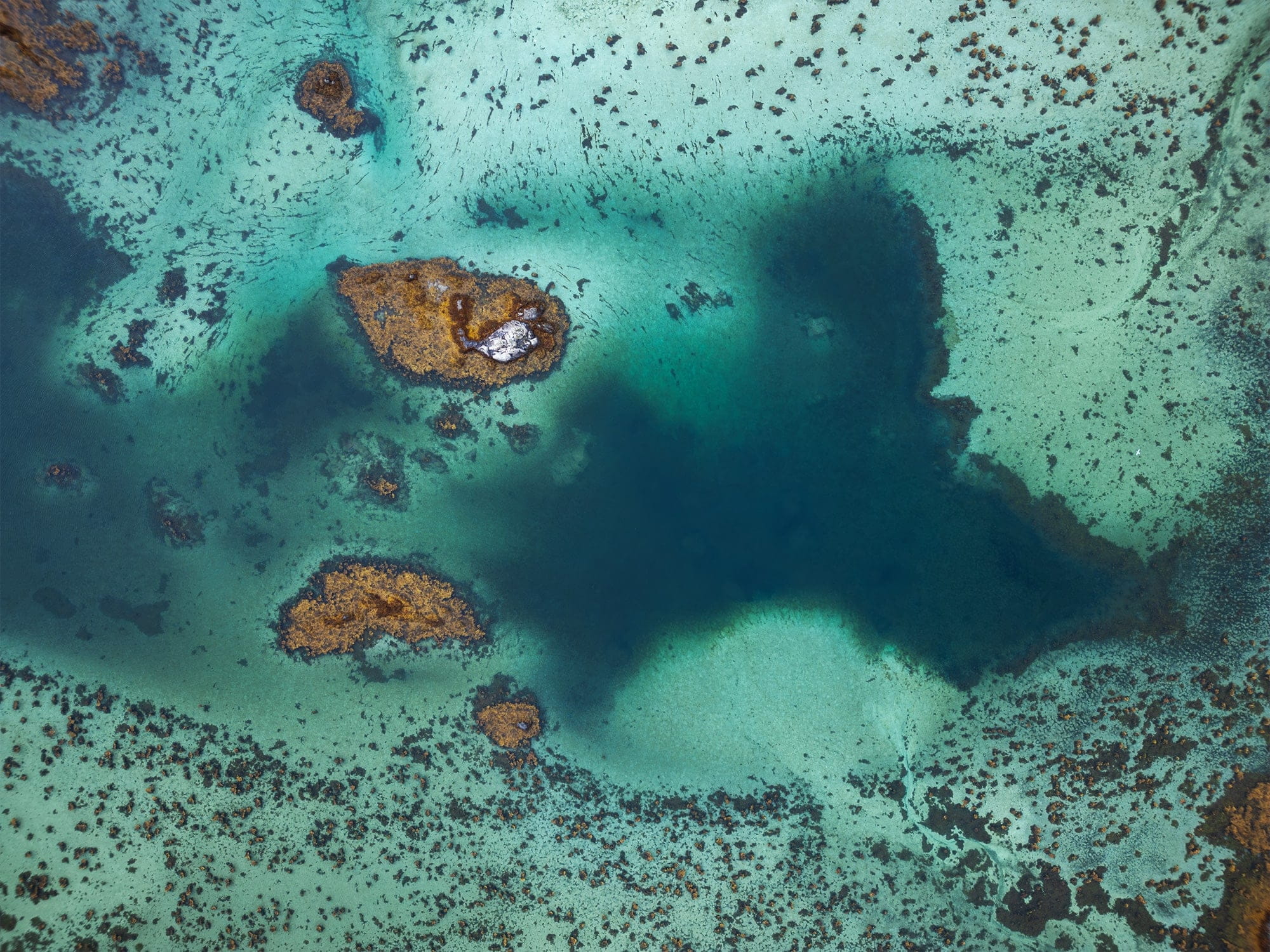
Gimsøystraumen: the whale tail hidden in turquoise waters
The area around Gimsøystraumen caught my attention for the incredible colour of the water. Seen from above, the shallow turquoise areas, darker channels and small rocky islands create almost abstract patterns that are completely different from the mountain landscapes usually associated with the Lofoten Islands.
How to get there
Gimsøystraumen is located directly along the E10. There is a rest area just before the bridge where you can safely park and explore the surroundings.
The story behind the image
While searching Google Maps for interesting places to photograph with my drone, I noticed several areas around Gimsøystraumen where the water looked incredibly turquoise. I marked this particular spot and decided to stop there before heading to Henningsvær.
As soon as I sent the drone into the air, I noticed this dark shape in the water that reminded me of a whale’s tail. I was also amazed by the colour of the water. From above, it almost looks tropical, yet the water here is freezing cold. I absolutely love that contrast.
Why I liked this spot for photography
✅ Incredible turquoise colours from above
✅ Abstract patterns created by the shallow water and rocks
Shot with DJI Mini 3 Pro
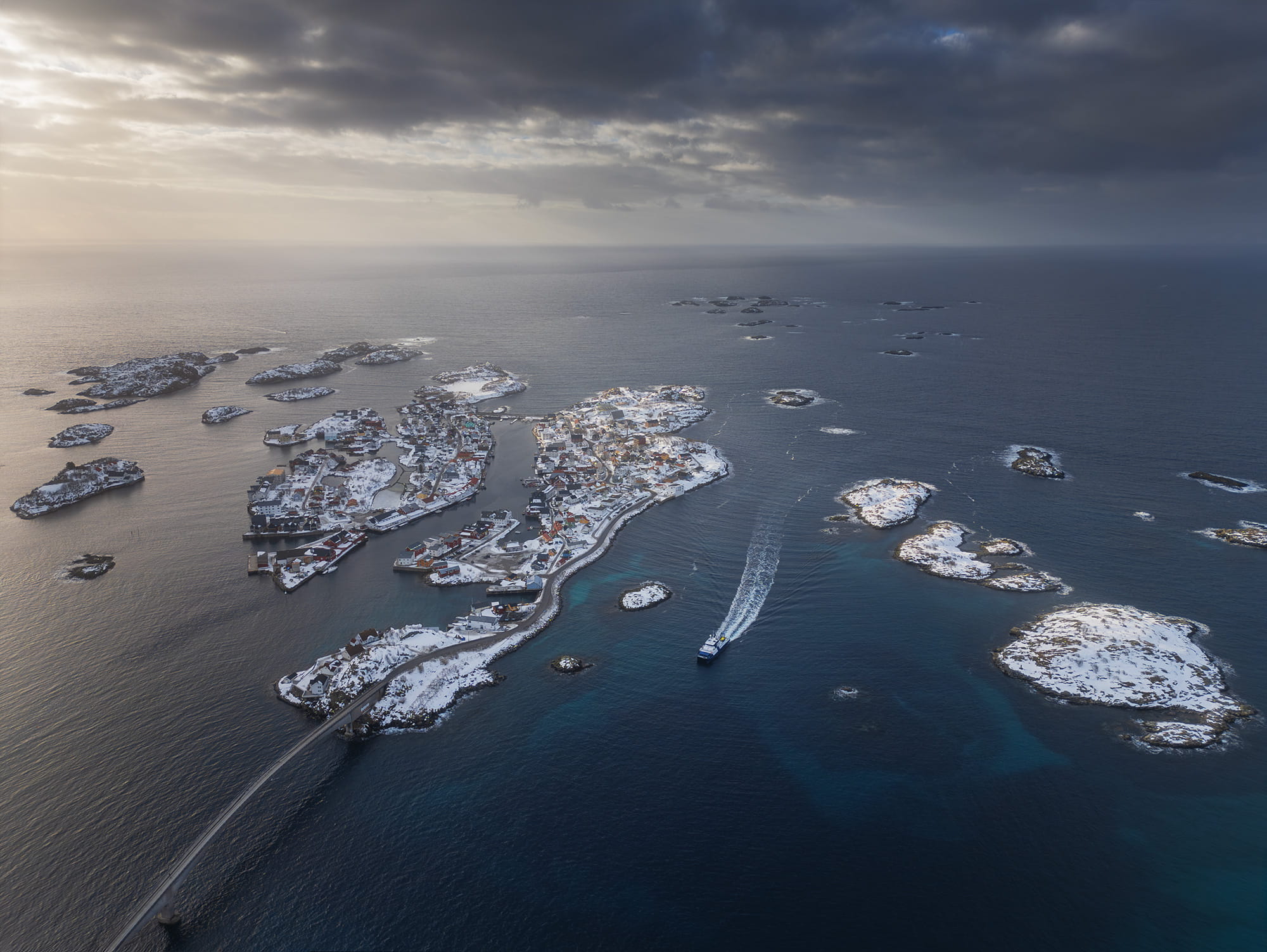
Henningsvær: a village scattered across the sea
Henningsvær is one of the most famous fishing villages in the Lofoten Islands, built across a collection of small islands surrounded by the Norwegian Sea. While it is often photographed from above for its famous football field, I wanted to show a different perspective of the village and its unique location.
From the air, you can really see how Henningsvær sits between the sea and the surrounding islands, with houses, roads and bridges occupying only a small part of this vast coastal landscape.
How to get there
Henningsvær is easily accessible by road, with several parking areas once you reach the village. From there, you can explore the village on foot and discover different views along the harbour and coastline.
The story behind the image
We had decided to spend one night in Henningsvær, and when we arrived, the conditions were beautiful, with very little wind and some lovely light. Before driving into the village, I decided to stop and send my drone into the air.
I wanted to capture Henningsvær from its entrance, with the bridge leading towards the village and the houses scattered across the small islands. From this perspective, you can also see the surrounding islands and the open ocean stretching towards the horizon, which really shows how unique the location of Henningsvær is.
Why I liked this spot for photography
✅ So many different viewpoints to explore
✅ One of Lofoten’s most iconic fishing villages
✅ A beautiful mix of village life and wild landscapes
Shot with DJI Mini 3 Pro
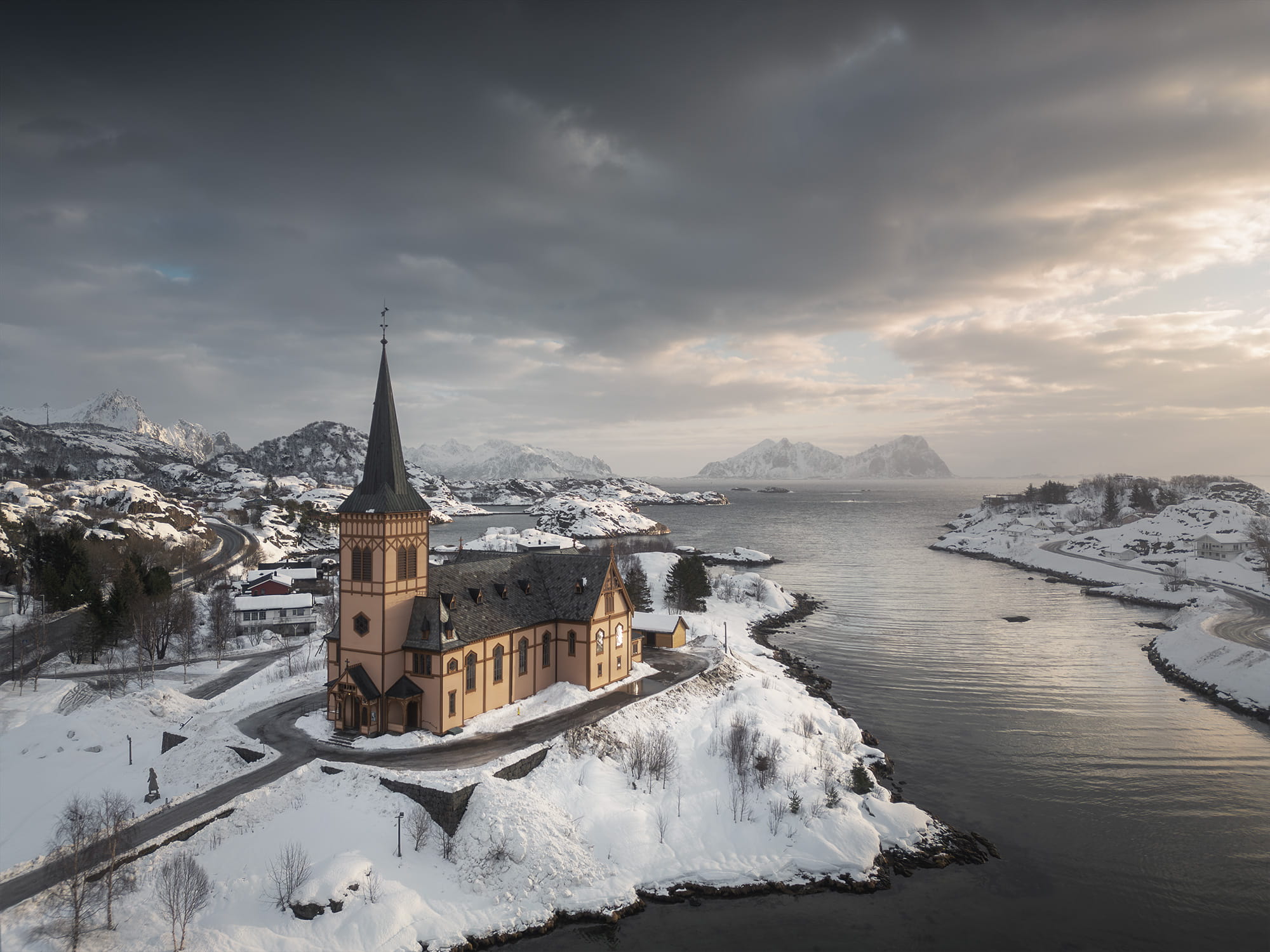
Kabelvåg: a colourful church in a winter landscape
Kabelvåg is one of the historic villages of the Lofoten Islands, surrounded by mountains and the sea. While driving through the area, the colourful church immediately caught my attention, especially against the snowy winter landscape.
Its warm tones create a beautiful contrast with the snow, while the surrounding coastline and distant mountains make it particularly interesting to photograph from above.
How to get there
You can park at Vågan Cemetery Parking, just next to the church. From there, the area is easy to explore on foot. In winter, be careful as the parking area and surrounding roads can be quite slippery.
➜ Parking location
The story behind the image
This was a completely spontaneous stop. I had noticed this beautiful church by the water and immediately thought its warm orange tones would stand out beautifully against the snow, so I decided to stop and send my drone into the air.
The conditions made the scene even better, with some sunlight breaking through dramatic clouds. I positioned the drone to include the church in the foreground, the water leading into the distance and the snowy mountains on the horizon.
Why I liked this spot for photography
✅ Beautiful contrast between the colourful church and the snow
✅ Mountains and ocean creating a very nice background
Shot with DJI Mini 3 Pro
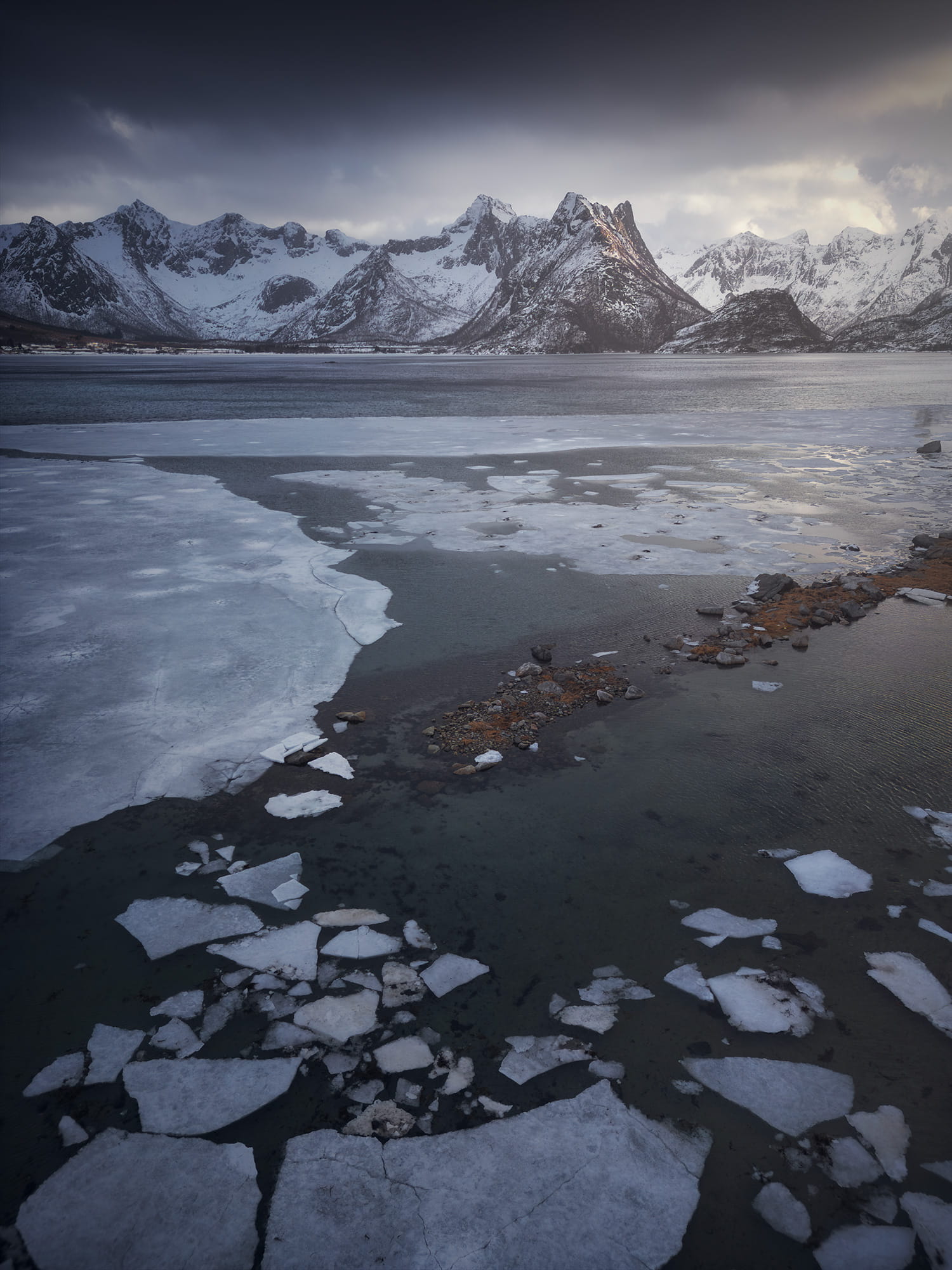
Grunnførfjord: ice and mountains at the end of the road
Grunnførfjord is located along one of the northern detours of the Lofoten Scenic Route. Surrounded by dramatic mountains, shallow water and small coastal landscapes, it feels much quieter and more remote than many of the famous locations further south.
In winter, the partially frozen fjord adds even more possibilities for photography, with ice creating constantly changing shapes and textures in the foreground.
How to get there
Grunnfør is reached via a detour from the E10 towards the northern part of the Scenic Route. I took this photograph from the beginning of the bridge crossing Grunnførfjord, where you get a beautiful open view towards the mountains.
➜ Parking location
The story behind the image
We made the detour to Grunnfør specifically because I wanted to photograph the fjord and the mountains in the background. During my first trip to the Lofoten Islands, I hadn’t travelled this far north, but this time our flight home was departing from Evenes, so it was the perfect opportunity to explore this part of the Scenic Route.
What immediately caught my attention was the ice breaking up across the fjord. I used these shapes as a foreground leading towards the mountains, while a little light breaking through the clouds illuminated parts of the peaks in the distance.
Why I liked this spot for photography
✅ Epic mountain views across the fjord
✅ Ice creating interesting winter foregrounds
Final thoughts
Driving the Lofoten Scenic Route in winter was a completely different experience from my first trip to the islands in autumn. Places I already knew looked completely transformed by the snow, while travelling further north gave me the opportunity to discover new landscapes along the way.
What I loved most was never really knowing what the next stop would bring. The weather changed constantly, some photographs were planned and others happened completely by chance. That’s also what makes photographing the Lofoten Islands so special for me.
If you’re planning a winter photography trip to the Lofoten Islands, take your time, stay flexible and don’t focus only on the famous locations. Some of my favourite moments happened simply because I decided to stop along the road.
And most of all, enjoy the moment. Happy shooting.