Wide-angle lenses are some of my favorite tools for landscape photography. What I love about my 14–24mm lens is how much I can fit into one image, from small details right in front of me to mountains far away.
I especially love working with foregrounds. Rocks, water, sand, and natural lines can make a photo more interesting and help guide the viewer’s eye through the landscape. By getting close to these elements, I can make the viewer feel like they are standing right there.
While my telephoto lenses help me focus on distant details, my 14–24mm lets me show more of the scene. For me, it’s not just about fitting everything into the frame. It’s about finding a composition that makes people want to step into the photograph.
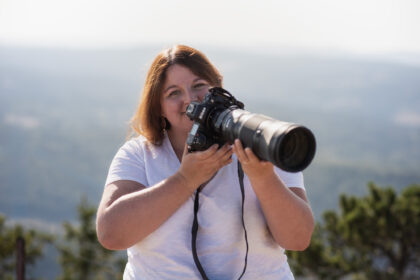
The lens behind these images
Nikon AF-S NIKKOR 14-24mm f/2.8G ED
The Nikon AF-S NIKKOR 14-24mm f/2.8G ED is one of my favorite lenses for landscape photography. It lets me photograph wide landscapes, get close to interesting foregrounds, and create a strong sense of perspective.
Another great advantage is the possibility of using filters with a compatible lens hood. I use the Kase Wolverine Revolution 112mm magnetic filter kit, which includes a CPL polarising filter and three ND filters (ND8, ND64, and ND1000). The magnetic system makes switching filters quick and easy, especially when working with long exposures, moving water, and changing light conditions.
Quick guide: Why use a 14–24mm lens for landscape photography?
A wide-angle lens can change the way you see and photograph a landscape.
Here are some of my favourite reasons for using it:
✅ Fit more of the landscape into one photo
✅ Get close to interesting foregrounds
✅ Make paths, rocks, and other lines stand out
✅ Show how small a person looks in a huge landscape
✅ Capture more of the sky
✅ Create photos that make you feel part of the scene
Below, I’ll share ten photographs and explain how I used my 14–24mm lens to create each one.
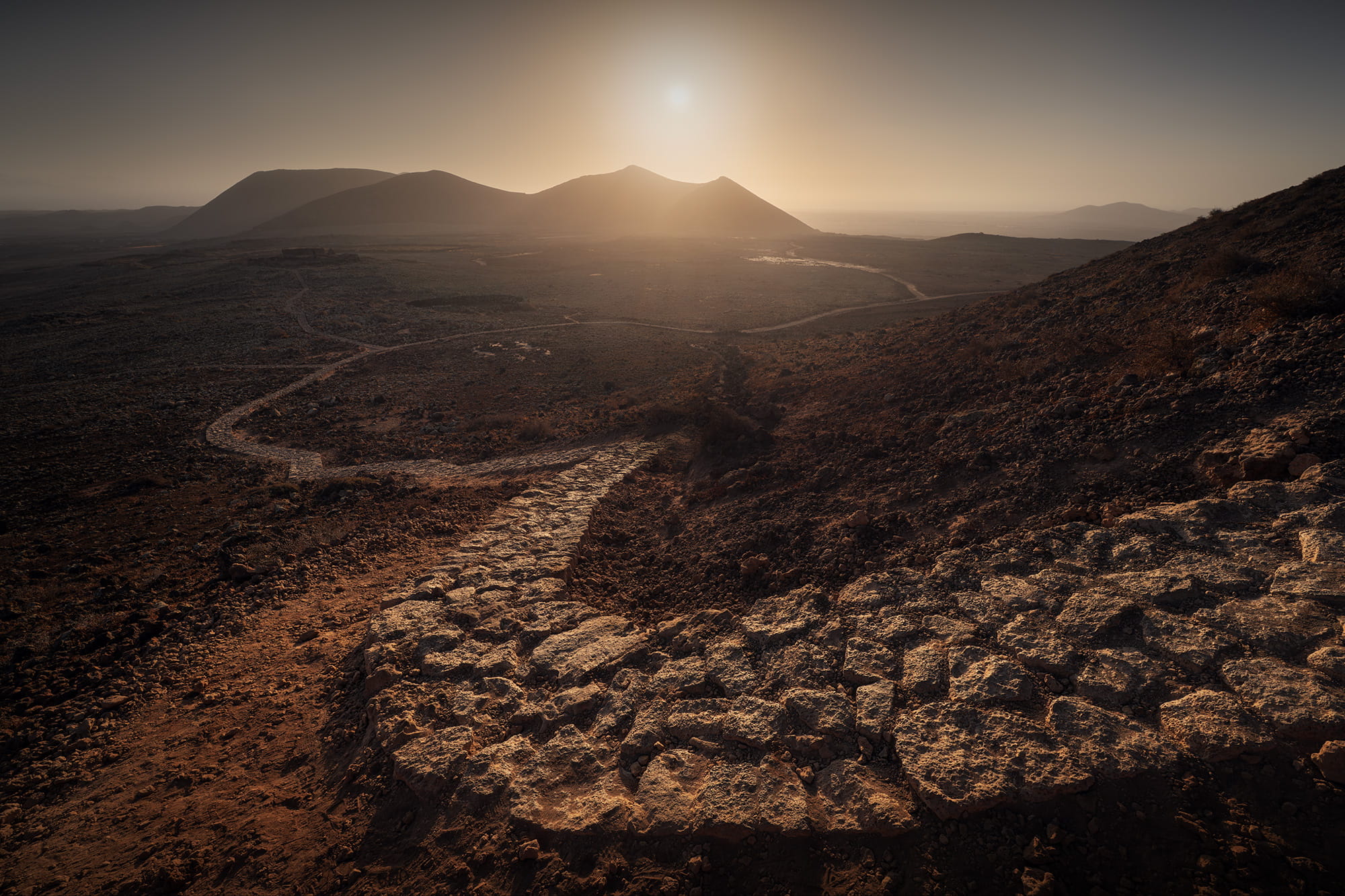
Shot with Nikon Z8 · Nikkor 14-24mm · 14mm
Calderón Hondo: following the path into the landscape
Located near Lajares in northern Fuerteventura, Calderón Hondo is one of the island’s best-preserved volcanic craters. A hiking trail leads to the edge of the crater, with beautiful views of the surrounding volcanoes.
The story behind this image
Calderón Hondo was one of the places I really wanted to visit at sunrise. My original plan was to take drone photos of the crater from above. But while walking up, I noticed the beautiful stone paths crossing the volcanic landscape.
After visiting the crater, I walked a little further down and found a spot where the path almost formed a heart shape. I loved how it led the eye towards the volcanoes in the distance, just as the sun was rising behind them.
I decided to use my 14–24mm lens to make the path stand out in the foreground. The stones look large close to the camera and become smaller in the distance, naturally guiding the eye towards the mountains.
Why a wide-angle lens worked so well here
✅ Made the stone path stand out
✅ Made the path look smaller in the distance
✅ Drew the eye towards the volcanoes
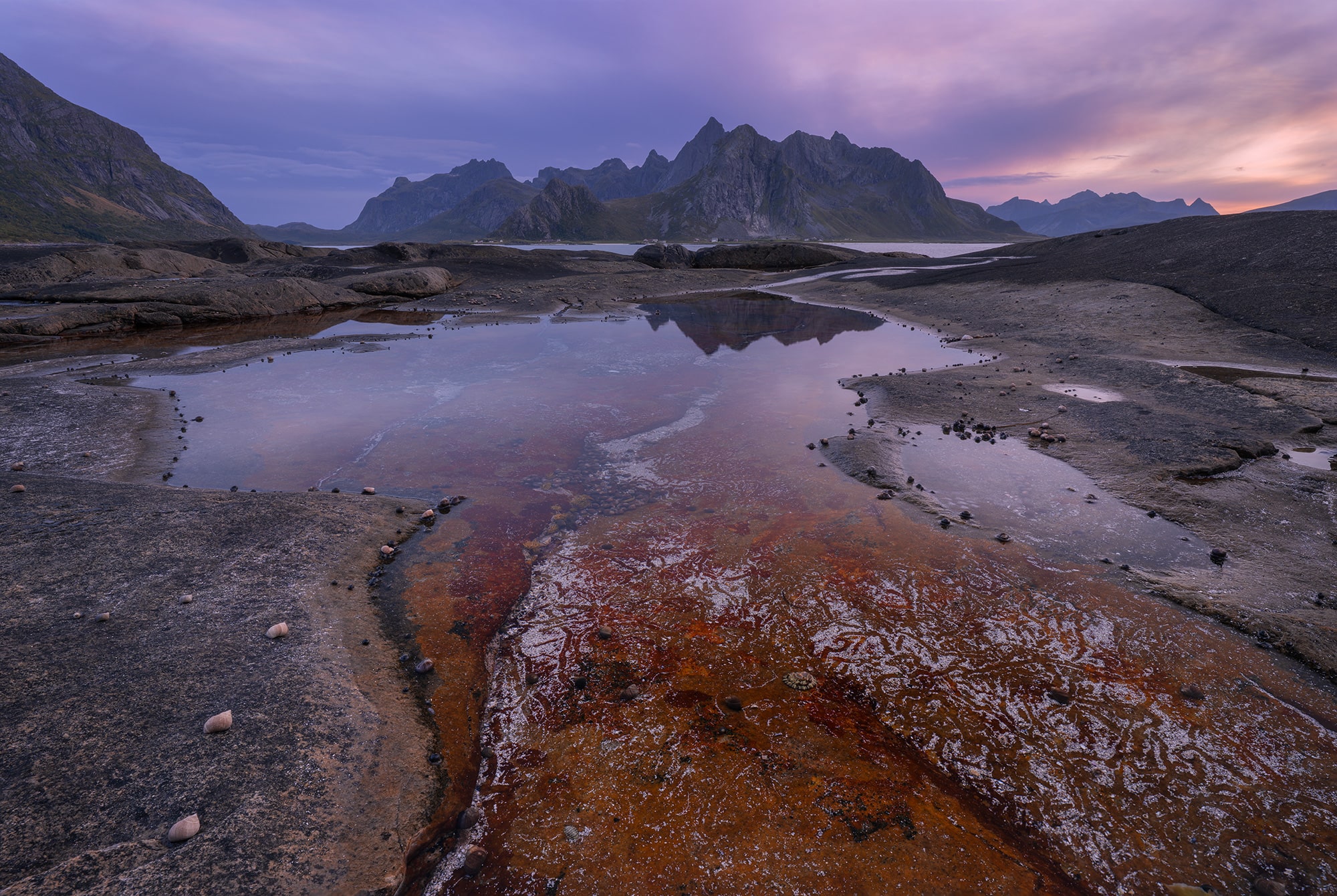
Shot with Nikon Z8 · Nikkor 14-24mm · 17.5mm
Lofoten Islands: finding beauty in the smallest details
The Lofoten Islands in northern Norway are famous for their mountains, wild beaches, and beautiful light. At low tide, the coastline reveals small pools, seaweed, and interesting details that are usually hidden underwater.
The story behind this image
During a trip to the Lofoten Islands in September, a friend who lives there invited me to photograph the sunset at one of her favorite spots. The tide was low, revealing small pools of water and lots of beautiful details along the shore.
I especially loved the red seaweed, which I don’t often see in my landscape photos. The tiny snail shells, sand, and stones also caught my attention. I wanted to include these small details while keeping the mountains in the background.
I placed my tripod very low to get close to the foreground. I also used focus stacking, taking several photos with different focus points, to keep everything sharp, from the tiny shells to the distant mountains.
Why a wide-angle lens worked so well here
✅ Made the tiny shells easy to notice
✅ Brought the viewer close to the tidal pools
✅ howed the contrast between small details and huge mountains
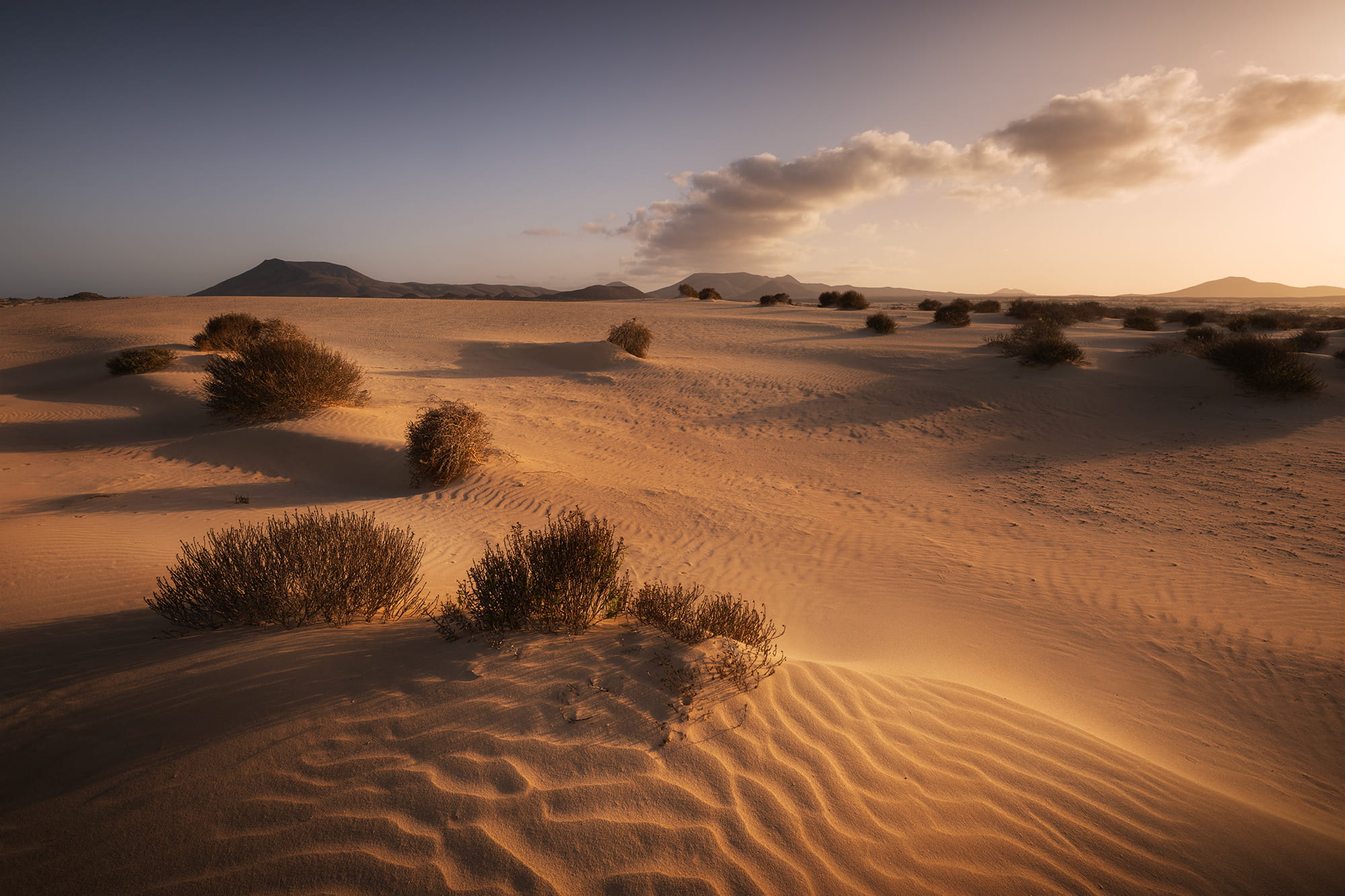
Shot with Nikon Z8 · Nikkor 14-24mm · 15mm
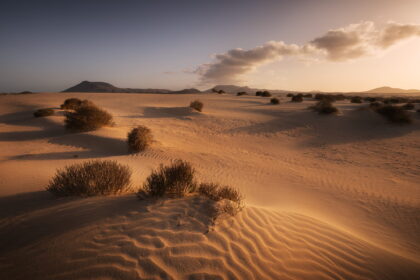
Corralejo Sand Dunes: getting close to the sand
Located in northern Fuerteventura, Corralejo Natural Park is known for its beautiful sand dunes, scattered bushes, and views of the volcanic mountains. It’s a wonderful place to photograph the shapes and textures created by the wind.
The story behind this image
Photographing real sand dunes had been on my wish list for a long time, so we visited Corralejo on our first evening in Fuerteventura. Before going, I had looked at the different parking areas and chosen a quieter spot in the south of the park. I wanted to see the mountains in the distance and avoid too many footprints in the sand.
Once there, I spent around 30 to 40 minutes looking for the right composition. I wanted to find beautiful patterns in the sand, with a few bushes to add some vegetation. Eventually, I found a place where the curves of the dunes and the bushes worked nicely together, guiding the eye through the landscape.
I waited for the golden hour to photograph the dunes in warm sunlight. The mix of light and shadow made the little ripples in the sand much more visible. By getting close with my wide-angle lens, I wanted the viewer to almost feel the sand beneath their feet.
Why a wide-angle lens worked so well here
✅ Showed the curves and patterns of the dunes
✅ Included the sand, bushes, clouds, and mountains
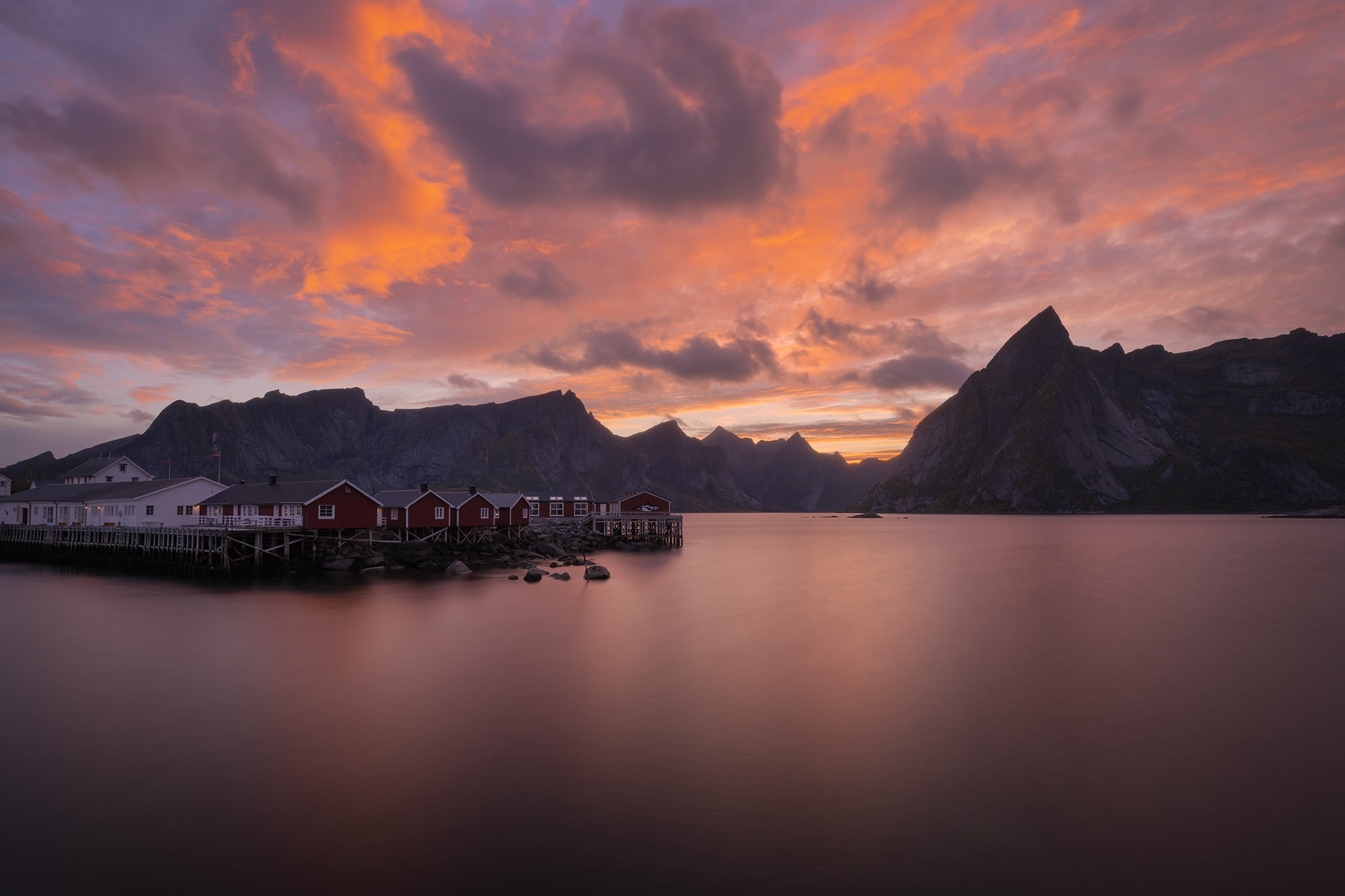
Shot with Nikon Z8 · Nikkor 14-24mm · 18mm
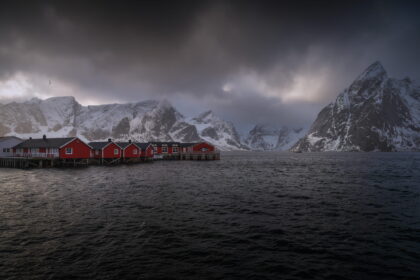
Hamnøy: giving the sunset sky more space
Hamnøy is one of the most famous fishing villages in the Lofoten Islands. Its traditional red cabins, surrounded by mountains and water, make it a beautiful place for landscape photography.
The story behind this image
During my trip to the Lofoten Islands, I visited Hamnøy with a friend who lives in the region. We wanted to photograph the sunset, and I had a fairly simple composition in mind: the red cabins, the mountains, and the beautiful sky.
I used a long exposure to make the water look smooth and peaceful. At the same time, I wanted to keep the clouds visible, especially because I loved the mix of bright orange and darker clouds.
With my 14–24mm lens, I could include the whole row of cabins, the mountains, and plenty of sky. I wanted the sunset colors to have enough space in the photo, while the calm water balanced the dramatic clouds.
Why a wide-angle lens worked so well here
✅ Included the whole row of red cabins
✅ Left plenty of room for the colorful sky
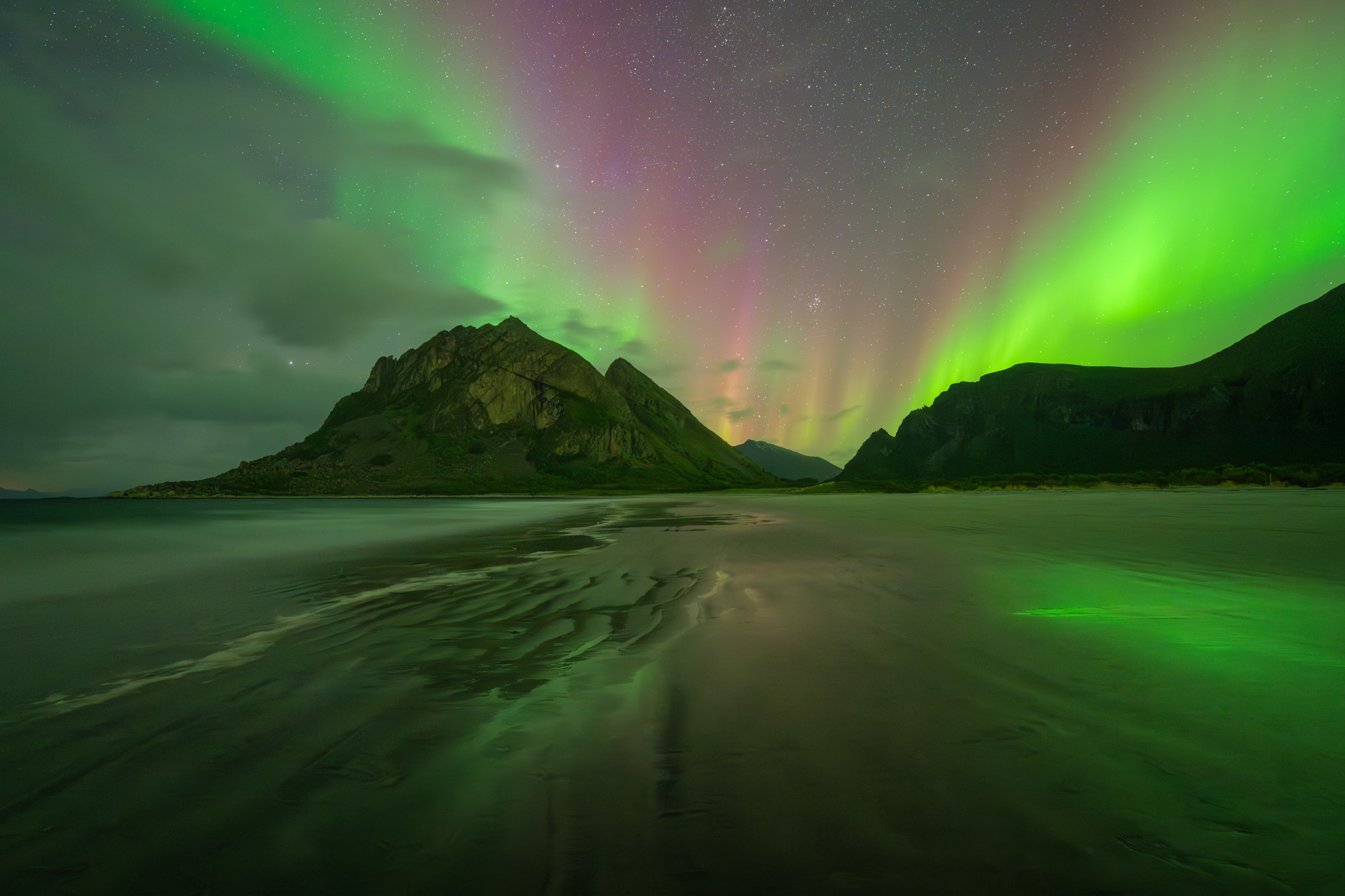
Shot with Nikon Z8 · Nikkor 14-24mm · 14mm
Steigen: beneath the northern lights
Steigen is a wild and beautiful region north of Bodø in Norway. With its mountains, beaches, and very little light pollution, it’s a wonderful place to watch and photograph the northern lights.
The story behind this image
During my trip to Steigen in 2025, I was really hoping to see the northern lights. Unfortunately, the sky was quite cloudy that evening. But suddenly, the clouds started to clear, and we could see the aurora from our cabin. I quickly decided to drive to a beach I had discovered earlier that day, about 15 minutes away.
When I arrived, the clouds were already coming back. I ran onto the beach, set up my tripod, and tried to find a good composition in the darkness. I wanted the mountains near the center, with the northern lights dancing above them and reflecting on the wet sand.
My wide-angle lens allowed me to capture both the sky and the beach in one photo. I only managed to take seven pictures before the clouds covered everything and it started raining. It was probably my shortest northern lights photography session ever, but I’m so happy I captured this moment!
Why a telephoto lens worked so well here
✅ Captured the aurora across the night sky
✅ Included its reflection on the wet sand
✅ Brought the sky and beach together around the mountains
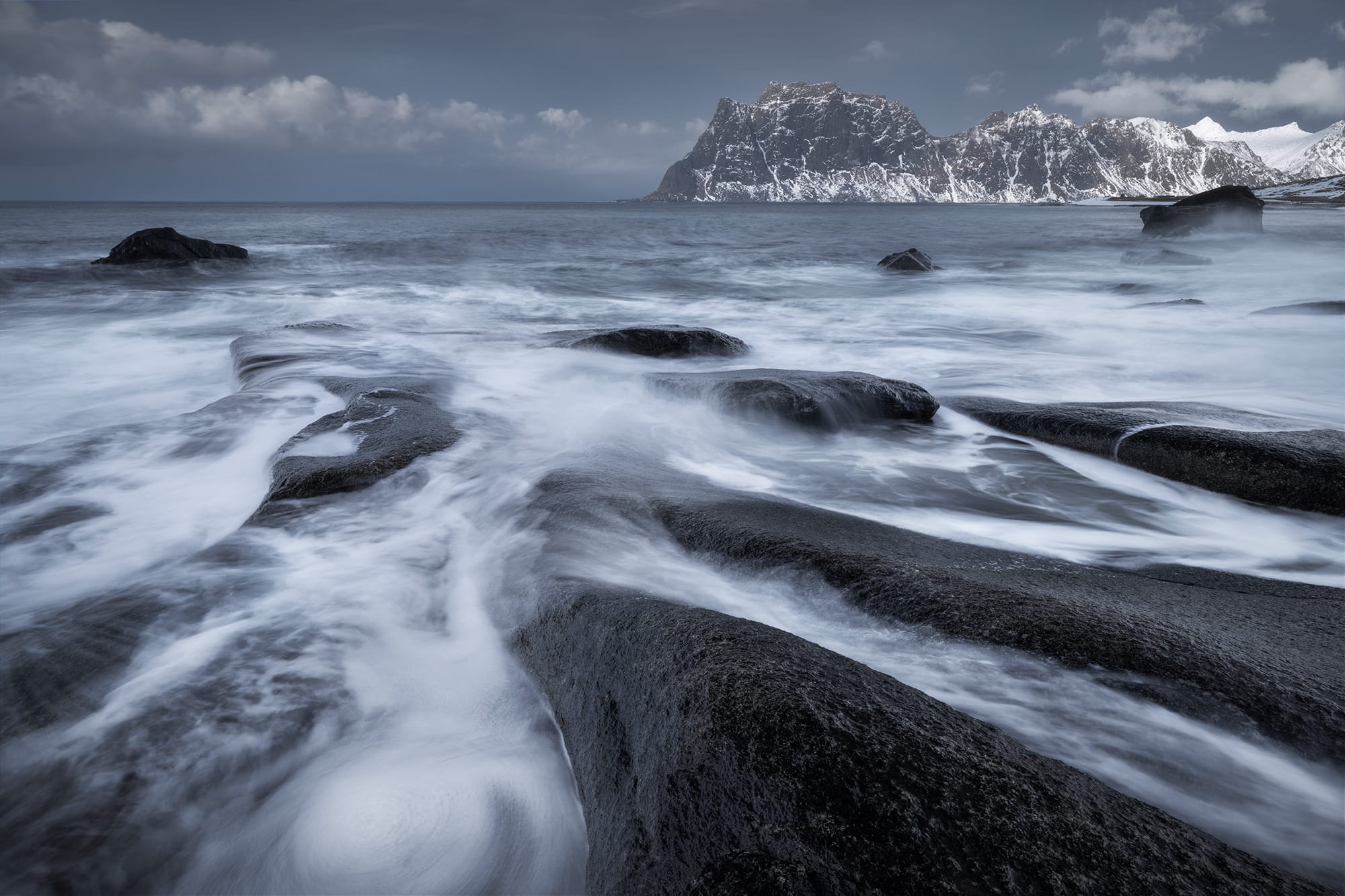
Shot with Nikon Z8 · Nikkor 14-24mm · 23mm
Uttakleiv Beach: feeling the power of the ocean
Uttakleiv Beach is one of the most beautiful beaches in the Lofoten Islands. It’s known for its black rocks, powerful waves, and mountains. In winter, the snow and changing weather make the landscape even more dramatic.
The story behind this image
During my winter trip to the Lofoten Islands, I visited Uttakleiv Beach on a cloudy day. I wanted to photograph the waves with a slightly longer exposure. At first, I hoped to photograph the famous Dragon Eye, but the tide was too high and the sea too rough.
Instead, I noticed how the water was moving around the black rocks. I decided to use them to guide the eye towards the mountains. I also loved the contrast between the dark rocks and the white foam. With a slightly slower shutter speed, I could show the movement of the water without making it completely smooth.
I placed my camera close to the rocks to make the viewer feel near the ocean. I wanted people to imagine the sound of the waves, the cold wind, and the wild atmosphere of a winter day in the Lofoten Islands.
Why a wide-angle lens worked so well here
✅ Made the waves feel close and powerful
✅ Used the black rocks to lead the eye towards the sea
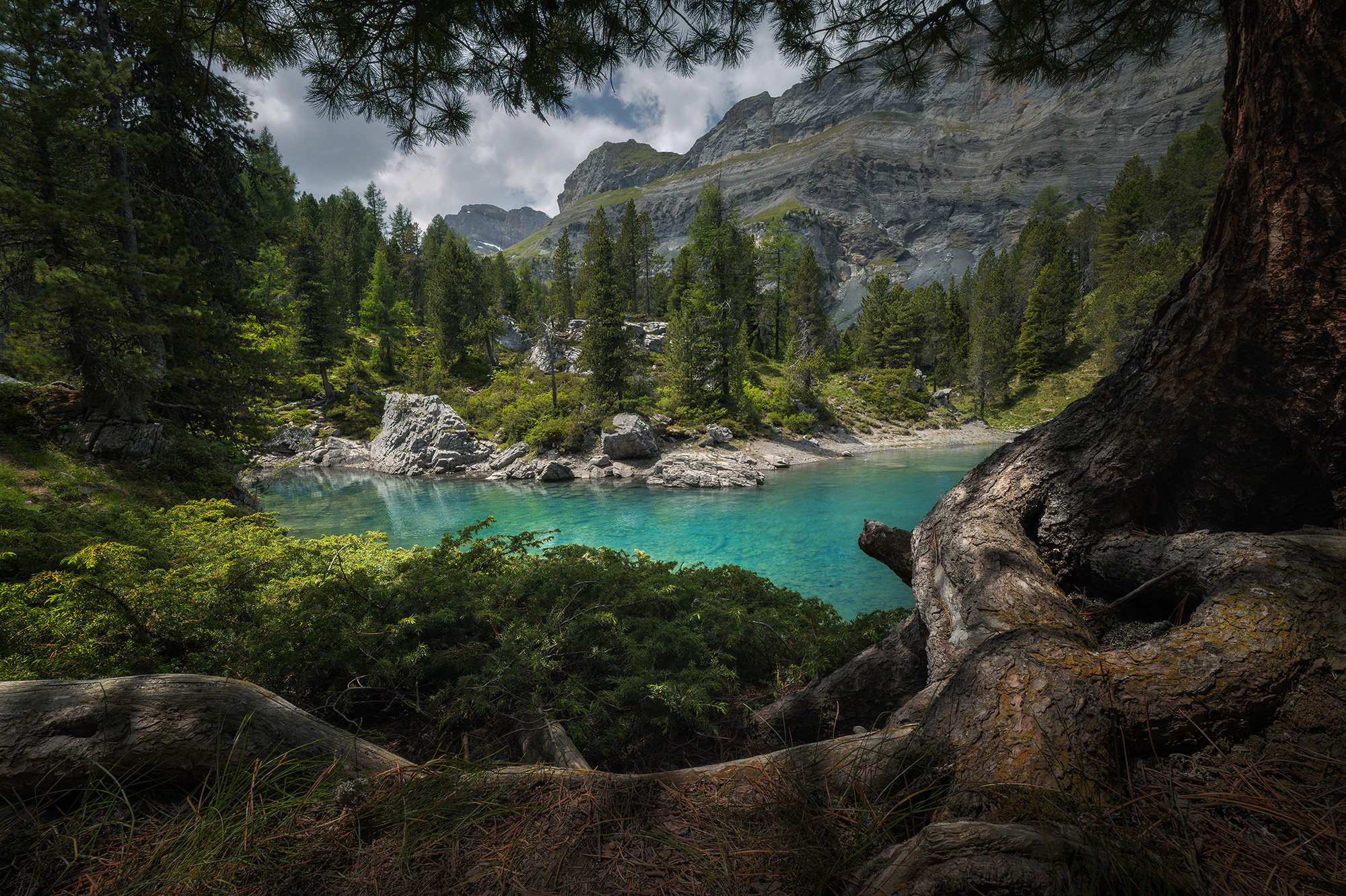
Shot with Nikon Z8 · Nikkor 14-24mm · 14mm
Swiss Alps: framing a hidden turquoise lake
Located in the canton of Bern, Switzerland, this small alpine lake is only visible from late spring to early summer. It slowly dries up during the warmer months because no permanent stream feeds it. To reach the lake, you need to take a cable car and then walk for around 30 to 45 minutes.
The story behind this image
When I arrived, I knew I wanted an interesting foreground, but nothing immediately caught my attention. The weather was also different from what I expected. Instead of clouds, we had sunshine. So I walked around the lake twice, looking for a composition I liked.
Eventually, I noticed a beautiful pine tree with large roots. I loved their shapes and realized they could create a natural frame around the lake. Together with the bushes and branches, they helped draw attention towards the turquoise water.
I used my wide-angle lens to get close to the roots while still showing the lake, forest, and mountains. I wanted the viewer to feel like they were discovering a hidden little lake through the trees.
Why a wide-angle lens worked so well here
✅ Used the tree roots as a natural frame
✅ Created the feeling of looking through the forest

Shot with Nikon Z8 · Nikkor 14-24mm · 17mm
Dragon Eye: playing with perspective
The Dragon Eye is a famous rock formation at Uttakleiv Beach in the Lofoten Islands. Its unusual circular shape looks like an eye, making it one of the best-known photography spots in the region.
The story behind this image
On our first evening in the Lofoten Islands in September, we visited Uttakleiv Beach to photograph the Dragon Eye at sunset. I couldn’t believe how beautiful the light was, and we even saw the moon rising! It’s a classic photography spot, and I certainly didn’t invent a new composition, but this is still one of my favorite photos.
I placed my tripod very low, close to the Dragon Eye. Because the rock formation is quite large and deep, I used my wide-angle lens to fit the whole scene into the frame, including the ocean and mountains. I also used a polarizing filter to reduce reflections on the water and wet rocks.
What I love most is how the shapes of the rocks guide the eye towards the mountains. The last orange rays of sunlight made these lines even more beautiful, lighting up parts of the rocks while leaving others in shadow.
Why a wide-angle lens worked so well here
✅ Created a strong sense of perspective
✅ Kept the whole Dragon Eye and the mountains in the frame
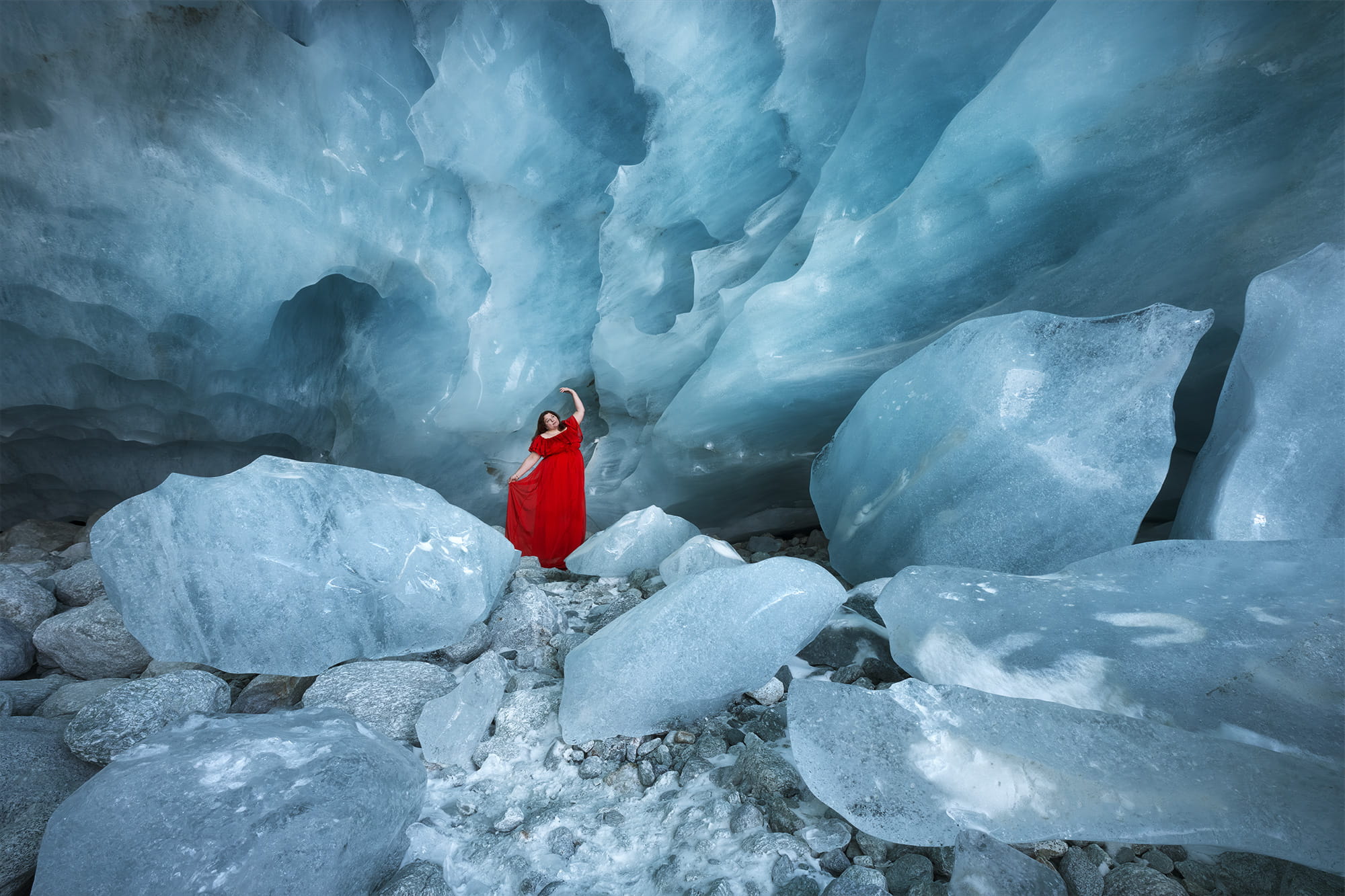
Shot with Nikon Z8 · Nikkor 14-24mm · 14mm
Zinal Ice Cave: feeling small inside a world of ice
Located in the Swiss Alps, the Zinal Glacier is known for its beautiful blue ice and changing ice caves. Every winter, the cave can look different as the glacier continues to change. Reaching the area involves a winter hike of around 6 km each way, with about 450 meters of elevation gain.
The story behind this image
I’ve been visiting the Zinal ice cave every winter for the past five years. What I love is that it looks different each time. I had wanted to take a self-portrait inside the cave for a long time, and this year I finally had the chance. When we arrived after our snowshoe hike, we were completely alone. I quickly changed into my red dress while I was still warm from walking!
For this photo, I wanted to show as much of the cave as possible while making myself look small next to the huge blocks of ice. My red dress also created a beautiful contrast with the blue surroundings.
I loved how the shapes of the ice ceiling seemed to point towards me. The fallen ice blocks also helped draw attention to my silhouette. I wanted people to understand how huge this place is and almost feel like they were standing inside the cave with me.
Why a wide-angle lens worked so well here
✅ Showed how huge the ice cave really is
✅ Made my red silhouette a clear point of interest
✅ ncluded the ice ceiling and the fallen blocks around me
Shot with Nikon Z8 · Nikkor 14-24mm · 19mm
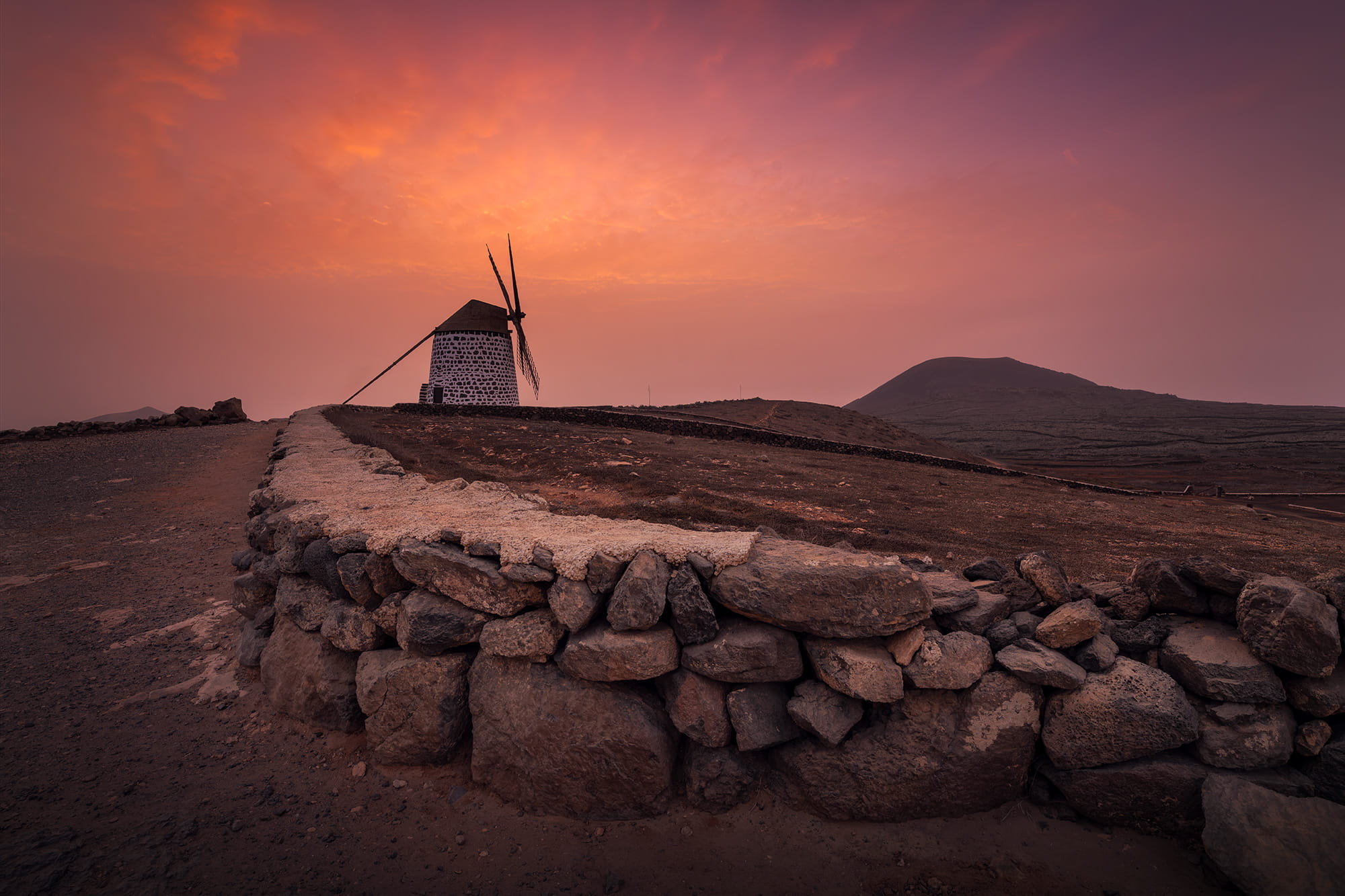
Molino de Villaverde: letting a stone wall guide the eye
Traditional windmills are an important part of Fuerteventura’s history. They were once used to grind grain and can still be found in different parts of the island. In Villaverde, two old windmills stand on a hill surrounded by volcanic landscapes.
The story behind this image
During my trip to Fuerteventura, I really wanted to photograph one of the island’s traditional windmills. I chose Molino de Villaverde because I liked its location and the surrounding landscape.
What caught my attention was the stone wall leading towards the windmill. I decided to use it as the main line in my composition. With my wide-angle lens, I could make its curve stand out while keeping the windmill and the surrounding landscape in the photo.
My original plan was to photograph the Milky Way, but the calima brought Saharan dust into the sky, making astrophotography impossible. Luckily, the sunset surprised us with beautiful pink and orange colors. It wasn’t what I had planned, but I loved the result!
Why a wide-angle lens worked so well here
✅ Made the curve of the wall more visible
✅ Led the eye from the stones to the windmill
Shot with Nikon Z8 · Nikkor 14-24mm · 14mm
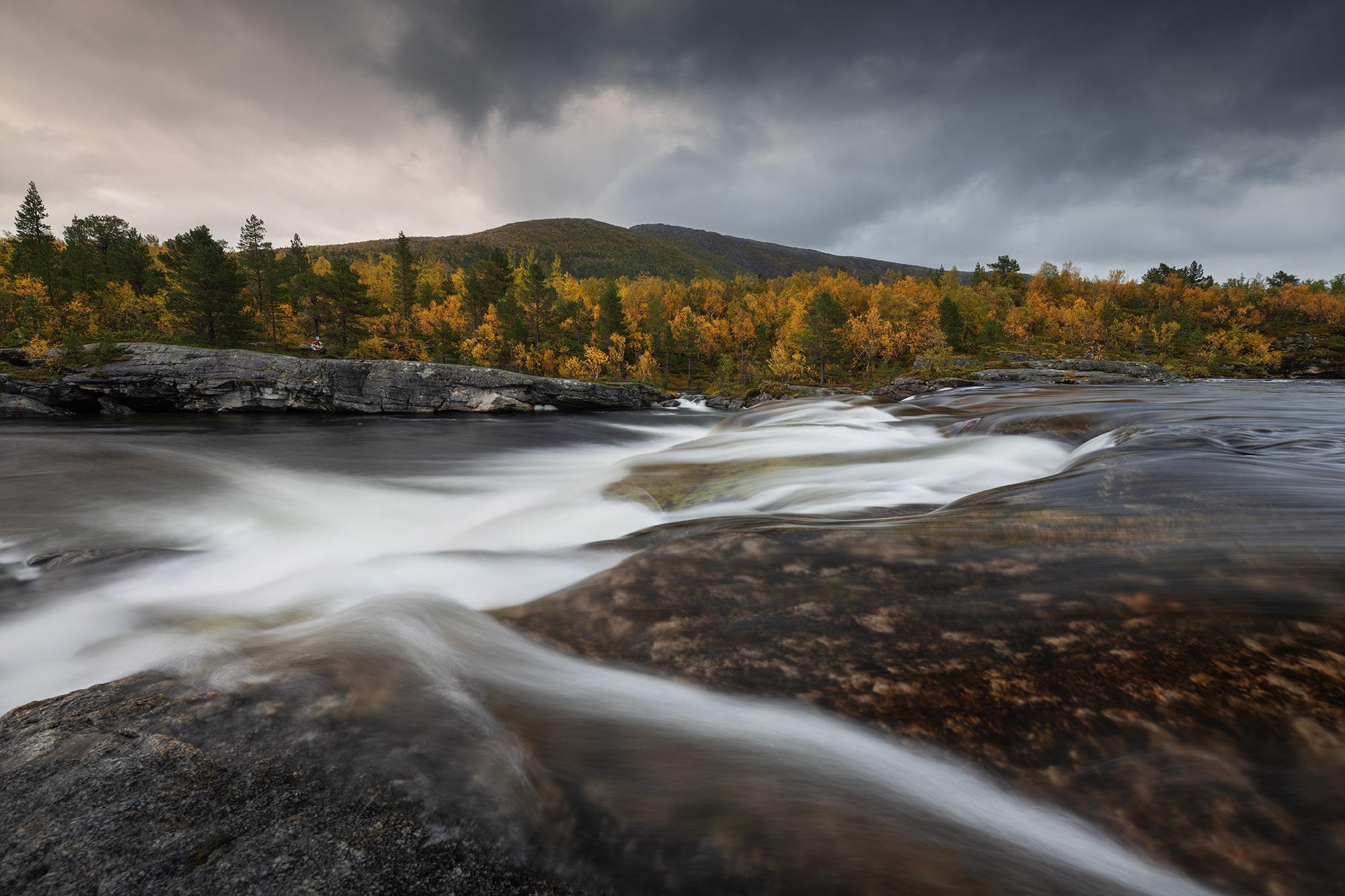
Valnesfossen: following the flow of the river
Located near Bodø in northern Norway, Valnesfossen is a beautiful place to photograph flowing water. In autumn, the yellow and orange trees create a lovely contrast with the dark rocks and the river. It’s also relatively easy to access.
The story behind this image
During our trip to the Lofoten Islands, Bodø was both our starting point and our final destination. On our way back, I had planned a few photography stops nearby. Since I love photographing rivers and waterfalls, I decided to visit Valnesfossen, especially with the beautiful autumn colors.
I wanted to use the movement of the water to build my composition. I placed my camera close to the rocks and used a long exposure to make the water look soft and flowing. I especially liked how the different streams came together near the center before flowing towards the left side of the photo.
I also wanted to include the colorful forest and dark clouds. They add a dramatic feeling to the scene, while the bright autumn leaves bring some warmth. I love how the smooth water, dark rocks, and golden trees work together in this image.
Why a wide-angle lens worked so well here
✅ Made the flowing water the main subject
✅ Showed the different streams coming together
✅ Kept the autumn forest and stormy sky in the background
Final thoughts
Wide-angle lenses are some of my favorite tools for landscape photography. Over the years, my 14–24mm lens has helped me capture beautiful landscapes while paying more attention to the small details around me.
Whether it’s getting close to interesting foregrounds, playing with leading lines, showing the scale of a landscape, or capturing a beautiful sky, a wide-angle lens offers so many creative possibilities.
If you already own a wide-angle lens, I would encourage you to experiment with different compositions. Get closer to the ground, look for interesting shapes and textures, and try different angles. Sometimes, moving your camera just a few centimeters can completely change your photo.
And most of all, enjoy the moment. Happy shooting.
Published on October 21, 2026 by Jennifer Esseiva