Scotland is a dream for landscape photographers : ever-changing skies, dramatic coastlines, and wild islands full of surprises. Among these hidden gems lies Fingal’s Cave, an extraordinary sea cave carved into the basalt cliffs of Staffa Island, just off the coast of the Isle of Mull. Known for its towering hexagonal columns, vaulted ceiling, and unique acoustics, Fingal’s Cave is both a geological wonder and a breathtaking photo location. And if you visit in spring or summer, you might even catch a glimpse of puffins!
In this guide, I’ll share how to get there, what to expect, and why this magical cave deserves a place on your photography bucket list.

Staffa Island, the majestic Fingal’s Cave, and puffins
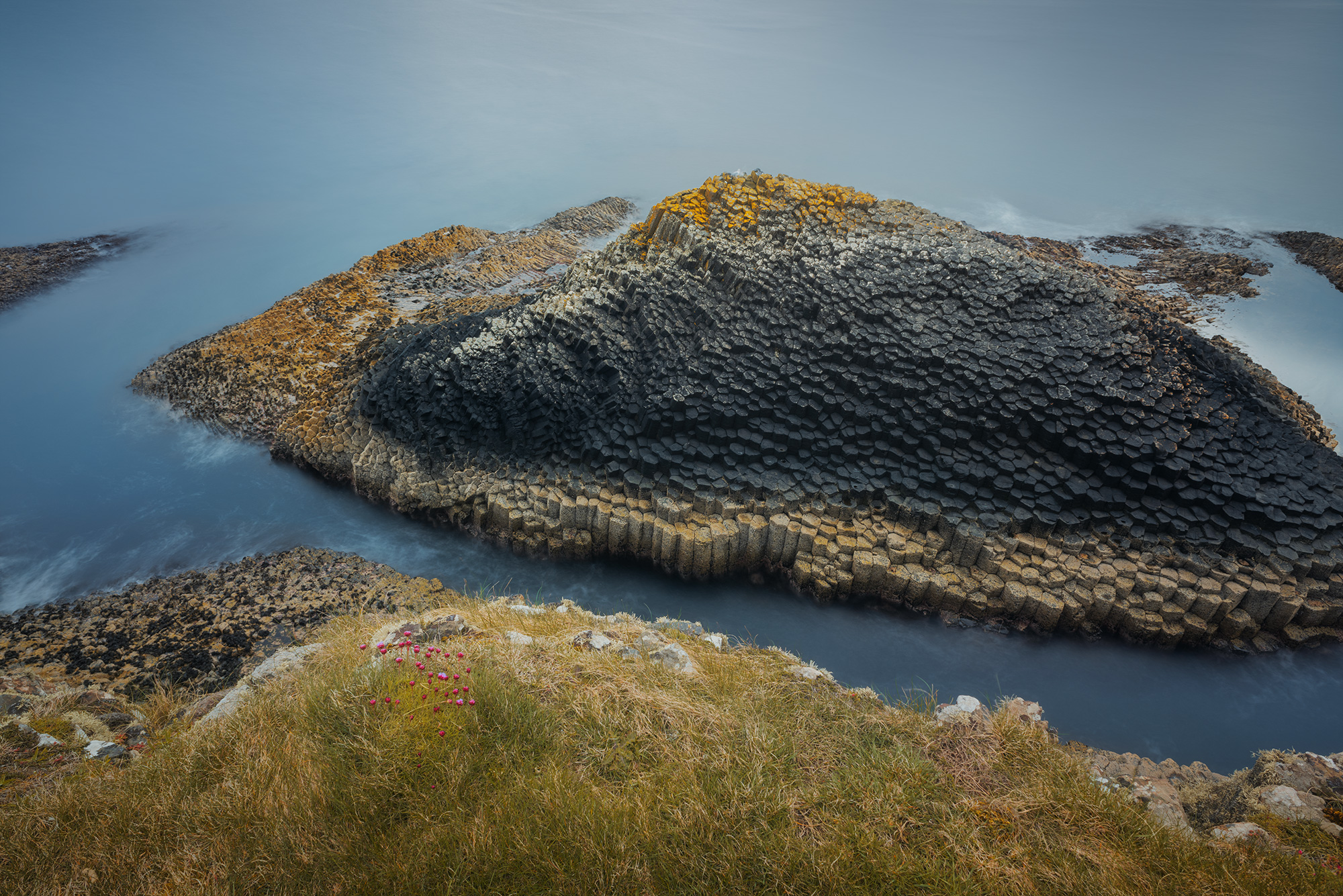
Located in the Inner Hebrides of Scotland, Staffa Island is a small volcanic island famous for its dramatic basalt columns, similar to those at the Giant’s Causeway in Northern Ireland. Its most iconic feature is Fingal’s Cave, a spectacular sea cave carved into the cliffside, known for its natural acoustics and cathedral-like structure.
In spring and summer, the island becomes even more magical as puffins nest in the grassy areas to the north, opposite Fingal’s Cave. When I visited in 2017, the puffins were already there, but since most tours only allow one hour on the island, I had to choose between exploring the cave or hiking to their nesting area.
➜ Staffa Island
➜ Fingal’s Cave
How to get to Fingal’s Cave
Staffa Island can only be reached by boat from the Isles of Mull and Iona, with departures usually leaving from Fionnphort or Oban. Since tours depend heavily on the weather, crossings may be canceled if the sea is rough. If visiting Fingal’s Cave is a priority for your photography trip, I recommend staying at least two nights on the Isle of Mull to increase your chances.
When I visited, the weather was on my side, and I had booked the earliest boat to avoid the crowds. The visit is limited to just one hour, and Fingal’s Cave is located at the southern tip of the island, so it takes a few minutes to walk there. That gives you roughly 20 to 40 minutes to photograph the site, depending on how quickly you move. I headed straight to the cave as soon as we docked to be among the first to arrive. The entrance area is narrow and cannot accommodate 25 photographers at once.
I believe the tide was low that morning, as the water level inside the cave was lower than expected. If you have a specific vision for your photo, with more or less water, check the tide schedule before booking your tour.
Photography gear: what to bring
To capture the dramatic beauty of Fingal’s Cave, here’s the photo equipment I recommend bringing with you:
✅ Camera and wide-angle lens : The cave is vast and impressive, and a wide-angle lens helps to frame the full height and depth of the basalt columns.
✅ Tripod : Ideal for long exposures. The front of the cave is well-lit, but the inside gets darker, so a tripod gives you more control.
✅ ND filters : Great if you want to experiment with very long exposures and smooth out the water.
✅ Polarizing filter : The rocks around the cave are often wet and shiny. A polarizer helps reduce glare and brings out the details in the stone.
✅ Good footwear : The terrain on Staffa is uneven and can be slippery, especially around the cave. Waterproof hiking boots are highly recommended for safety and comfort.
Final thoughts
Fingal’s Cave on Staffa Island is a truly unique location for landscape photographers. Between the wild setting, the rhythmic sound of waves echoing in the cave, and the dramatic basalt formations, it’s an unforgettable place to explore with your camera. If you’re visiting the Isle of Mull, I highly recommend planning a trip to Staffa, but be sure to book in advance and keep an eye on the weather.
And most of all, enjoy the moment. Happy shooting!
Published on February 10, 2025 by Jennifer Esseiva