Blue hour photography is often overlooked but it’s one of the most magical moments of the day for capturing landscapes. Before sunrise or after sunset, when the light turns cool and soft, a different kind of beauty emerges.
We often hear about the golden hour in photography that glowing moment when the light turns warm and vibrant. For a long time, I chased sunsets, looking for drama and contrast. But lately, I’ve been drawn to something quieter. The blue hour.
What is the blue hour?
The blue hour is the short period of time just before sunrise and just after sunset, when the sun is below the horizon but its light still softly illuminates the sky. The result is a gentle, cool-toned atmosphere with deep blues, soft shadows, and subtle contrasts, perfect for creating calm, poetic and graphical images. Depending on the season and location, it usually lasts between 20 and 40 minutes.
1️⃣ For minimalist and graphical compositions
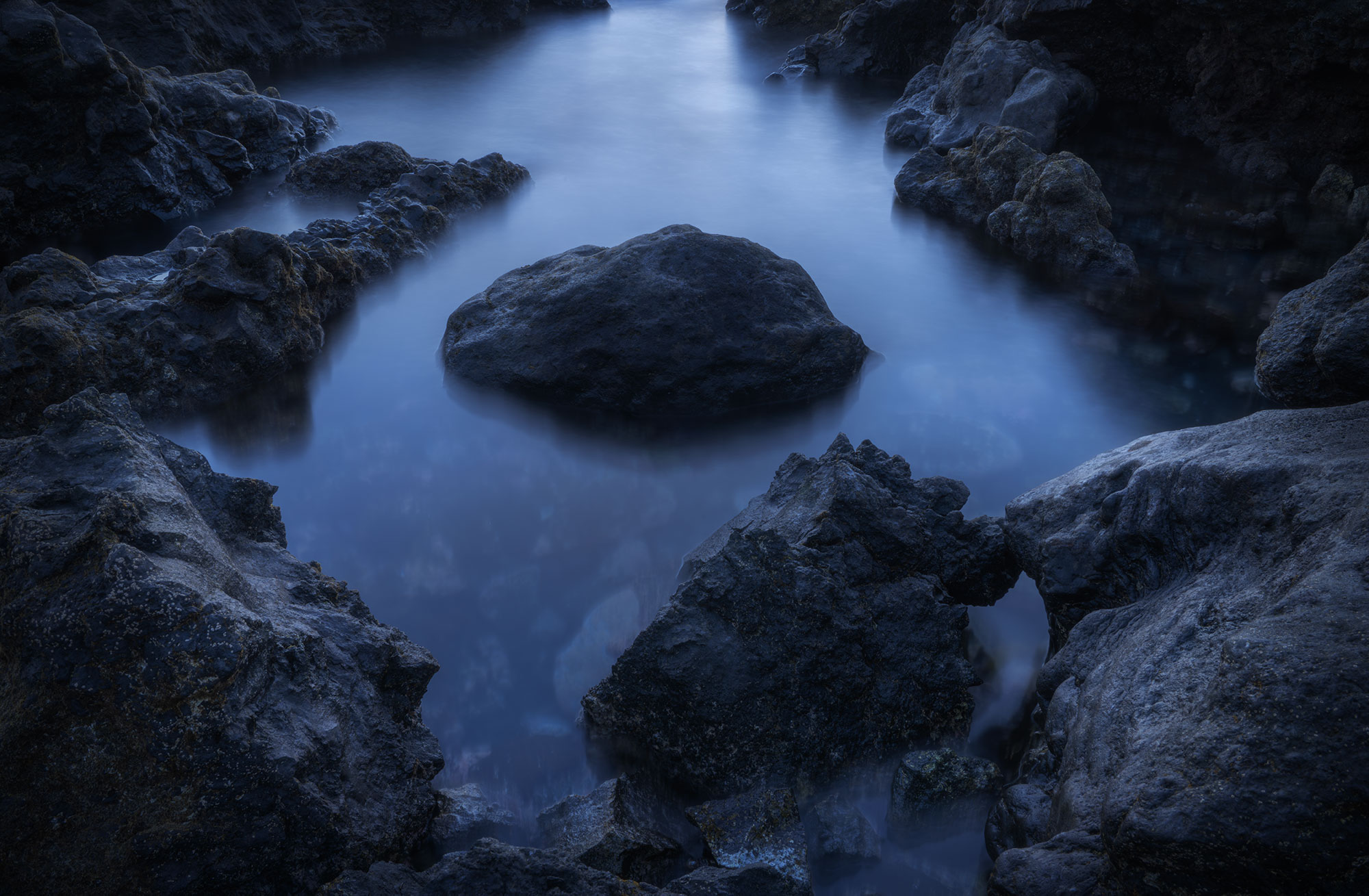
📍Playa de Montaña Bermeja, Lanzarote
During the day, the volcanic coastline of Lanzarote can feel harsh and dramatic. But during the blue hour, something shifts. The contrast between the black rocks and the soft, bluish ocean becomes more subtle. It’s the perfect time to create minimalist and graphical compositions.
This image of a volcanic rock in the sea, taken at playa de montaña bermeja just after sunset, uses a long exposure to soften the movement of the water. The result is a quiet scene, where the texture of the rock brings depth and balance.
2️⃣ For creating images that feel like paintings
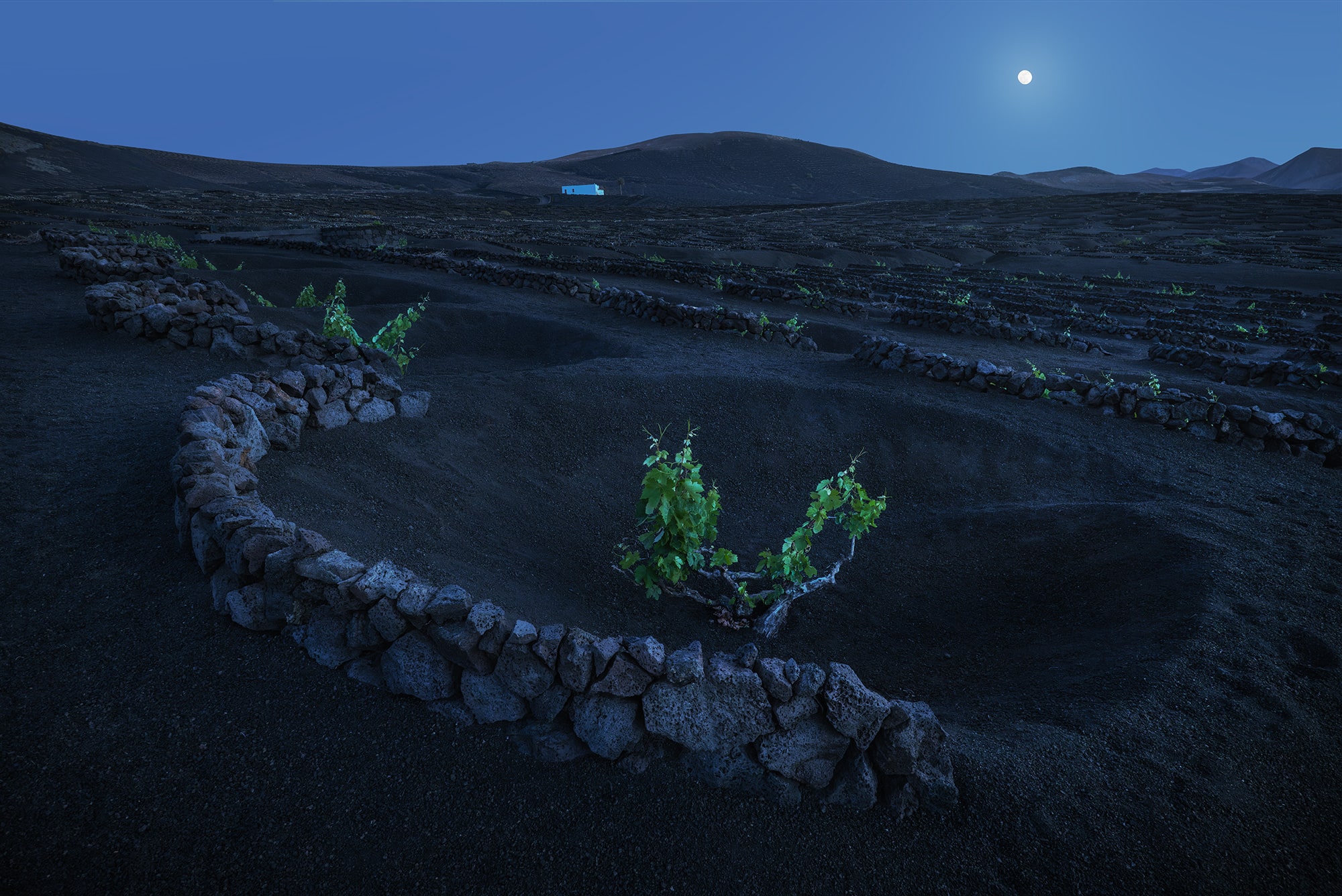
📍La Geria Vineyards under the moonlight, Lanzarote
La Geria is one of the most iconic landscapes in Lanzarote. During the day, the low sun lights up the volcanic sand and brings out warm tones. But this time, I wanted to try something different, a quieter mood, with a more graphic approach. I had a specific composition in mind: a structured stone wall in the foreground, and the volcanoes rising in the distance.
During the blue hour, the landscape transforms completely. Everything becomes softer, more muted, almost surreal. I loved how the wall stood out, how the green leaves were still vibrant, and how the entire scene felt like it was painted in shades of blue. The textures remain, but the image shifts into something nearly monochrom, delicate and calm.

3️⃣ For soft color palettes and new perspective
📍Sornfelli, Faroe Islands
When people think of the Faroe Islands, they imagine dramatic cliffs, moody skies, and heavy clouds. And honestly, that’s exactly what drew me there. But what if you try something softer?
This image was taken at the Sornfelli viewpoint during the blue hour. The fog was gently moving, and a long exposure helped simplify the scene into soft shapes and muted tones. The mood became more intimate, more delicate. The blue hour offered a different perspective, one that’s less dramatic, but just as beautiful.
Another nice thing about blue hour is that it happens before sunrise or after sunset. In spring and autumn, it’s easy to catch, whether the sky is cloudy or clear. Unless it’s raining sideways, it’s usually worth giving it a try. Honestly, I always struggle to enjoy a proper dinner and catch the sunset. Blue hour gives me that extra window and a second chance to shoot without skipping dessert.
4️⃣ For maximizing a location in one session
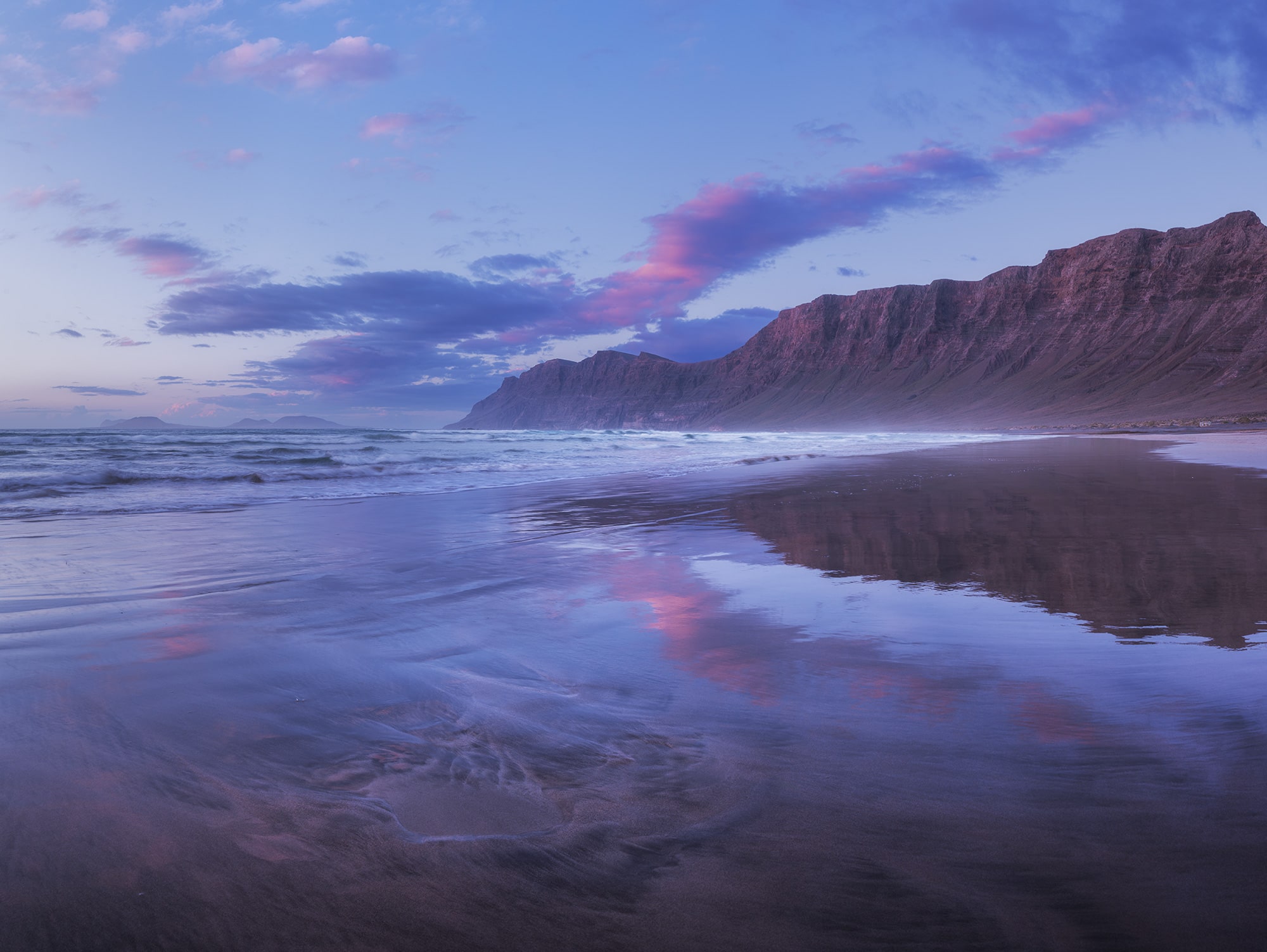
📍Famara Beach, Lanzarote
Golden hour may be over… but your photo session doesn’t have to end. One of my favorite tricks while traveling is to stay a bit longer and wait for the blue hour. The same place can transform completely in less than an hour.
At Famara Beach, after the sun dipped below the horizon, the sky turned pinkish-lavender. The atmosphere shifted, the light softened, and the reflections on the wet sand became even more magical. Same beach, new mood, all in one evening.
When you’re short on time or unable to return to a specific spot, combining golden hour and blue hour in one session is a great way to get two strong shots without moving. I always recommend arriving early enough to plan both compositions. They can be the same… or completely different. Either way, you make the most of a single location.
5️⃣ For capturing everyday moments with a touch of magic
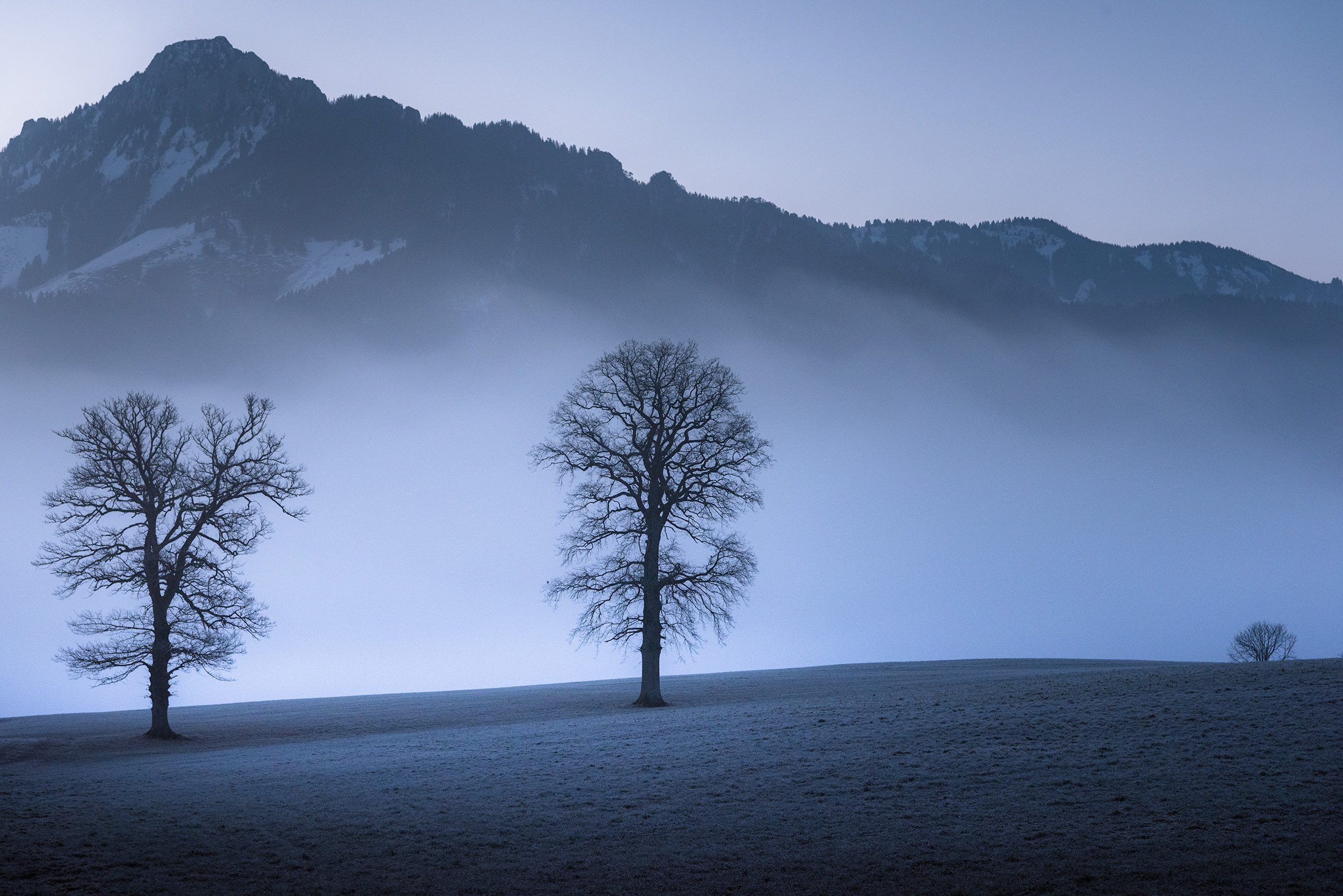
📍Gruyère, Switzerland
You don’t have to travel far to enjoy the blue hour! Sometimes, it’s waiting for you on your morning commute.
This image of two lonely trees was taken in winter, in the Gruyère region of Switzerland. I was driving to work when I saw the scene. I took the next roundabout and turned back. A light frost covered the ground, and a soft mist was rising. It felt so quiet, so magical, I had to stop.
Since then, I’ve started looking for a few photo spots along my way to work or home. If the conditions look promising, I give it a try. Sometimes I wake up a little earlier, or I take the long way back after work.
What do you need to photograph the blue hour
✅ Use a tripod : longer shutter speeds will bring softness and detail. Since the light is low, a tripod is almost mandatory.
✅ Keep ISO as low as possible to reduce noise.
✅ Use f/5.6 to f/11 for sharper landscapes.
✅ Adjust your white balance manually to keep the cool tones.
✅ Use apps like PhotoPills to track the exact timing of the blue hour.
✅ Don’t rush : let the light fade slowly, and enjoy the stillness.
✅ Take a jacket or pullover : the air can get chilly, depending on where you are.
When less light means more magic
The blue hour is easy to overlook. It’s not golden. It’s not dramatic. It’s subtle, slow, and quiet.
But maybe that’s exactly why it’s so beautiful.
Next time you go out to photograph, try staying just a little longer… or waking up just a little earlier. You might discover a new kind of light and a new way of seeing landscapes around you.
And most of all, enjoy the moment. Happy shooting.
Published on July 10, 2025 by Jennifer Esseiva