Seeing the northern lights was always a dream for me, and probably for you too. I had the chance to photograph them in Sweden, Finland (Lapland), Norway and the Faroe Islands. But Switzerland, my home country, never really felt like a place where this could happen. Well, it usually isn’t. But in recent years, solar activity has been strong enough to trigger major geomagnetic storms. And with them came rare aurora displays that lit up the Swiss sky.
In this article, I’ll share my experience of chasing and photographing northern lights in Switzerland. You’ll learn how I predicted the events, how I planned my photo sessions, and how you can prepare for the next big solar storm. Because who knows, the next aurora show might be just around the corner.
This guide is based on my personal experience as a landscape photographer. I’m still learning too, but I hope it inspires you to stay curious, look up, and be ready.
If you’re new to aurora photography, don’t miss my complete guide with essential tips for northern lights photography. It covers gear, settings, and planning to help you capture the auroras with confidence.
Are Northern Lights Really Visible in Switzerland?
Yes. Northern lights can occasionally be seen in Switzerland during periods of intense solar activity.
Although Switzerland lies far from the Arctic Circle, strong geomagnetic storms can push the auroral oval far enough south to make auroras visible across parts of the country. This remains a rare event, but several major displays were observed in Switzerland in 2024 and 2026.
To see northern lights in Switzerland, you typically need:
✅ A strong geomagnetic storm
✅ Clear skies
✅ Low light pollution
✅ An unobstructed view towards the north
Because these events are unpredictable and infrequent, preparation is essential. The good news is that with the right forecasts and a bit of luck, witnessing an aurora in Switzerland is absolutely possible.
Best Places to See Northern Lights in Switzerland
When strong geomagnetic storms reach Switzerland, the best locations are generally elevated areas with a clear northern horizon and minimal light pollution.
Some good regions include:
✅ Jura Mountains (Marchairuz, Chasseron, Vue des Alpes)
✅ Pre-Alps above the fog layer
✅ Alpine passes with northern exposure
✅ Lakes with open views towards the north, such as Lac de Bret
✅ Dark-sky locations away from major cities
The exact location matters less than the weather. During rare aurora events, finding clear skies is often more important than driving hundreds of kilometres.
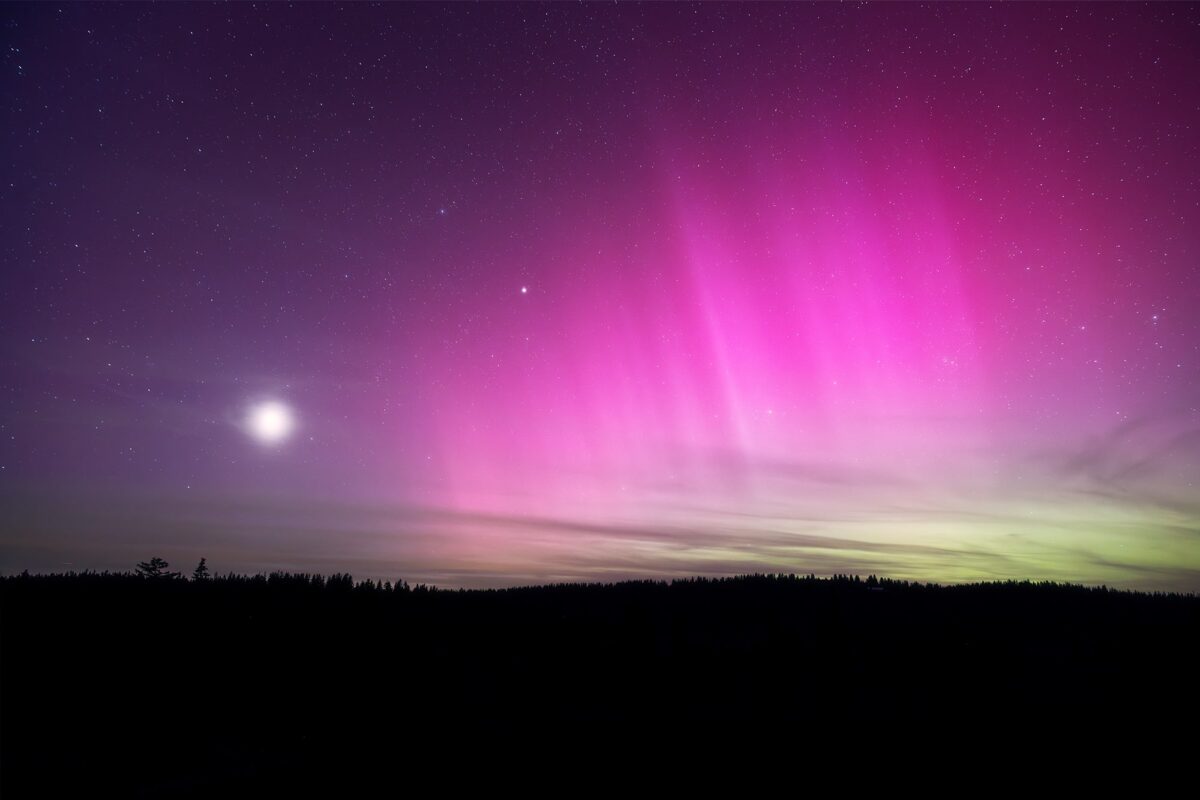
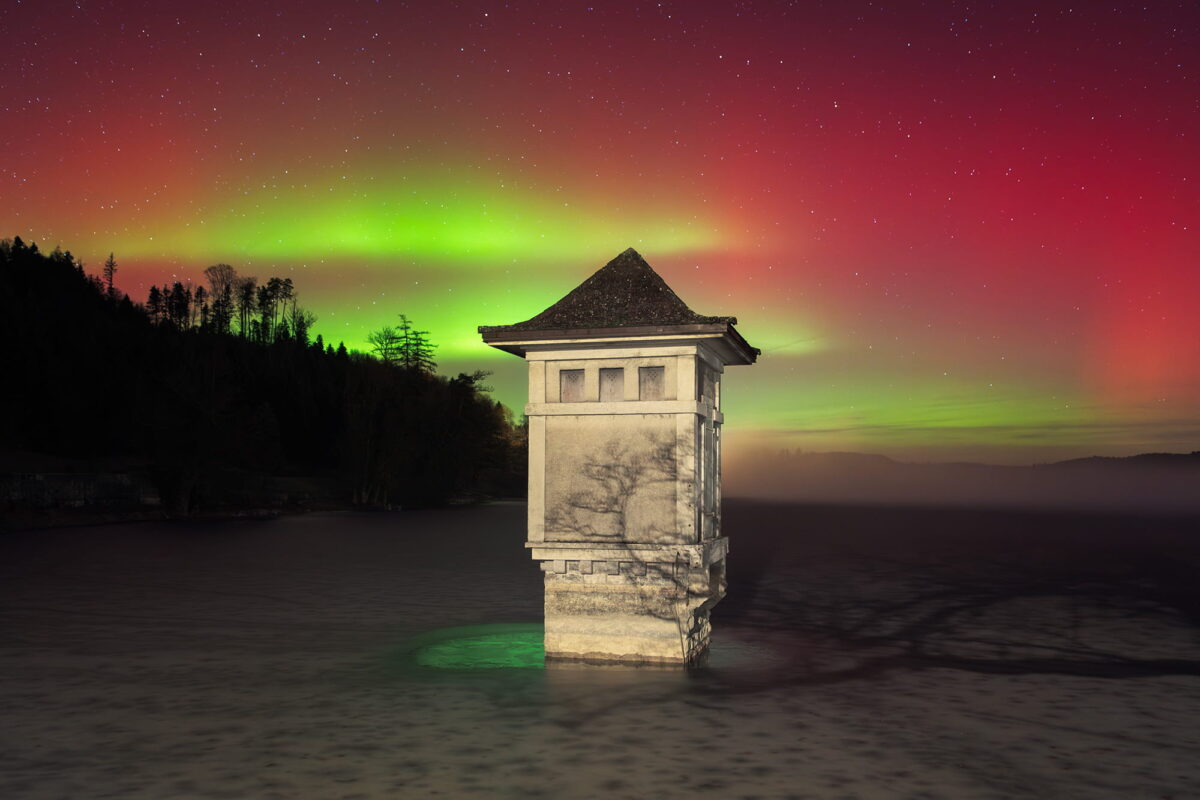
These photographs were captured during an exceptionally active period of the current solar cycle. Between 2024 and 2026, several major geomagnetic storms made northern lights visible much farther south than usual, including in Switzerland.
Under normal conditions, auroras are extremely rare here. Most years, they are either invisible or only visible very low on the northern horizon. The displays photographed in 2024, 2025, and 2026 were made possible by unusually strong solar activity, which is why these years have been so remarkable for aurora enthusiasts across Europe.
How to find a good spot to see northern lights in Switzerland
One of the biggest challenges with aurora photography in Switzerland is knowing when to go outside. Since auroras are extremely rare here, you can’t just step out and hope to see them. Most of the time, there’s nothing. But with the right tools and a bit of luck, you can catch the right moment.
1️⃣ Use aurora forecast apps (My Aurora, SpaceWeatherLive, HelloAurora)
Apps are one of the best tools to know when and where to look for northern lights. I personally use three of them:
My Aurora Forecast : my go-to app. It shows the current KP index (you generally need KP 7 or more in Switzerland), cloud cover, and notifications when auroral activity increases.
HelloAurora : an intuitive app with real-time aurora reports shared by users. It’s especially popular in northern countries and great for spotting activity live.
SpaceWeatherLive : a technical but powerful tool with live solar wind charts, solar flare warnings, and detailed forecasts.


2️⃣ Follow aurora photographers on Instagram
I’ve found it incredibly useful to follow photographers based in France, Germany, Denmark and the UK. Many of them post updates in their stories when a strong solar storm is expected. This can be a great way to stay informed in real time, especially when multiple people across Europe start sharing alerts.
3️⃣ Check NOAA’s space weather data
For more advanced forecasting, the NOAA Space Weather Prediction Center offers scientific data including solar wind speed, geomagnetic storm warnings, and KP predictions. It’s a helpful resource if you want to go deeper into the science behind auroras and better anticipate strong events.
How to prepare for photographing northern lights in Switzerland
Planning your photo session is just as important as checking the aurora forecast. Since northern lights are rare in Switzerland, every minute under the stars matters. Being ready can make the difference between capturing a magical moment or missing it altogether.
Photographing the aurora isn’t always easy, especially in unexpected locations like Switzerland. I’ve listed the 8 biggest challenges of shooting the northern lights and how to overcome them in a dedicated article.
1️⃣ Choose a good location
Not all landscapes will work for aurora photography. In Switzerland, where visibility is often limited, your spot has to meet a few key conditions:
✅ Face north: auroras usually appear in the northern sky, so pick a place with a clear view in that direction.
✅ Avoid light pollution: use a light pollution map to find dark areas far from cities.
✅ Check the weather: aclear sky is essential. Avoid regions known for frequent fog or cloud cover.
✅ Accessibility: ideally, your spot should be reachable by car, with minimal walking in the dark especially in winter.
2️⃣ Know when to go out
Timing is everything. If the northern lights are forecasted during the weekend, go early and be patient. But on weekdays, you may need to be more strategic.
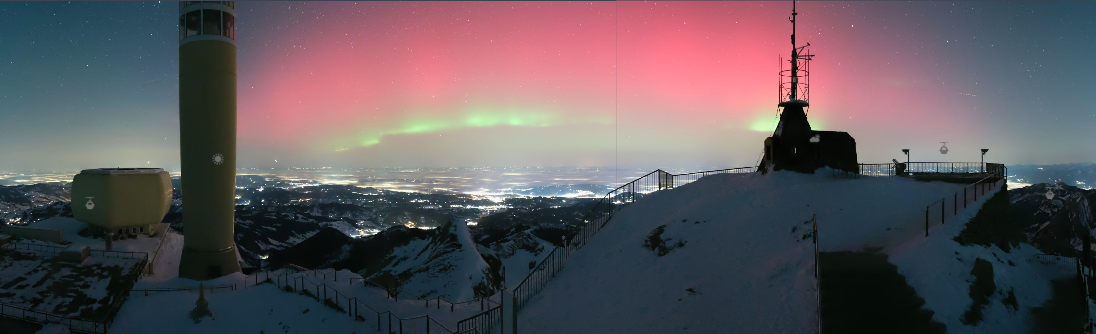
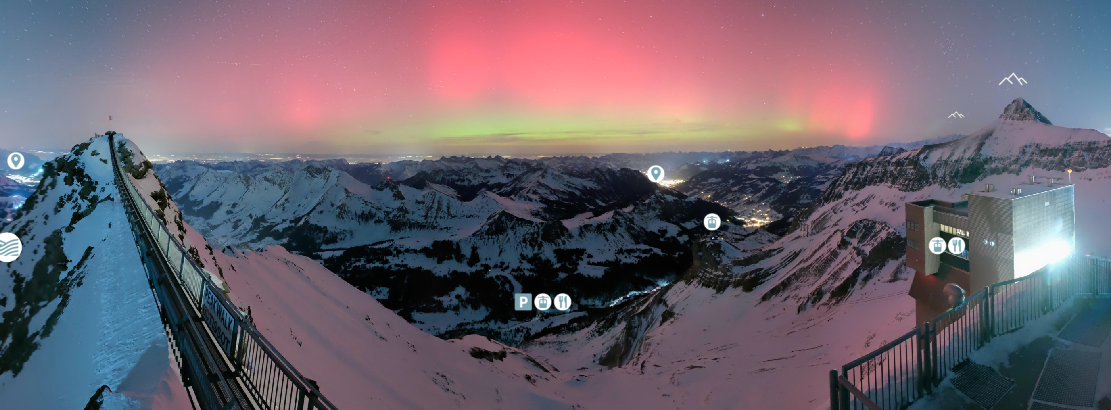
One of the best ways to know when to leave home is by checking Alpine webcams. Some, like Glacier 3000 or Säntis, have excellent night image quality and update every 20 minutes. When I see a pink or red glow and the KP index is 7 or higher, that’s my cue to go.
This approach is especially helpful if you live in a city, where auroras are invisible to the naked eye. In Switzerland, northern lights are usually faint and slow, not the vivid dancing lights you might see in Iceland or Norway. So every clue matters.
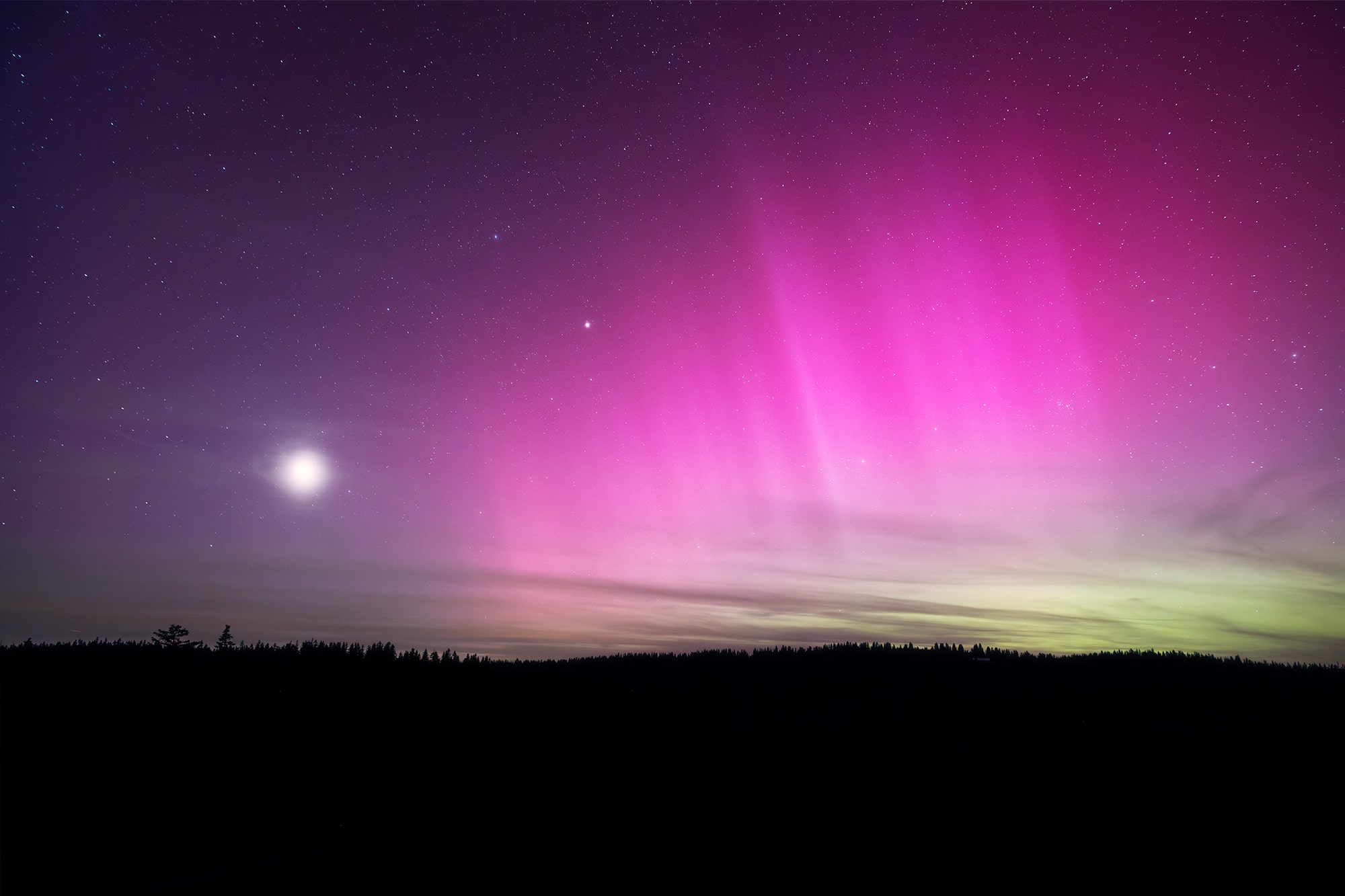
May 10, 2024 · First aurora sighting in Switzerland
📍 Col du Marchairuz
Earlier that day, a few rumours had started circulating on Instagram, but I didn’t really believe them until a notification from the My Aurora Forecast app confirmed extremely high activity. Something was happening.
I was sick, completely unprepared, and had no idea where to go. With little time to think, I asked ChatGPT to help me find a location near Lausanne, ideally within 45 minutes, with a clear view to the north and minimal light pollution.
We rushed out into the night. I had never been to the spot before, and the darkness felt unfamiliar. Standing in a quiet field, I framed the auroras above a pine forest, hardly believing what I was seeing.
That image remains one of my favourites. Not for its technical perfection, but because that night, a childhood dream came true. I witnessed the aurora borealis above my home country.
My gear
✅ Nikon Z8 and Nikkor 24–70mm f/2.8
Camera settings
ISO 1000, f/5, 15s
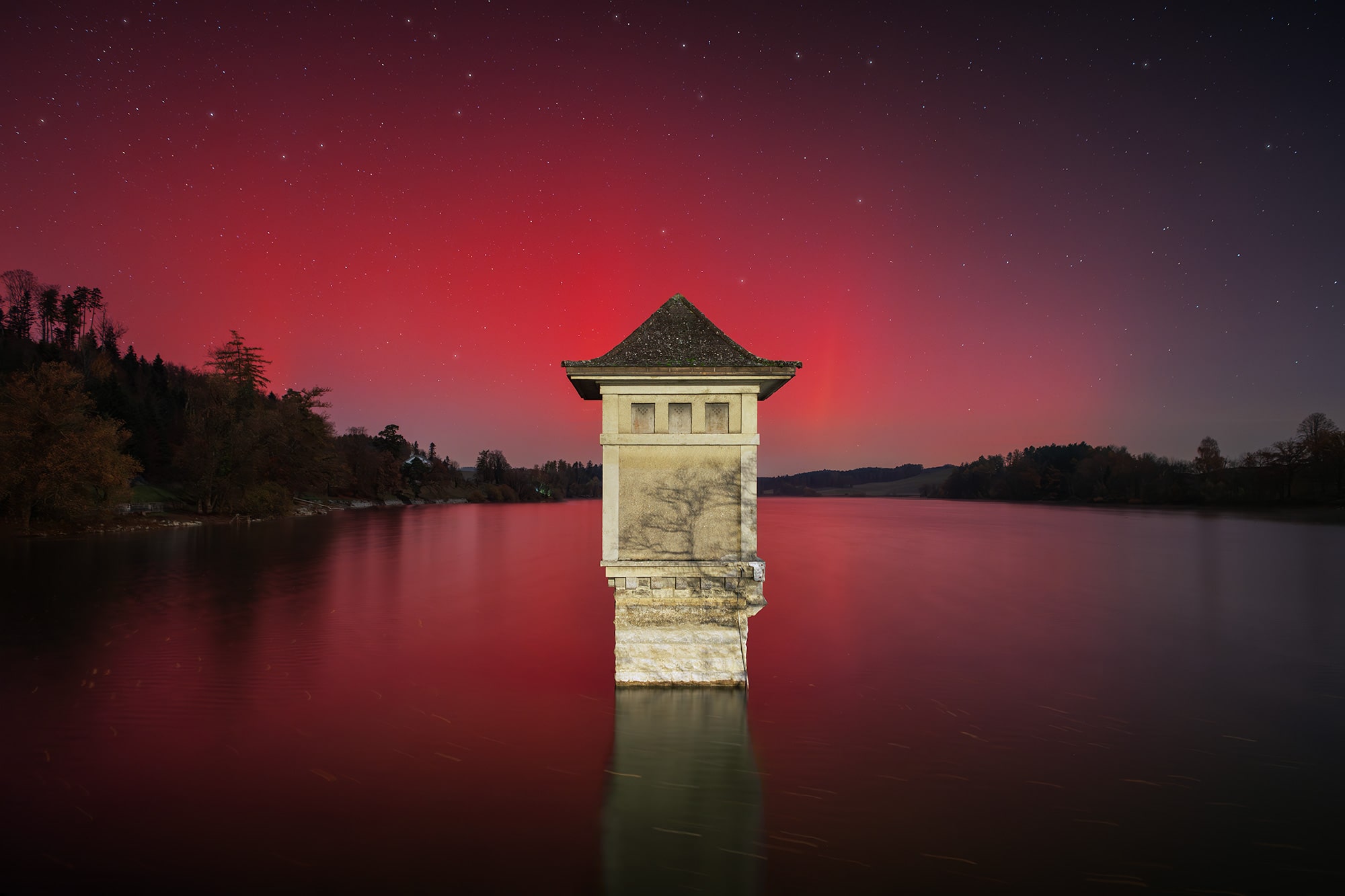
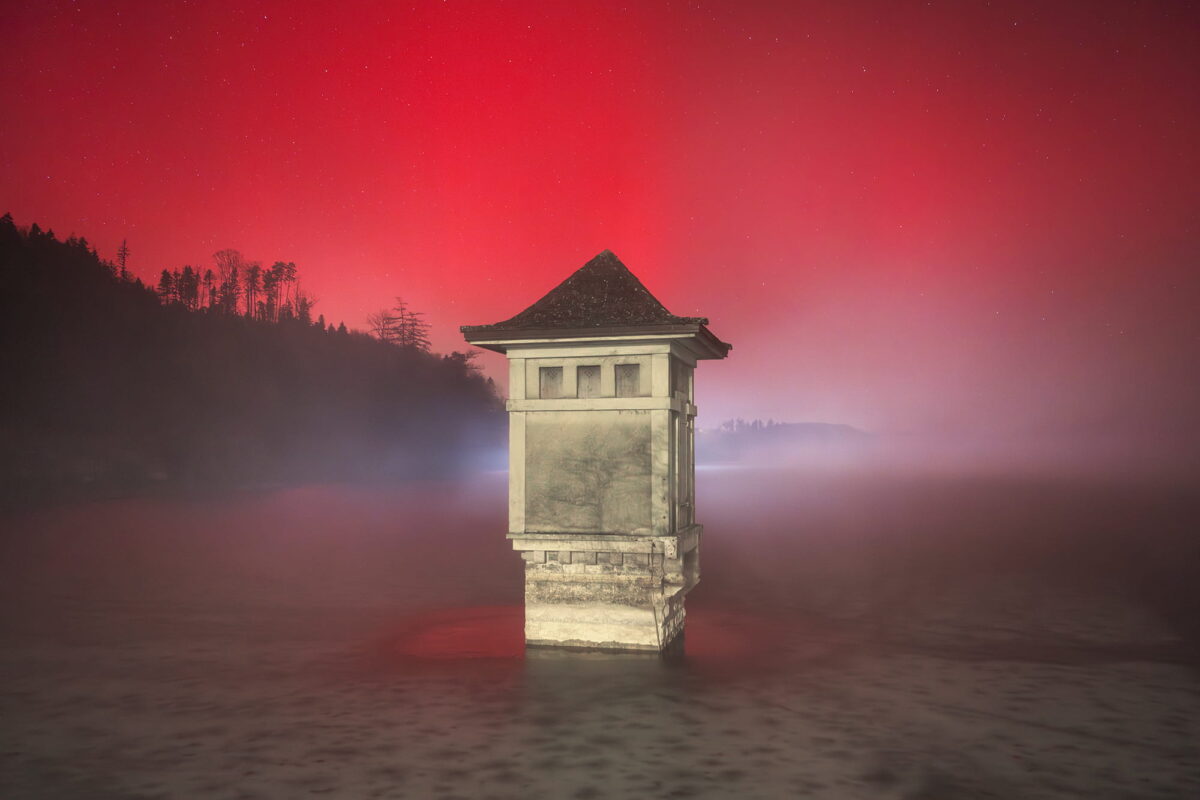
November 11, 2025 : A red aurora
📍 Lac de Bret
This time, I was more prepared. I had made a list of potential locations in advance and had been keeping an eye on the aurora forecast. Once again, I saw several photographers on Instagram sharing stories about a possible storm, and the My Aurora app confirmed a strong KP index.
The tricky part? The aurora was expected to appear around 4 am. I monitored the webcams until 10 pm, then set two alarms – one at midnight (nothing), and one at 3 am. At 3 am, I checked the Säntis webcam and saw a faint red glow on the horizon. That was enough for me to grab my gear and go.
This time, I chose a small lake not far from my home. It had a wooden tower in the water, and I thought the reflection could add an interesting element. Bonus: I could park just a few meters away, which was perfect at 3:30 in the morning.
My gear
✅ Nikon Z8 and Nikkor 24–70mm f/2.8
Camera settings
ISO 2500, f/2.8, 8s
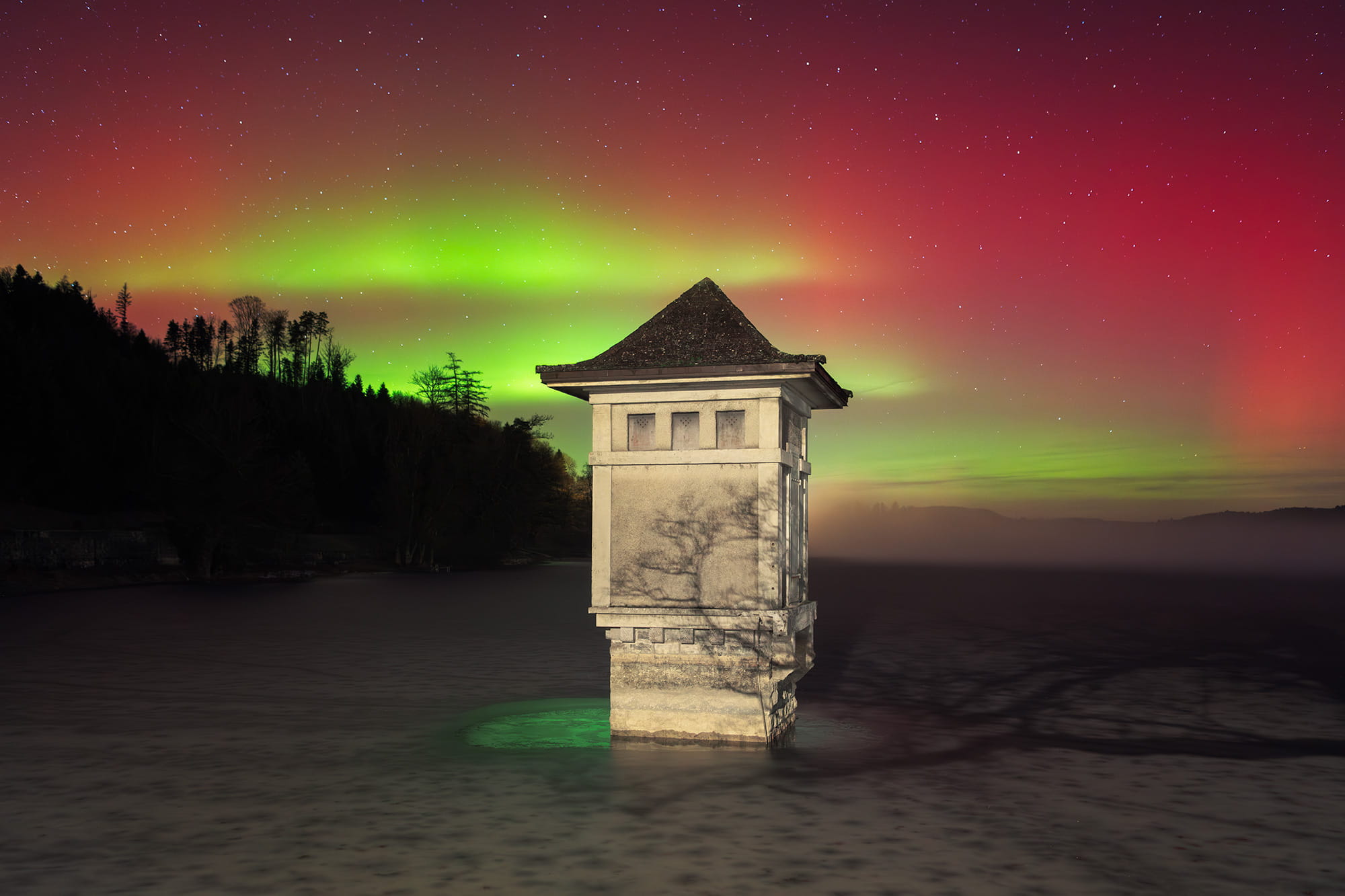
January 19, 2026 : Green and pink aurora during the big solar storm
📍 Lac de Bret
This was one of the strongest geomagnetic storms I’ve ever experienced. I heard about it on Instagram earlier that day and immediately opened the My Aurora app. The forecast was crazy: KP 8.
But there was a new challenge: fog. It covered everything in the region, and I knew the only possible location above the fog layer was that same lake I had visited in 2025.
I kept checking the webcams all evening. Around 9:45 pm, I spotted a bit of pink in the sky on the webcam images. That was my sign to go.
The drive was stressful. We couldn’t see a single star through the fog… until we arrived at the parking lot, where we suddenly found ourselves above the mist. We were literally just one meter above the fog line.
And then the sky lit up. I saw dancing green and pink auroras above a frozen lake. The fog below added the perfect touch of atmosphere, and the moment felt completely otherworldly. I had about 15 magical minutes before the fog rose again and swallowed the landscape.
My gear
✅ Nikon Z8 and Nikkor 24–70mm f/2.8
Camera settings
ISO 4000, f/2.8, 8s

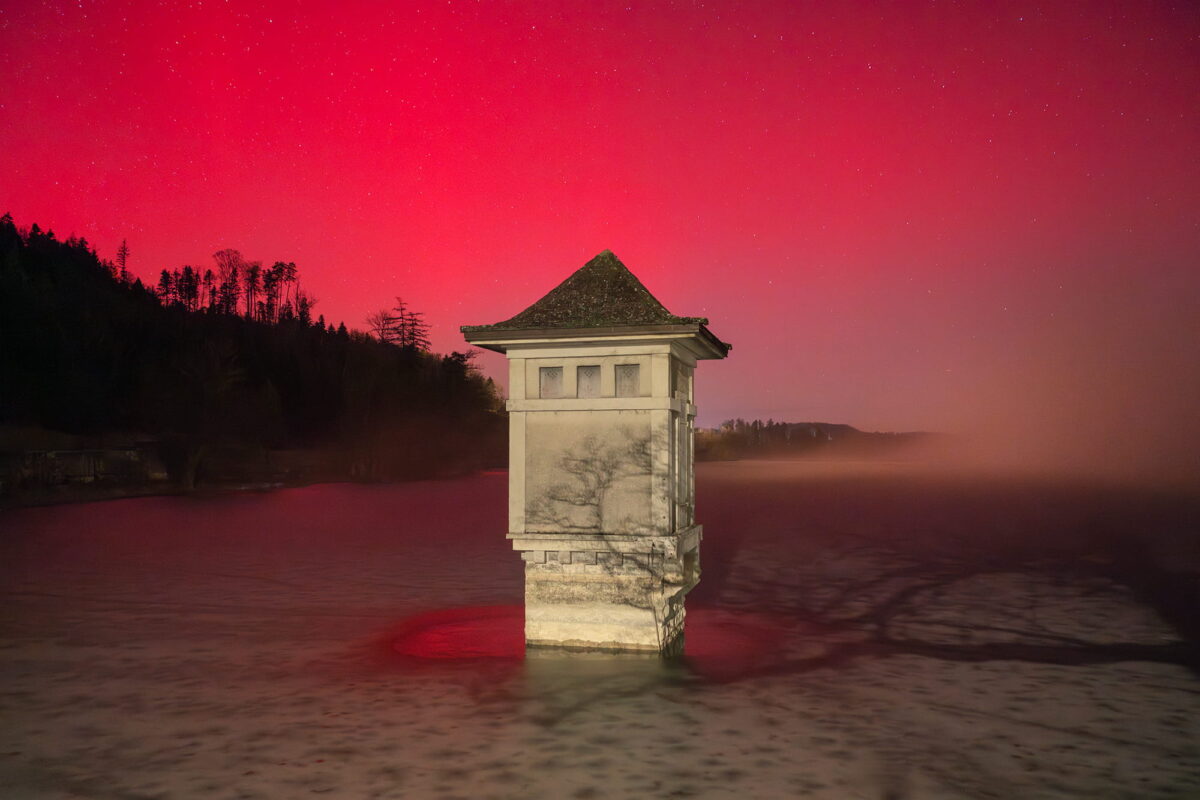
Final tips to photograph the northern lights in Switzerland
✅ Plan in advance : Know your nearby north-facing spots and test them before
✅ Use real-time tools : Apps + Alpine webcams are a game changer
✅ Be flexible : Even 15 minutes of visibility can give you a photo
✅ Don’t chase too far : Focus on reachable locations, especially on weeknight
If you’d like to explore more images from these rare aurora nights in Switzerland and beyond, discover my curated photo series: Boreal Dreams
Published on January 30, 2026 by Jennifer Esseiva