Most travellers arriving in Bodø use the city as a gateway to the Lofoten Islands. And I completely understand why. In fact, if you’re planning to continue your journey there, I also shared my favourite locations in this 8-day Lofoten photography itinerary.
Before our trip, however, a few Norwegian acquaintances recommended that we spend some time exploring the region between Steigen and Bodø. They described it as one of Northern Norway’s hidden gems, with wild landscapes, beautiful beaches and very few tourists. Curious to discover a different side of Nordland, I decided to add a few days to our itinerary.
We stayed on the small island of Røssøya, in the heart of Steigen, where life felt wonderfully slow and remote. Tiny fishing villages, white sand beaches and dramatic mountain landscapes quickly made me realise this region deserves far more attention than it receives. On our way between Steigen and Bodø, we also spent some time exploring Rago National Park, where golden autumn forests and turquoise rivers offered a completely different atmosphere from the coastline.
Around Bodø, we only had time for a handful of stops before taking the ferry to the Lofoten Islands and driving back through the region. Even so, places like Mjelle Beach, with its famous pink sand, and Valnesfossen waterfall completely won me over. There were still many places on my list that we didn’t have time to visit, which simply gives me another reason to return one day.
In this guide, I’m sharing the six photography spots that impressed me the most and that I would happily revisit on my next trip to Northern Norway.
Quick guide: 6 photography spots between Steigen and Bodø
A short road trip through one of Northern Norway’s most underrated regions. Between remote beaches, turquoise coastlines, autumn forests and waterfalls, these six locations completely surprised me.
➜ Bøsanden Beach : white sand beach perfect for northern lights photography
➜ Røssøya : spectacular turquoise coastline best photographed by drone
➜ Brennviksanden : one of Steigen’s wildest beaches beneath dramatic mountains
➜ Rago National Park : colourful autumn forests, turquoise rivers and peaceful hiking trails
➜ Valnesfossen : a beautiful waterfall surrounded by forest just south of Bodø
➜ Mjelle Beach : Bodø’s famous pink sand beach with ever-changing Arctic light
If you’re travelling between Bodø and the Lofoten Islands, I highly recommend adding a couple of days to explore this quieter part of Nordland. It became one of my favourite discoveries in Northern Norway.
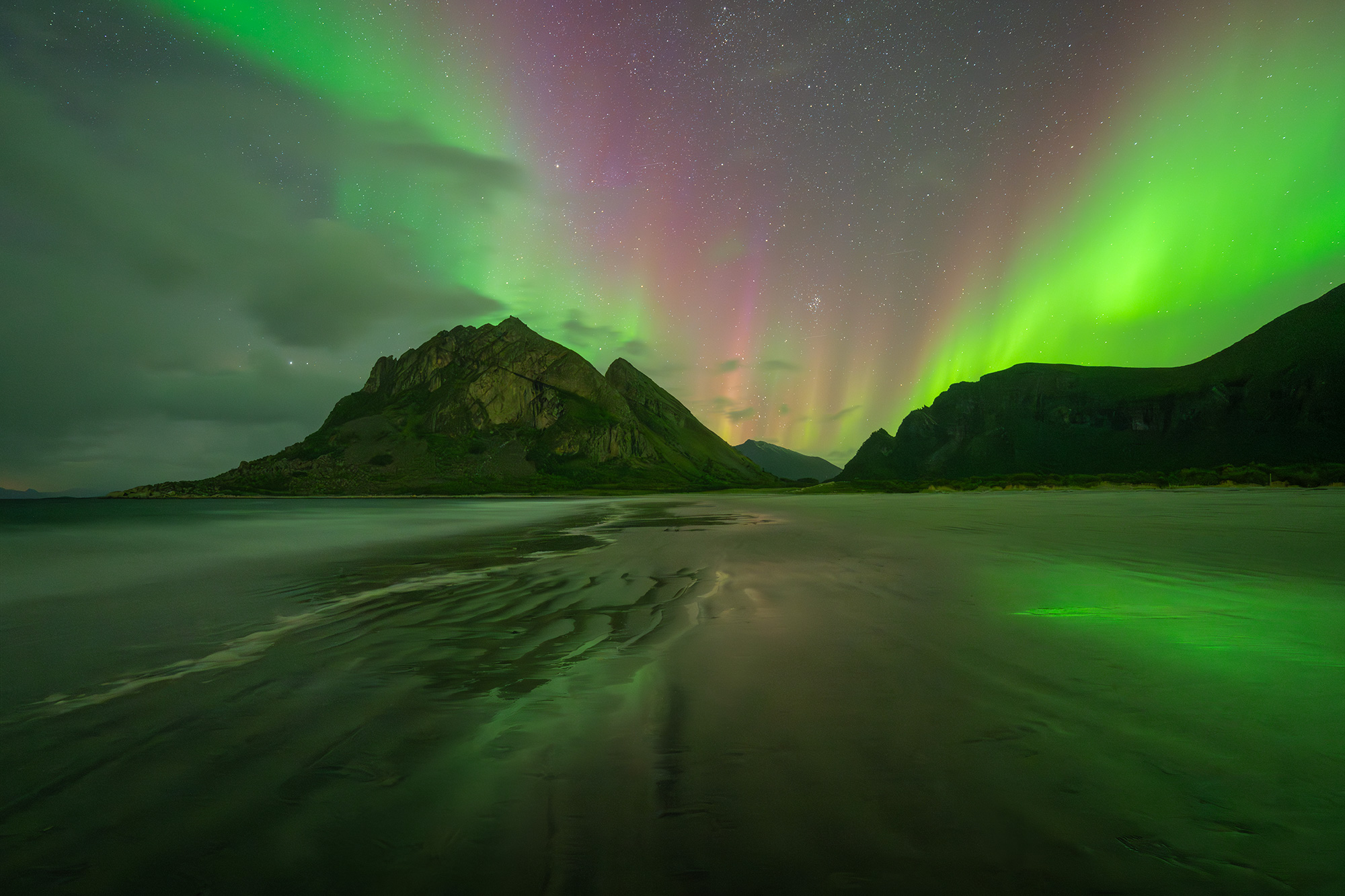
Shot with Nikon Z8 · 14-24mm
Bøsanden Beach: Northern Lights on Engeløya
Bøsanden Beach is located on Engeløya Island, in Steigen, Nordland, in Northern Norway. With its white sand, shells scattered along the shore and open views toward the famous Lofoten Wall, it is a beautiful and still very wild-looking beach to photograph.
What makes this location especially interesting for night photography is its open horizon and very low light pollution. On a clear night, it can be a wonderful place to photograph the northern lights above the mountains and the beach.
How to get there
Access to Bøsanden Beach is very easy by car. Drive to Engeløya Island in Steigen and follow the road toward the beach parking area. There is a large parking lot, as well as toilets, showers and a garbage container.
The final road to the parking area is a little rough, so drive slowly and allow some extra time, especially if you are going there at night.
The story behind the image
Before arriving in Steigen, I had already marked Bøsanden Beach as one of my best options for photographing the northern lights. It was only a 15-minute drive from our cabin, offered very little light pollution and had everything I was looking for: a beautiful beach, dramatic mountains and an open view of the sky.
When night fell, however, thick clouds covered most of the sky and I wasn’t sure we would see the aurora at all. Then, just after 8 pm, stars suddenly appeared between the clouds and the northern lights started dancing. We immediately drove to the beach, grateful that we had scouted the location earlier that afternoon. Knowing exactly where to park and where to set up my tripod saved precious minutes.
In the end, I managed to capture only six images before the clouds returned and the rain began. It was a very short display, but that’s exactly what makes photographing the aurora so exciting. My favourite part of this image is the wet sand reflecting the green glow while the mountains frame the sky.
Why I liked this spot for photography
✅ Beautiful white sand and natural foreground textures
✅ Very low light pollution for northern lights photography
✅ Easy access by car
Shot with the DJI mini 3 pro
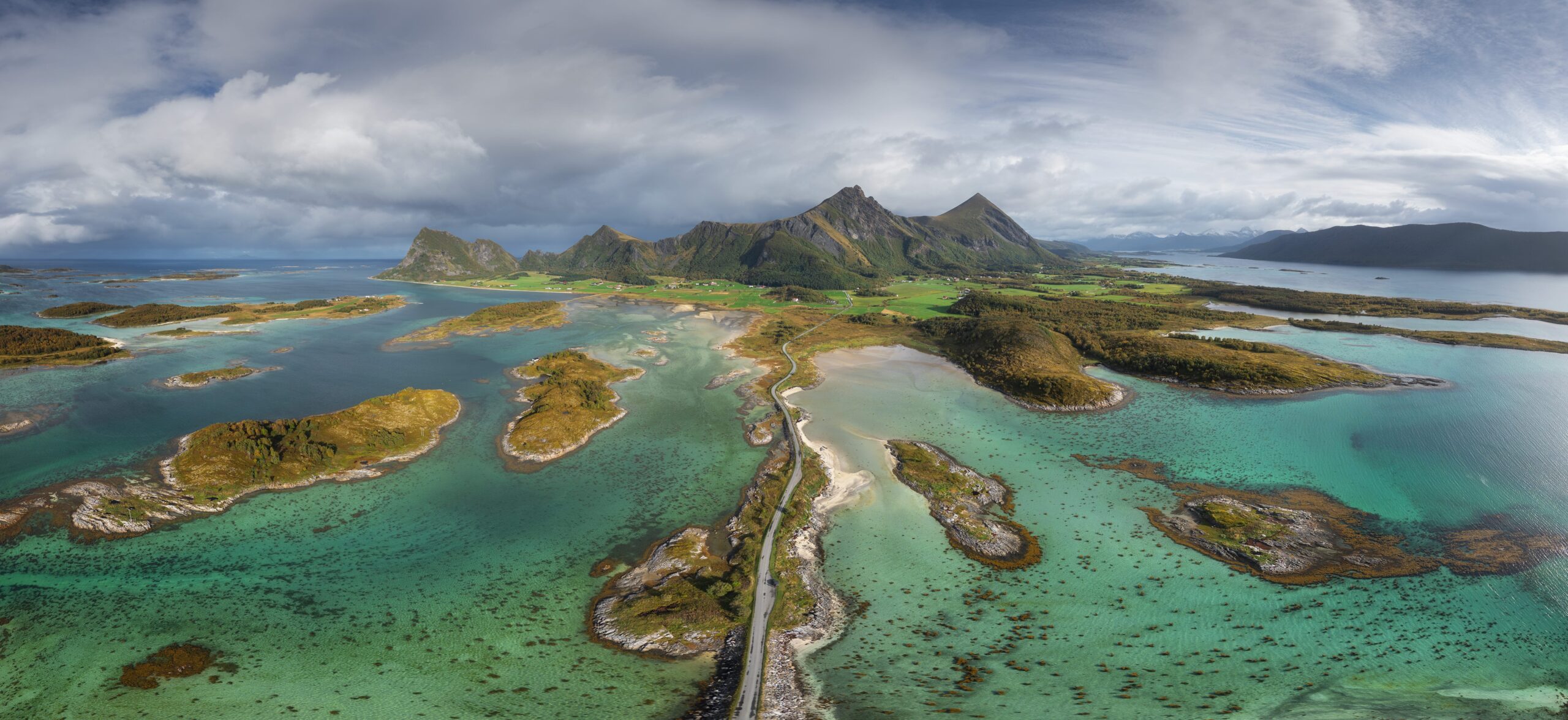
Røssøya: A Turquoise Drone Paradise in Steigen
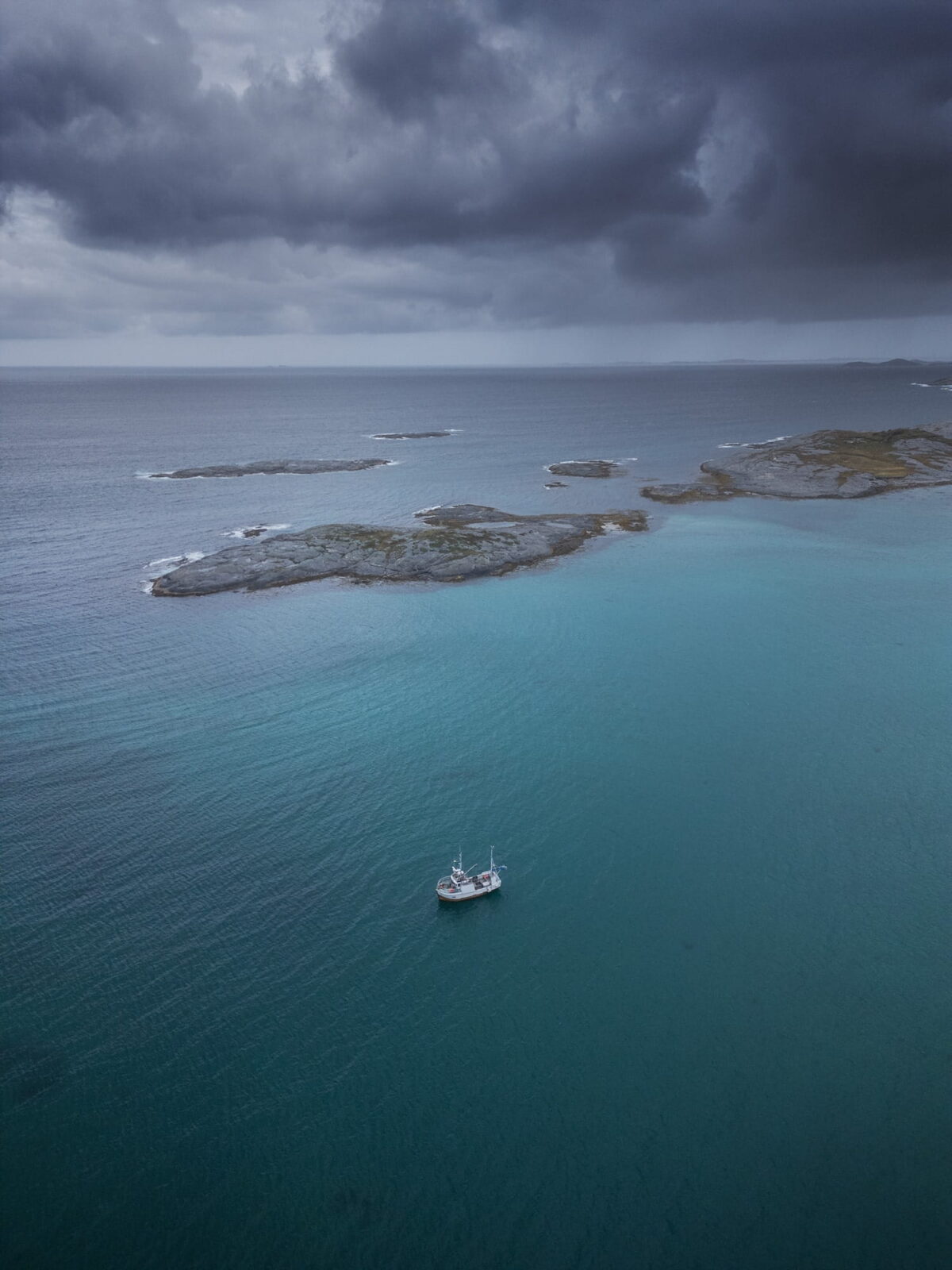
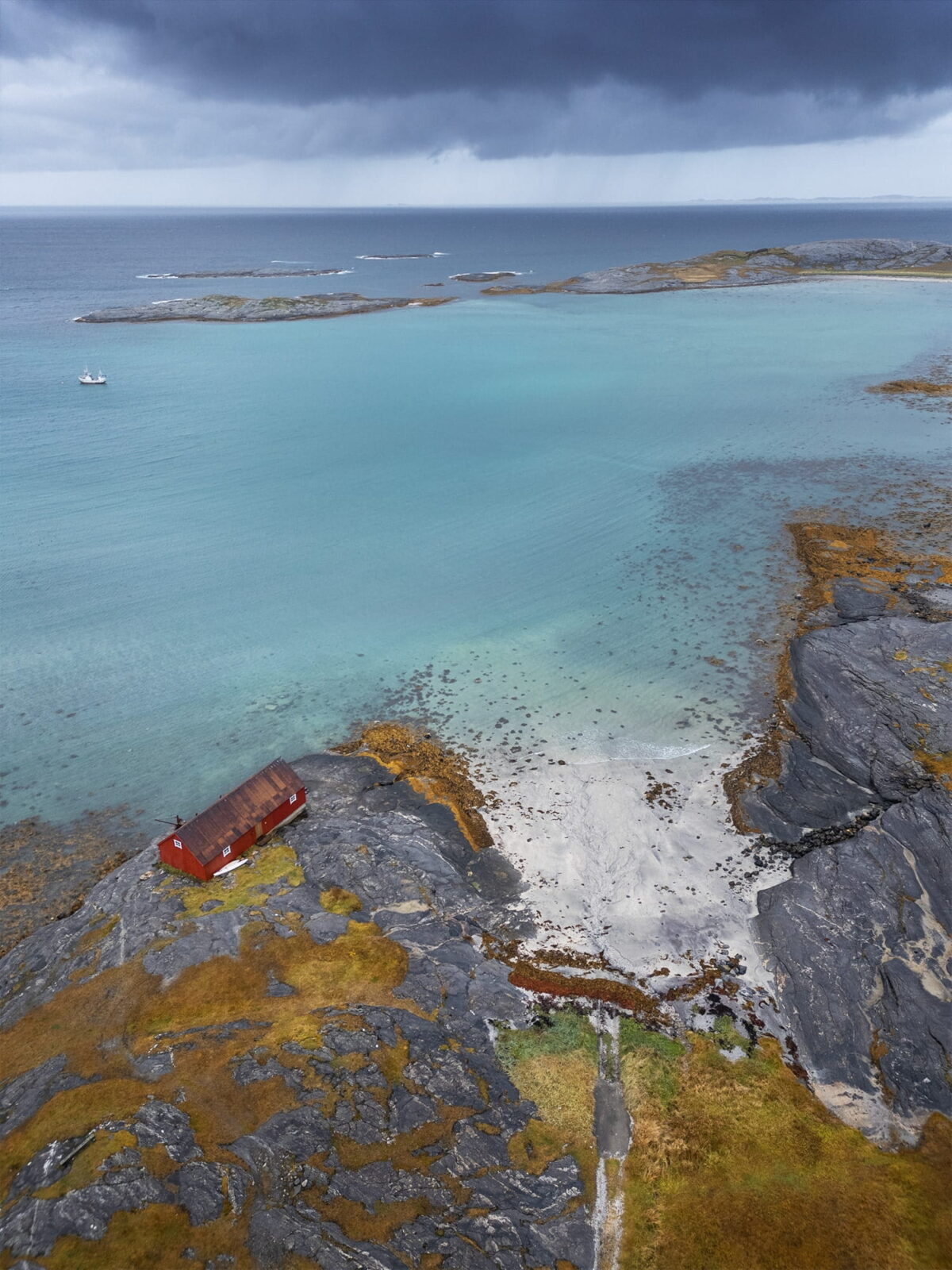
Røssøya is a small island located on Engeløya, in the Steigen region of Nordland, Northern Norway. Surrounded by crystal-clear turquoise water and dramatic mountain peaks, it quickly became one of my favourite drone photography locations of the trip.
We stayed nearby at Steigen Lodge, making it an ideal base for exploring Engeløya and the surrounding coastline.
How to get there
Røssøya is easily accessible by car via Engeløya Island. There is a small parking area close to the bridge, allowing you to reach the drone launch point within a few minutes.
If you’re staying for a few days, I highly recommend booking accommodation on Engeløya. It allows you to return whenever the light, weather or tide become favourable, something that proved invaluable during our stay.
The story behind the image
While planning our trip, I spent hours exploring Northern Norway on Google Maps looking for interesting compositions. Røssøya immediately caught my attention. From above, the combination of turquoise water, tiny islands, winding roads and mountain peaks looked absolutely spectacular. I knew it had the potential to become one of my favourite drone photographs of the trip.
Capturing this image, however, required much more than simply flying the drone.
The first evening, we arrived during low tide and the vibrant turquoise colours had almost disappeared, replaced by brown seaweed and exposed seabed. The following morning, high tide finally returned, so I launched the drone immediately and captured this panorama. I had originally hoped to photograph the scene during golden hour, but every subsequent high tide coincided with strong winds, making it impossible to fly safely.
Looking back, I’m actually very happy with these conditions. The soft morning light revealed the incredible colours of the water while keeping enough detail in the surrounding mountains.
My photography tips
✅ Visit at high tide for the most vibrant turquoise water.
✅ Always check the wind forecast before flying your drone.
✅ Don’t wait for “perfect” light. When both the tide and the weather align, take the opportunity.
Why I liked this spot for photography
✅ Incredible turquoise water
✅ Spectacular drone compositions
✅ Dramatic mountain backdrop
Shot with Nikon Z8 · 14-24mm
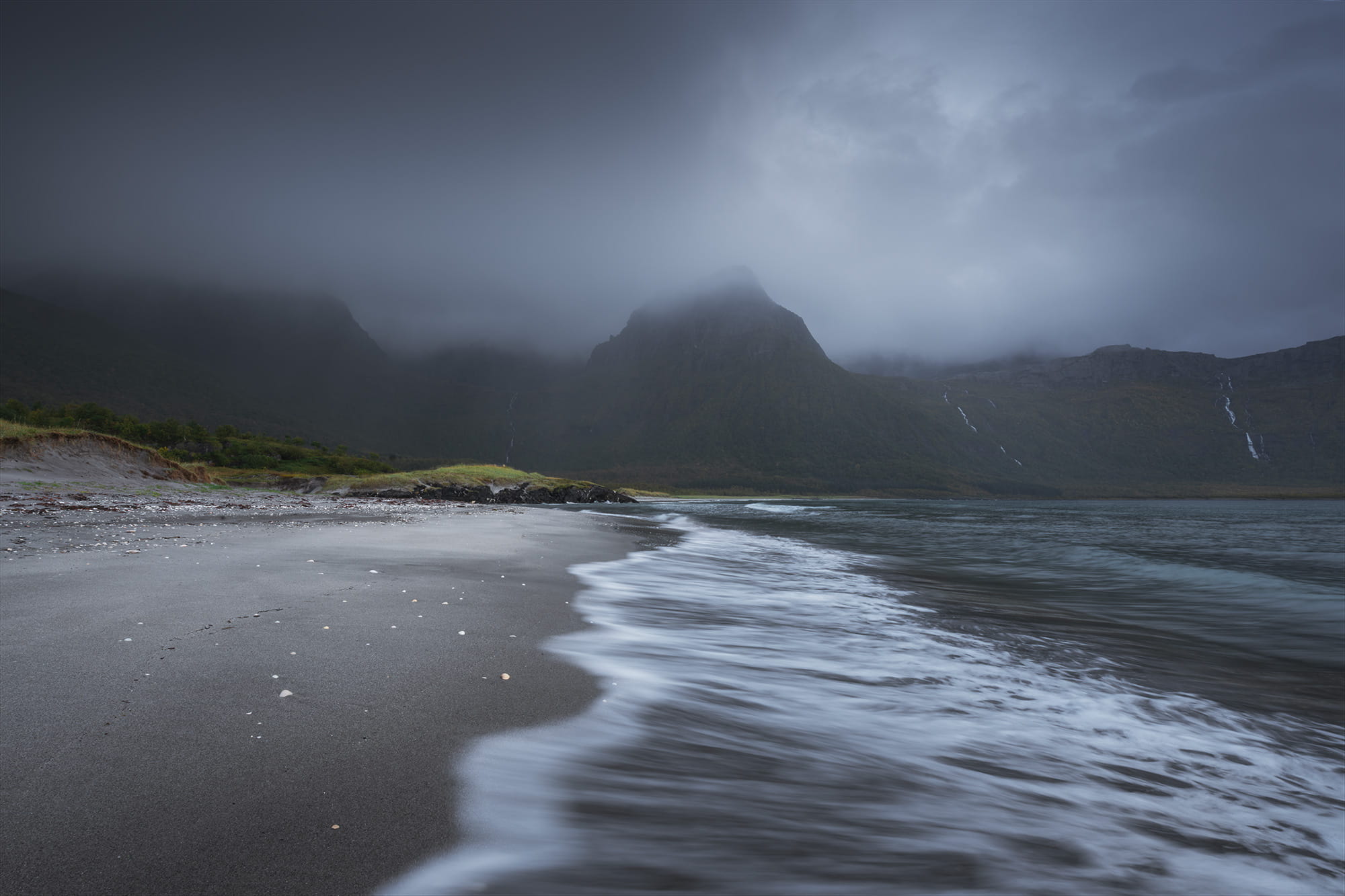
Brennviksanden: A Wild Beach in the Heart of Steigen
Brennviksanden is a long white sand beach nestled between steep mountains on the Steigen Peninsula. Despite its impressive setting, it remains a peaceful place that feels wonderfully untouched. The combination of white sand, turquoise water and dramatic peaks makes it one of the most photogenic beaches in the region.
How to get there
Brennviksanden is easily accessible by car from the main road between Leines and Helnessund. A parking area is located just a short walk from the beach, making it an easy stop during a road trip through Steigen.
The story behind the image
Brennviksanden was one of the beaches I most wanted to visit during our stay in Steigen. The weather wasn’t really on our side, with alternating sunshine and heavy rain throughout the day, so we decided to take advantage of a short break in the clouds and drive there.
When we arrived, the atmosphere was exactly what I love about Northern Norway. Dark clouds were hanging over the mountains, the wind was picking up and rain was clearly on its way. The beach felt completely wild and almost deserted. I especially loved the countless white shells scattered across the sand, which added beautiful texture to the foreground.
To capture the mood of the scene, I placed my tripod low to the ground and used a long exposure to soften the movement of the waves while preserving the dramatic sky above the mountains. I only had around ten minutes before the rain started pouring down. With the strong wind constantly covering my lens with raindrops, photographing became quite challenging, but it was absolutely worth it.
I can easily imagine this beach looking spectacular at sunrise or sunset. Hopefully, that’s a story for another trip.
Why I liked this spot for photography
✅ Wild and peaceful atmosphere
✅ Remote location with very few visitors
✅ Dramatic mountain backdrop
Shot with Nikon Z8 · 24-70mm
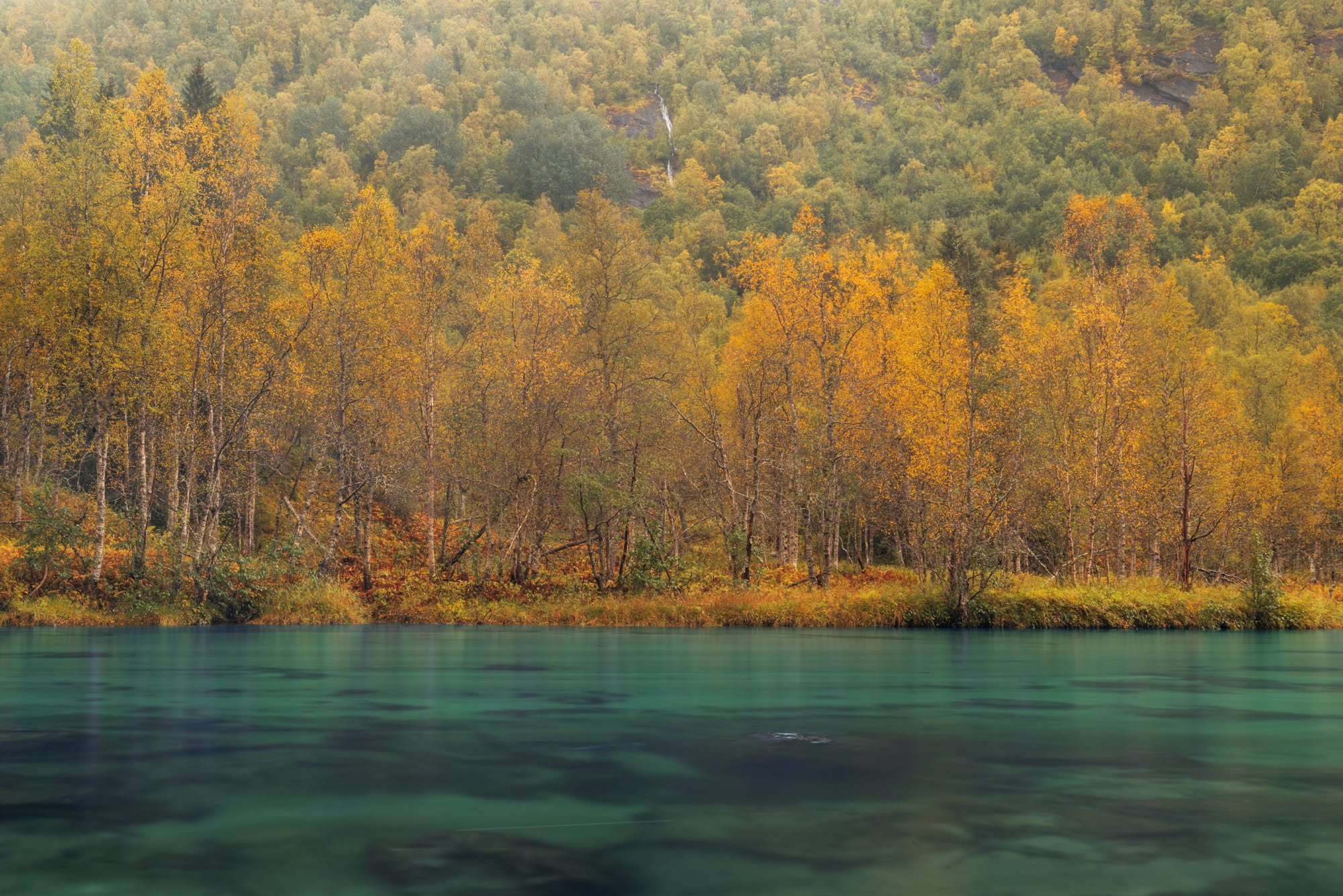
Rago National Park: A Taste of Northern Norway’s Wilderness
Rago National Park is one of the wildest places we visited during our road trip through Nordland. Located about 80 minutes east of Bodø, it offers a completely different landscape from the coastline, with dense forests, turquoise rivers, waterfalls and rugged granite mountains.
If you’re looking for a quiet hike away from the crowds, Rago is well worth adding to your itinerary.
➜ Info about the Rago National Park
How to get there
Rago National Park is easily reached by car from the E6. A parking area is located at Lakshol, where several hiking trails begin.
There are several hikes within the park, ranging from short walks to full-day adventures. We originally planned to hike to Litlverivassforsen waterfall, but the weather had other plans.
The story behind the image
It rained all day.
Not the kind of light rain you can ignore, but the kind that follows you from the moment you leave the car until you get back. Despite the weather, we were determined to discover Rago National Park.
Our original plan was to hike to Litlverivassforsen, but after seeing how wet and slippery the trail had become, we decided to stay on the lower section of the park and follow the river from Lakshol instead.
In the end, I have no regrets. The autumn colours were just starting to appear, with yellow birch trees contrasting beautifully against the turquoise river. The rain also gave the forest a wonderfully fresh atmosphere, making the whole landscape feel even wilder. We walked around four kilometres before returning to the car, completely soaked but very happy we hadn’t cancelled the hike.
Sometimes the weather completely changes your plans, but it also creates photographs you would never have taken on a sunny day.
Why I liked this spot for photography
✅ Wild and untouched landscapes
✅ Beautiful turquoise river
✅ Peaceful hiking trails
✅ A completely different atmosphere from the Norwegian coastline
Shot with Nikon Z8 · 14-24mm
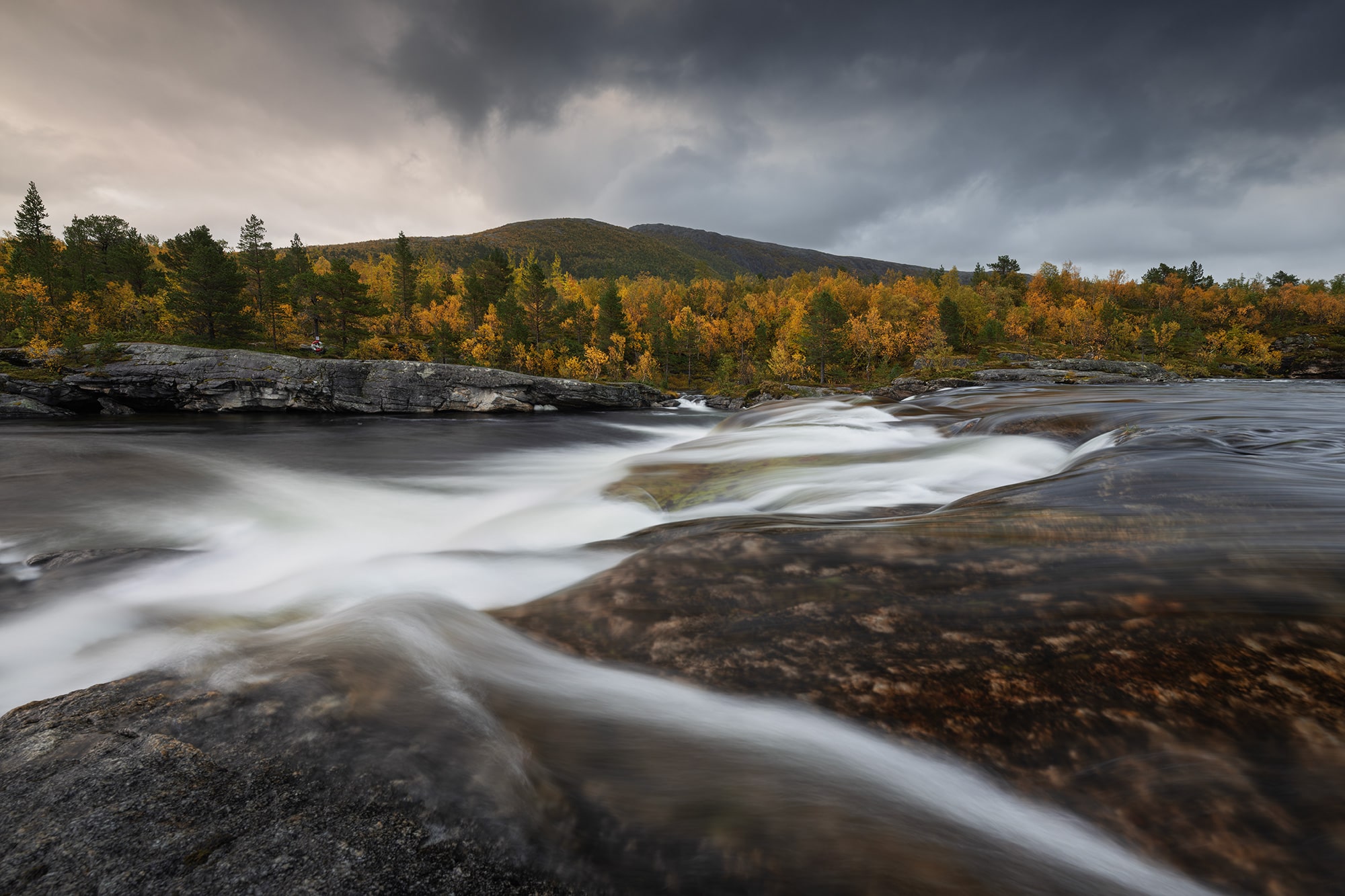
Valnesfossen: A Hidden Waterfall Near Bodø
Valnesfossen (also called Valnesforsen) is one of the largest waterfalls near Bodø, located around 45 minutes south of the city in Nordland, Northern Norway. Surrounded by forest and flowing over a steep rock face, it offers a completely different atmosphere from the beaches along the coast.
If you’re looking for a peaceful stop during a road trip, this waterfall is well worth the detour, especially in autumn when the surrounding trees begin to change colour.
How to get there
Valnesfossen is easily accessible by car from Bodø. A small parking area is located close to the waterfall, allowing you to reach the viewpoint within a few minutes.
I photographed the upper section of the waterfall, but there are also trails leading further down if you want to explore different viewpoints.
The story behind the image
After photographing several beaches during our trip through Northern Norway, I was looking for a completely different type of landscape. Valnesfossen was the perfect opportunity to add a waterfall and a forest scene to my portfolio.
We arrived about an hour and a half before sunset. Although the sun never broke through the clouds, the sky gradually started to pick up soft pastel colours, creating a beautiful contrast with the turquoise water and the autumn forest. I chose a simple composition from the top of the waterfall and used a long exposure to smooth the flowing water while preserving the details in the surrounding landscape.
Sometimes you don’t need dramatic light to create a peaceful image. For me, the soft evening colours and the sound of the waterfall were enough to make this one of my favourite stops near Bodø.
Why I liked this spot for photography
✅ Beautiful waterfall surrounded by forest
✅ Perfect for long exposure photography
✅ A peaceful alternative to the coastal landscapes
Shot with Nikon Z8 · 14-24mm
Mjelle Beach: Norway’s Pink Sand Beach
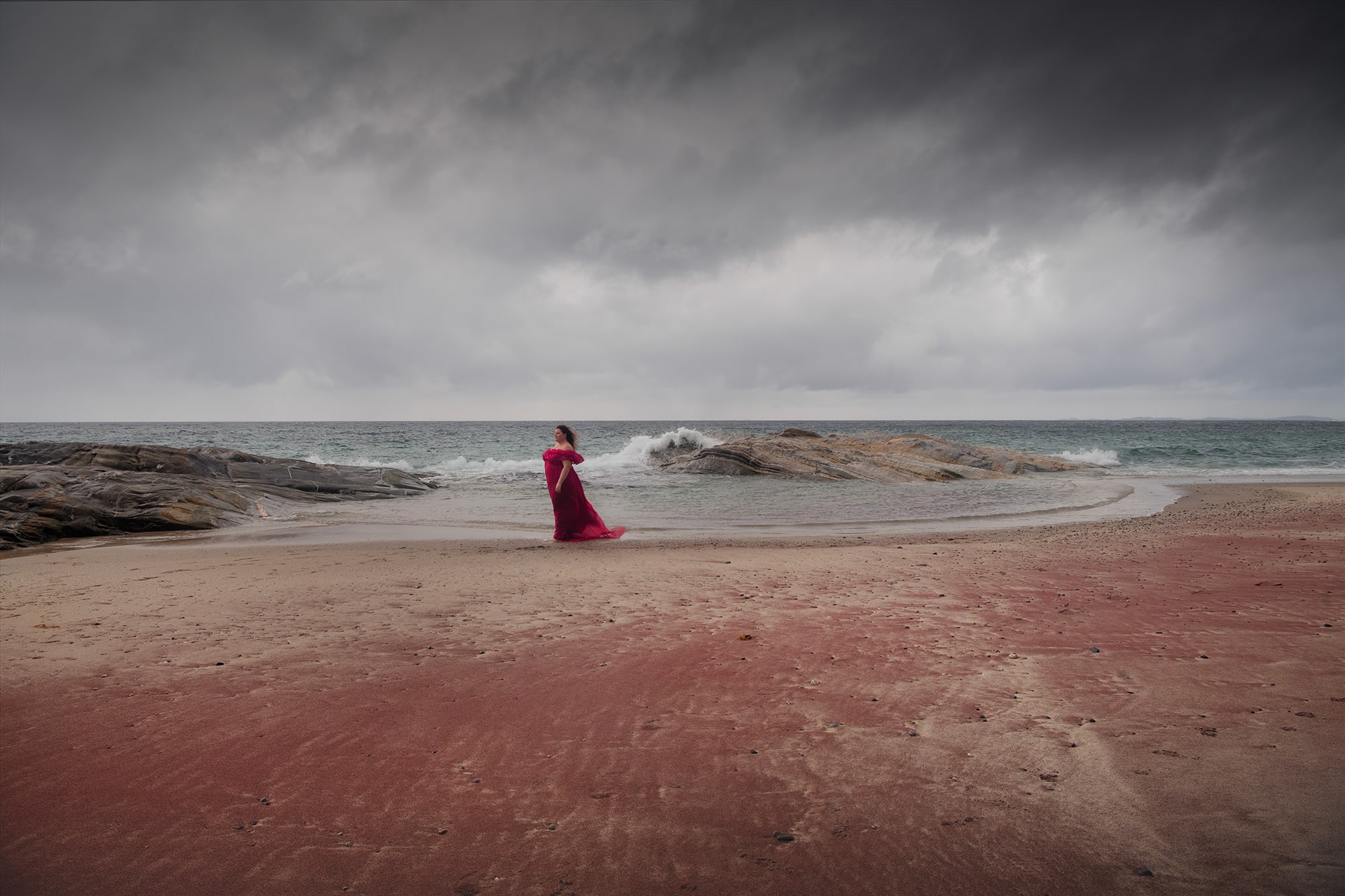
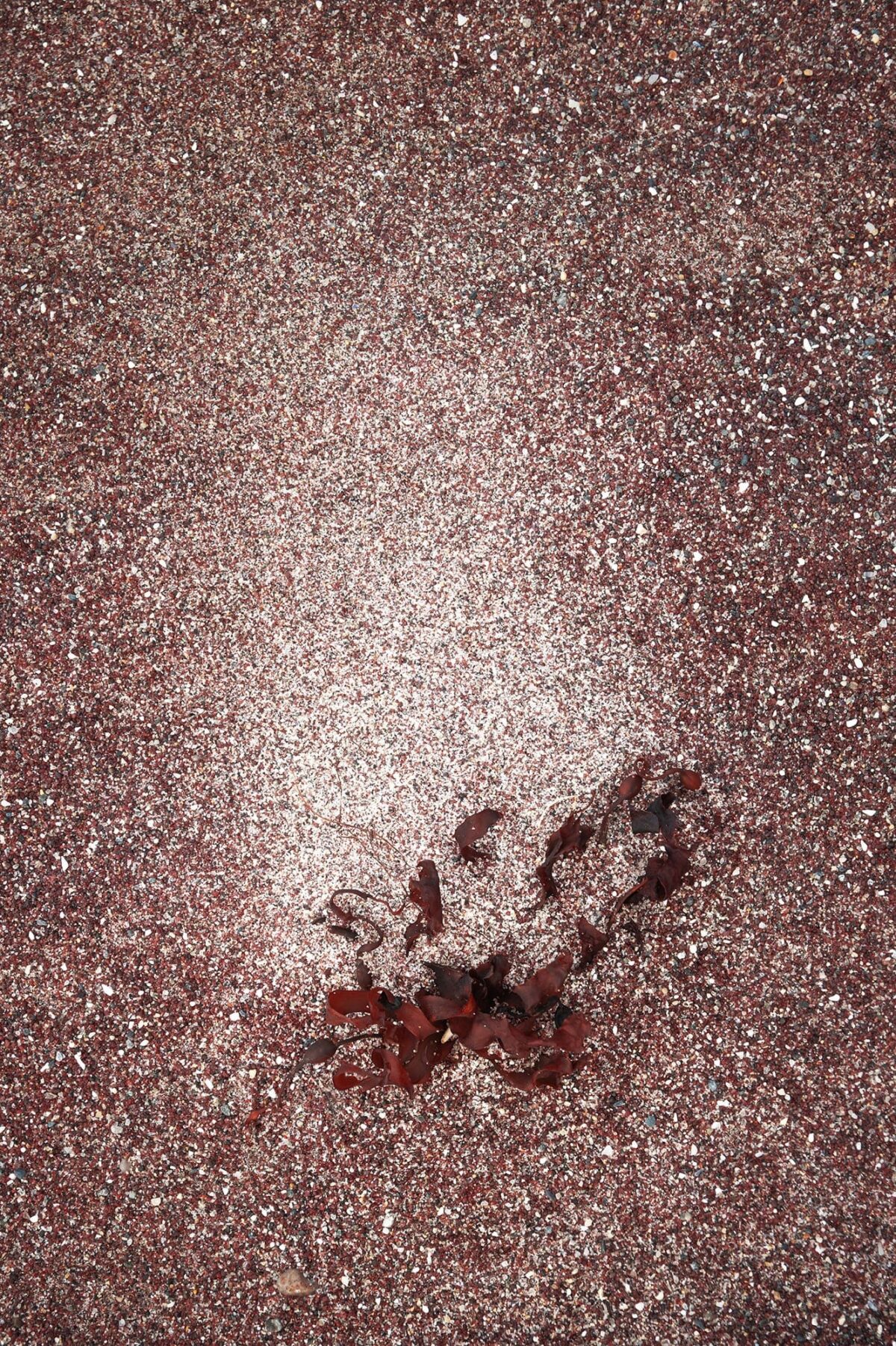
Mjelle Beach is one of the most unique beaches near Bodø. While it may look like a classic white sand beach from a distance, parts of the shoreline take on beautiful pink and reddish tones thanks to garnet minerals naturally mixed into the sand. Combined with the surrounding mountains and the constantly changing Arctic weather, it creates a truly special place for landscape photography.
Whether you visit on a sunny day or under dramatic skies, Mjelle offers completely different moods, making it a location worth returning to more than once.
How to get there
Mjelle Beach is located around 25 minutes by car from Bodø. A parking area is available close to the main beach.
To reach the famous pink sand section, simply follow the coastal path north for about 15 minutes. The walk is easy and well marked, offering beautiful views along the coastline.
Final thoughts
Steigen and Bodø may not be the first destinations that come to mind when planning a photography trip to Northern Norway, but they completely exceeded my expectations. From white sand beaches and turquoise waters to waterfalls, remote forests and dramatic coastlines, this region offers an incredible variety of landscapes while remaining far quieter than many of Norway’s better-known destinations.
If you’re driving to or from the Lofoten Islands, I highly recommend spending a few extra days exploring this part of Nordland. You might just discover some of your favourite photography locations along the way.
And most of all, enjoy the moment. Happy shooting.
Published on July 9, 2026 by Jennifer Esseiva