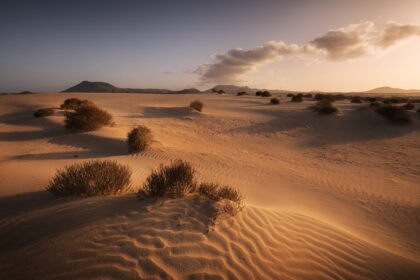
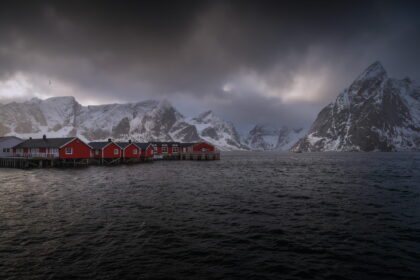
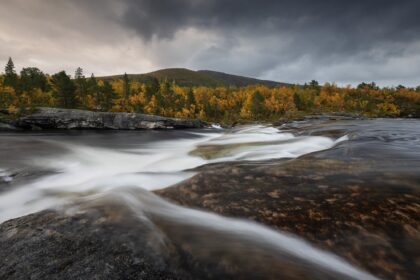
For a long time, I associated super-telephoto lenses mostly with wildlife photography. I never really imagined carrying such a big lens for landscapes until one particular photograph in the Faroe Islands changed my mind.
I originally bought the Nikon AF-S NIKKOR 200–500mm for that single photograph, as I needed at least 400mm to create the composition I had in mind. But what started as a very specific purchase quickly became a lens I loved using for landscape photography.
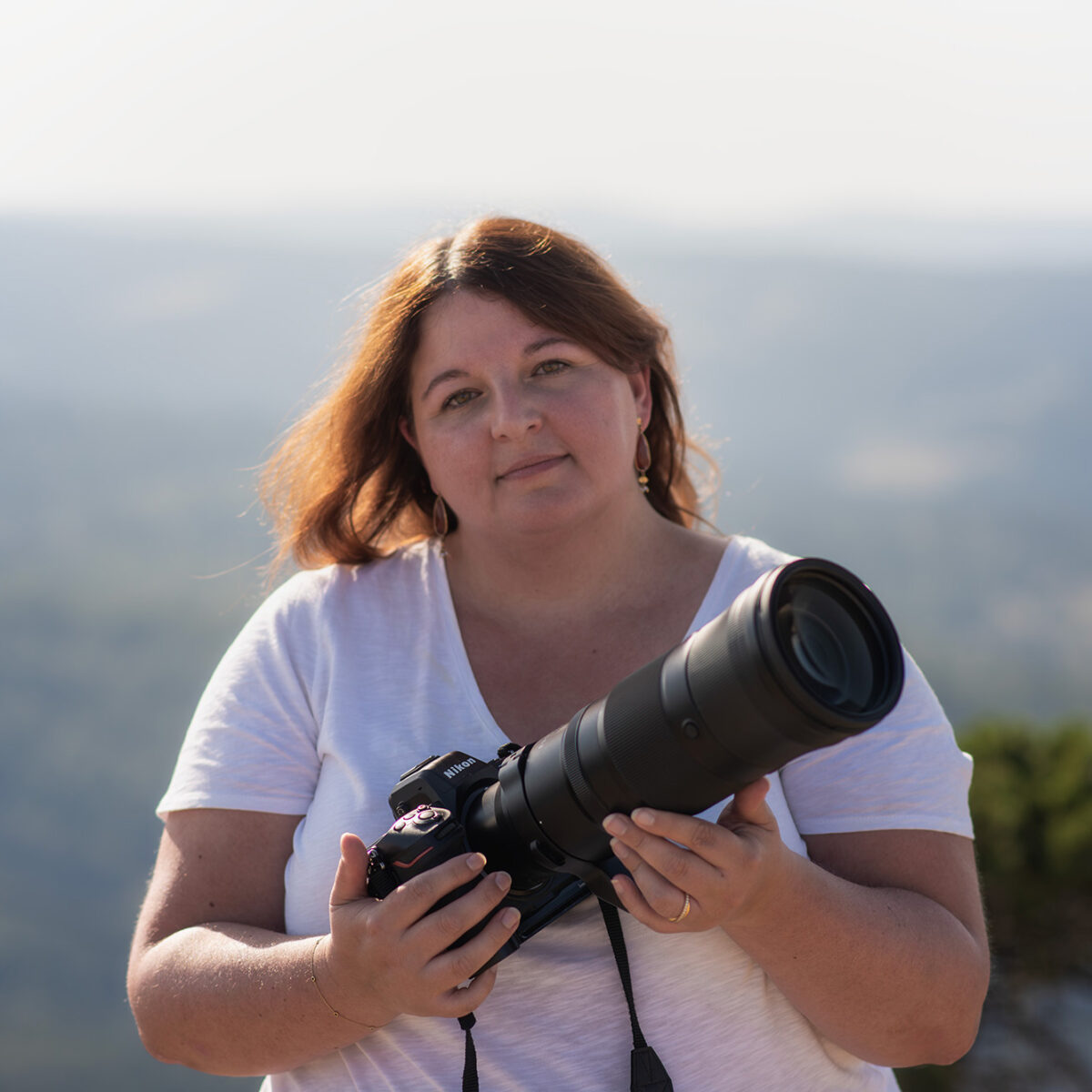
Being able to isolate tiny details, compress distant landscapes or make the moon much more prominent within a composition opened up completely new creative possibilities. More recently, I replaced my 200–500mm with the NIKKOR Z 180–600mm for my Nikon Z8, and I’m already loving the extra reach.
In this article, I’m sharing photographs taken with both lenses to show how I use super-telephoto focal lengths creatively for landscape photography.
The lenses behind these images
Nikon AF-S NIKKOR 200–500mm f/5.6E ED VR
The Nikkor 200–500mm was my first super-telephoto lens. I initially bought it for one very specific photograph in the Faroe Islands, as I needed enough reach to capture a distant part of the landscape without investing in one of the much more expensive professional telephoto lenses.
With its 200–500mm focal range and constant f/5.6 maximum aperture, it gave me exactly the reach I was looking for. I first used it with my Nikon D810 and later continued using it with my Nikon Z8 and Nikon’s FTZ adapter.
What surprised me was how useful it became beyond that original idea. It was never an everyday lens in my camera bag, but whenever a landscape required serious reach, it allowed me to create compositions that none of my other lenses could achieve.
NIKKOR Z 180–600mm f/5.6–6.3 VR
After several years with the 200–500mm, I recently moved to the NIKKOR Z 180–600mm for my Nikon Z8. This new lens gives me a little more flexibility, with an extra 100mm of reach. It is also lighter, but a bit bigger than the 200–500mm.
I’m particularly excited about that extra reach for landscape photography, especially for photographing the moon, distant mountains and small details within much larger scenes. I’ve only recently started using it, so this isn’t intended as a technical comparison or an in-depth review of the two lenses. Instead, I want to focus on what matters most to me: the creative possibilities a super-telephoto lens can bring to landscape photography.
Quick guide: Why use a super-telephoto lens for landscape photography?
A super-telephoto lens can completely change the way you see and photograph landscapes.
Here are some of my favourite reasons for using it:
✅ Create simple and minimalist compositions
✅ Compress distant landscapes into a single frame
✅ Find small scenes hidden within larger landscapes
✅ Emphasize the scale of mountains and distant subjects
✅ Bring distant elements together to build a composition
✅ Make the moon more prominent within the landscape
✅ Isolate distant subjects and unexpected moments
In the examples below, I’ll show exactly how I used these possibilities with my 200–500mm and 180–600mm lenses in different landscapes and conditions.
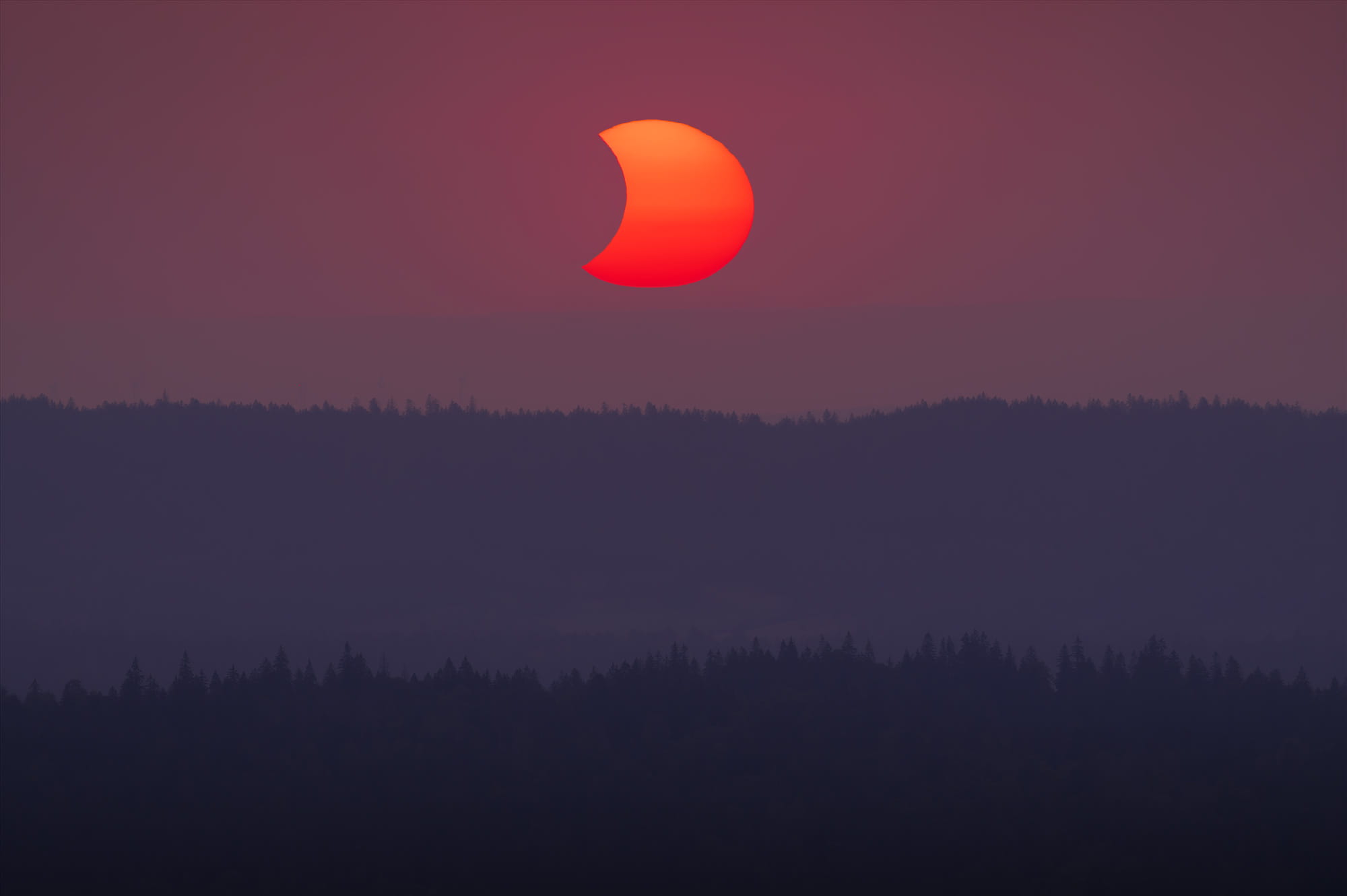
Shot with Nikon Z8 · NIKKOR Z 180–600mm · 600mm
Solar eclipse: creating a minimalist composition with a super-telephoto lens
A super-telephoto lens can be incredibly useful for simplifying a landscape. At 600mm, I was able to isolate the eclipse and the distant layers of the Jura mountains, removing almost everything else from the scene.
What I especially love about this image is its simplicity. The soft pink and purple tones, combined with the dark silhouettes of the pine forests, create an almost abstract landscape where the eclipse immediately becomes the main subject.
The story behind this image
For the August 12, 2026 eclipse, I knew that many places would be crowded. Initially, I wanted to photograph the eclipse with a subject in the foreground, but finding the right alignment isn’t always easy in Switzerland because of the mountain ranges.
In the end, I decided to head up to the Dent de Vaulion in the Jura mountains, where I could enjoy a clear view of the eclipse as the sun was setting. My idea was to create a minimalist image of the sun disappearing behind the mountains and really emphasize the crescent shape of the eclipse and its beautiful colours.
As the sun descended, the atmospheric haze softened the different ridges and created beautiful shades of pink and purple. At 600mm, I was able to focus on just a small part of the landscape and create the simple composition I had imagined.
Why a super-telephoto lens worked so well here
✅ Made the sun much more prominent in the frame
✅ Compressed the distant forest layers
✅ Created a simple and minimalist composition
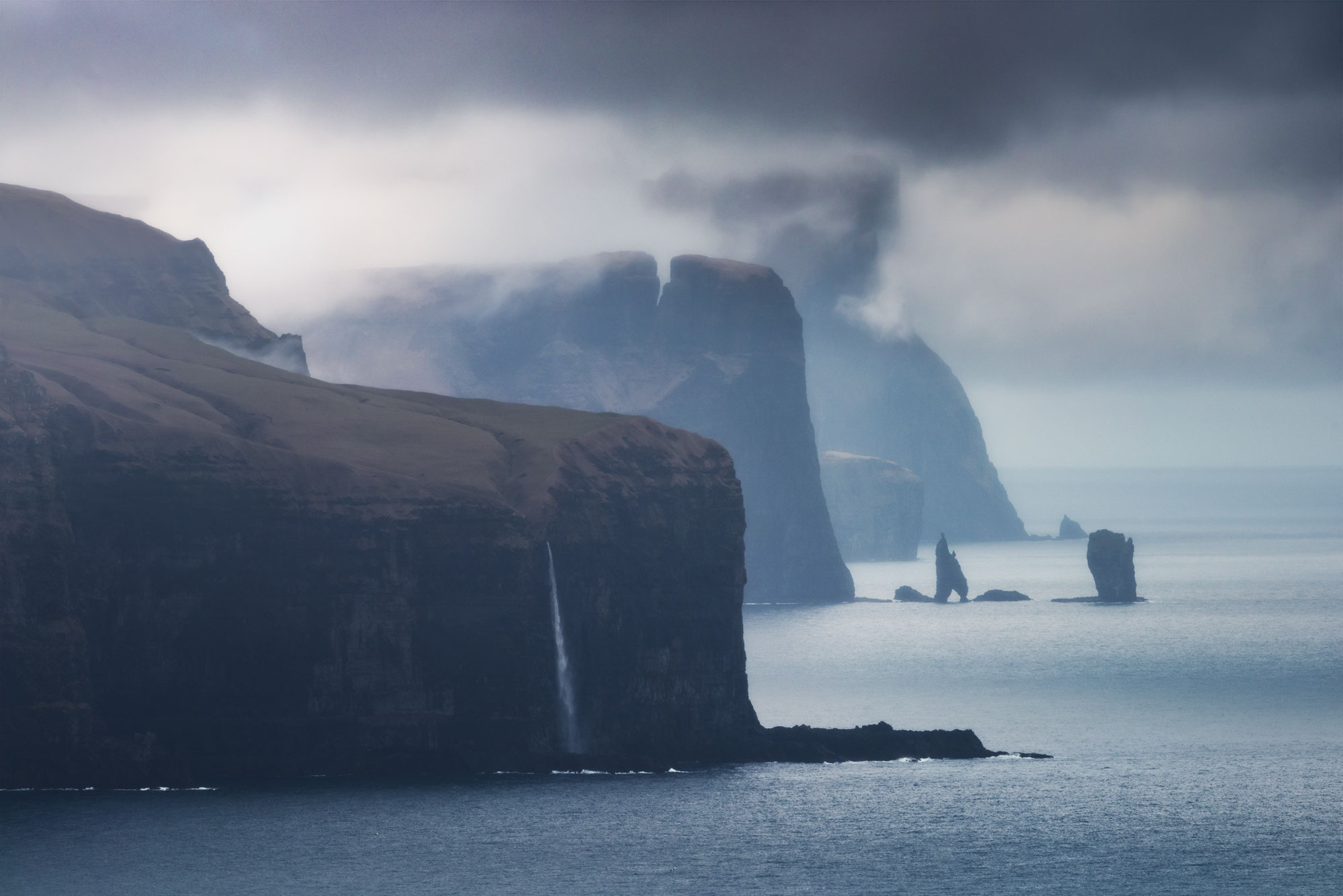
Shot with Nikon D810 · AF-S NIKKOR 200–500mm · 400mm
Faroe Islands: bringing distant landscapes together
Kalsoy is one of the northern islands of the Faroe Islands, known for its dramatic cliffs and the famous Kallur Lighthouse hike. From the northern part of the island, you can enjoy incredible views towards the surrounding islands and distant sea stacks.
The story behind this image
About three weeks before my trip to the Faroe Islands, I realised that my 70–200mm simply wouldn’t be enough to create this composition. The more I planned the trip, the more I knew I wanted to photograph this particular view. So yes, I basically decided to buy a 200–500mm for one single photograph!
I knew this composition had already been photographed many times, but I really wanted to capture my own version of it. In the end, I got the photograph I had imagined, but more importantly, buying this lens made me discover how much I enjoyed using super-telephoto focal lengths for landscape photography.
Why a super-telephoto lens worked so well here
✅ Compressed several distant cliffs into a single composition
✅ Revealed details such as the waterfall and distant sea stacks
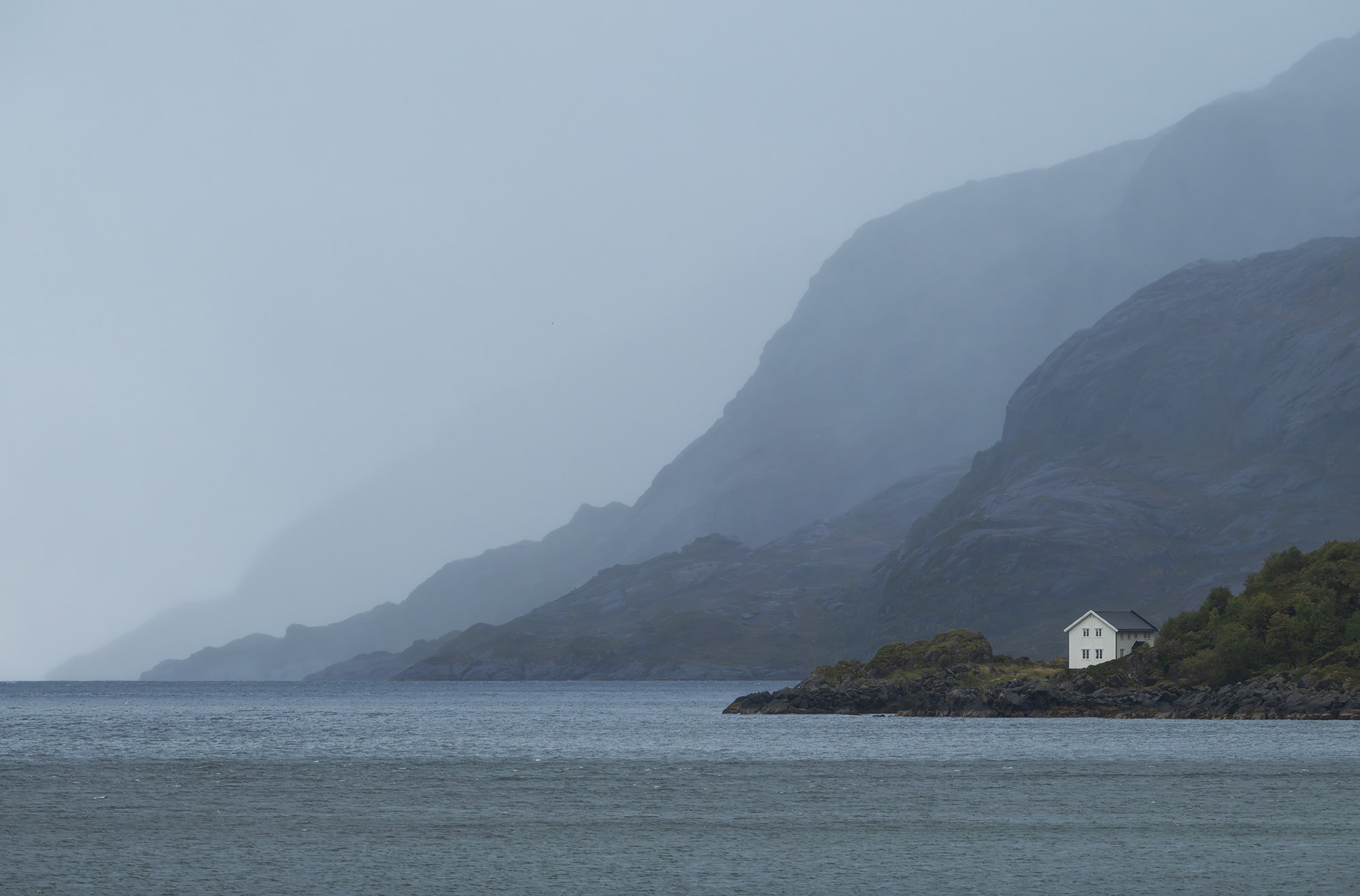
Shot with Nikon Z8 · AF-S NIKKOR 200–500mm · 390mm
Lofoten Islands: discovering small scenes within a larger landscape
A super-telephoto lens is perfect for finding small compositions within much larger landscapes. For this image in the Lofoten Islands, I focused on a tiny white house surrounded by layers of distant mountains rather than trying to capture the entire scene.
What I especially love is how the approaching rain softened the mountains and gradually faded the different layers into the distance. The little white house becomes the only clear element in an otherwise very simple and moody landscape.
The story behind this image
This photograph was completely unplanned. I noticed the little white house from the car and immediately wondered whether I could bring it together with the mountains behind it using my super-telephoto lens. We pulled over, and I quickly changed lenses to see what I could create.
This is one of the reasons I love travelling with different focal lengths. Sometimes a composition isn’t immediately obvious to the naked eye, but once you start looking at a landscape through 400 or 500mm, completely new scenes begin to appear.
Why a super-telephoto lens worked so well here
✅ Created a small scene within a much larger landscape
✅ Highlighted a distant detail that could easily go unnoticed
✅ Removed unnecessary elements to focus entirely on the house and mountains
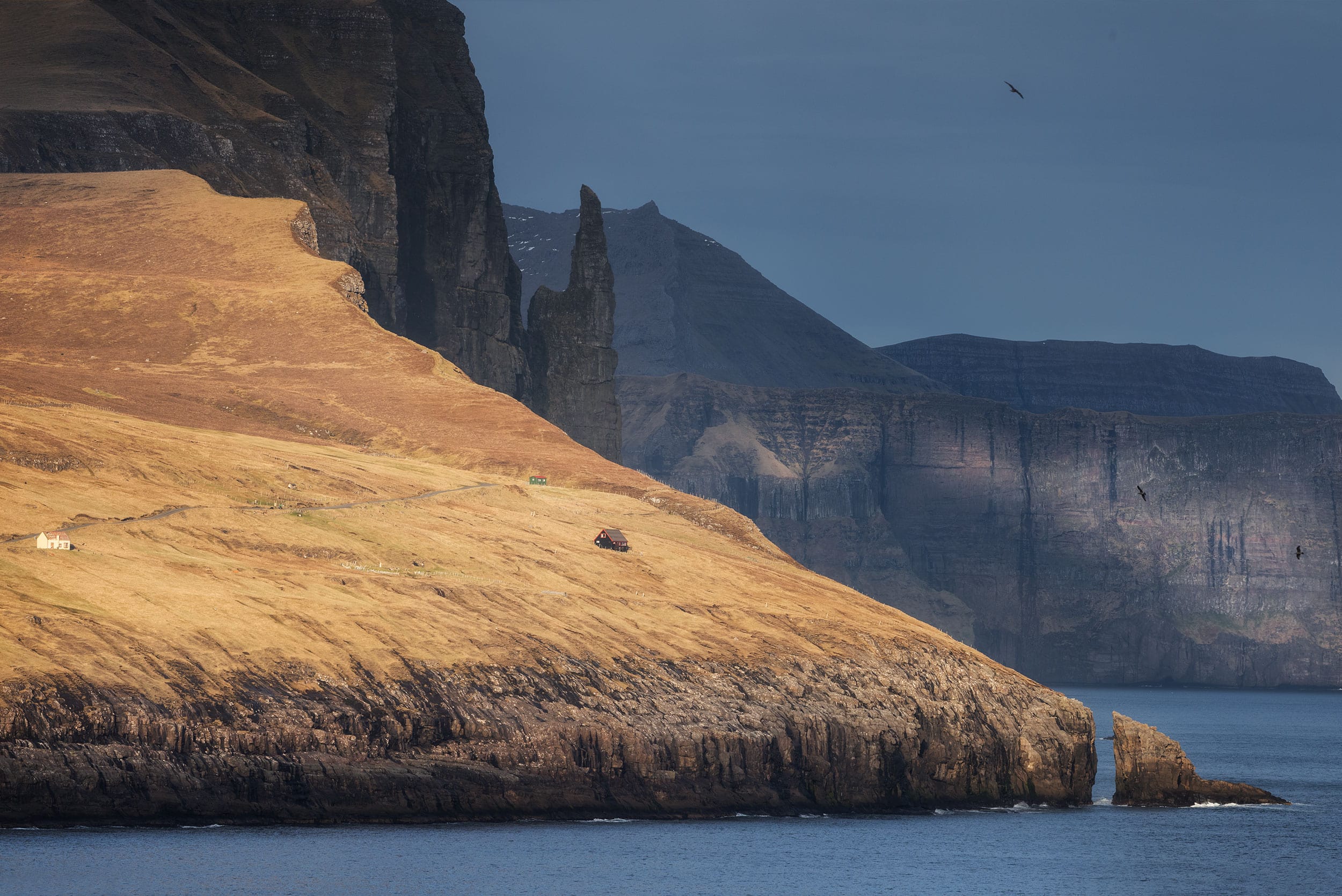
Shot with Nikon Z8 · AF-S NIKKOR 200–500mm · 230mm
Faroe Islands: photographing Trollkonufingur from a distance
Some landscapes are especially interesting with a super-telephoto lens because you can build a composition using elements that are actually very far apart. For this view of Trollkonufingur in the Faroe Islands, I wanted to combine the dramatic sea stack, the surrounding cliffs, the ocean and the tiny house within the same frame.
From this distance, the long focal length allowed me to create a much tighter composition and give each of these elements a place within the image.
The story behind this image
Unlike some of my spontaneous photographs, this one was carefully planned. Before travelling to the Faroe Islands, I had already identified this area as the viewpoint I wanted to photograph Trollkonufingur from.
Once there, I explored the surroundings until I found the composition I had imagined. The tiny house was particularly important to me, as it adds a human element to the scene and gives a sense of how impressive the landscape really is.
Why a telephoto lens worked so well here
✅ Allowed me to photograph Trollkonufingur from a distant viewpoint
✅ Brought several landscape elements into one balanced frame
✅ Gave me precise control over the composition without physically getting closer
Shot with Nikon Z8 · AF-S NIKKOR 200–500mm · 260mm
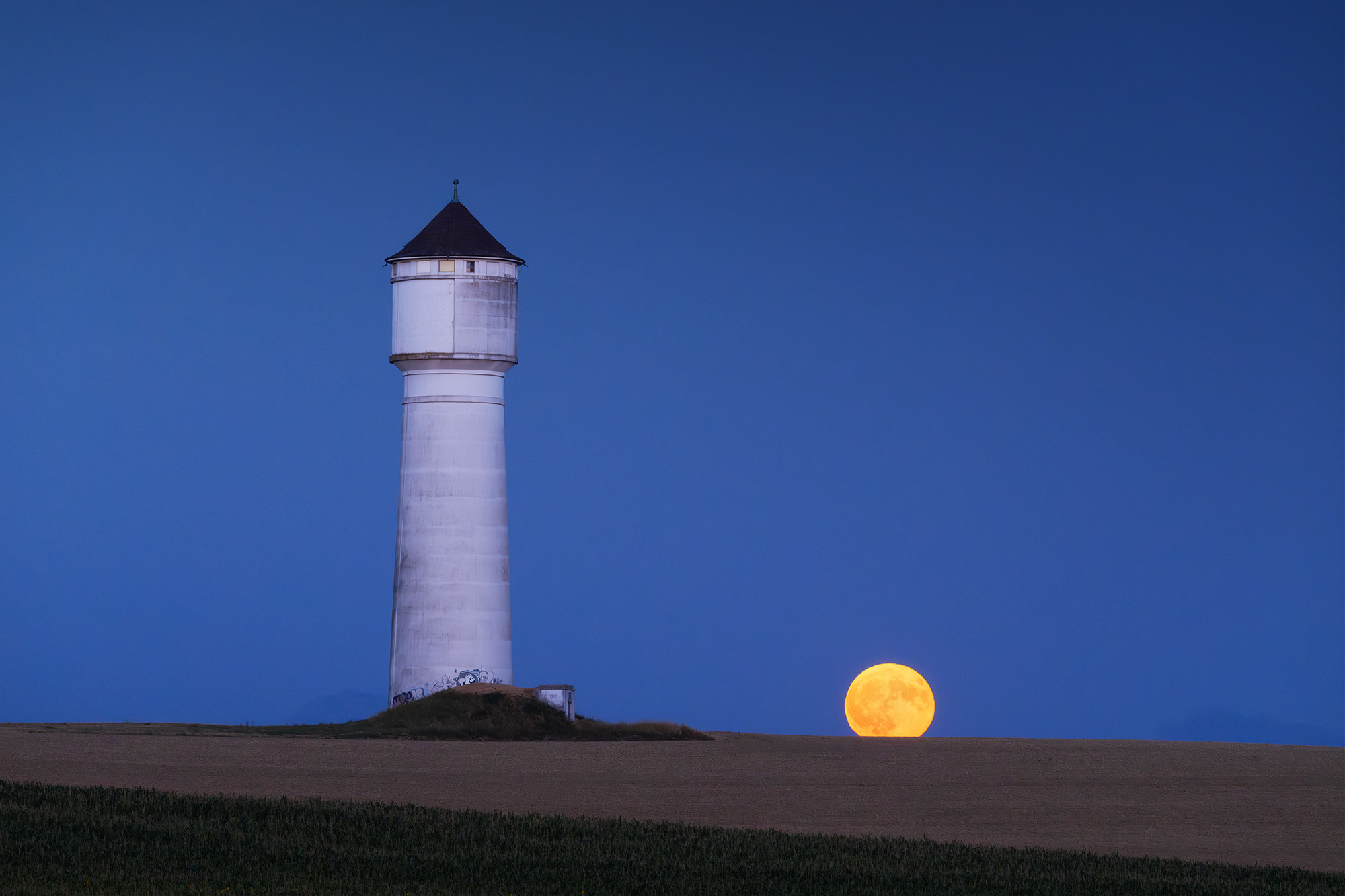
Moonrise: making the moon part of the landscape
A super-telephoto lens doesn’t necessarily mean filling the entire frame with a distant subject. It can also be used to give the moon enough visual importance while still leaving space for the surrounding landscape.
For this composition, I wanted the moon and the water tower to balance each other within the frame. By placing them on opposite thirds, they become two strong focal points connected by the simplicity of the blue-hour sky.
The story behind this image
I had planned this photograph around the full moon in July, knowing that it would rise while there was still some light in the sky. I specifically wanted to photograph during blue hour, when the warm moon would stand out against the cooler blue tones.
Once the moon appeared, I adjusted my position until it reached the composition I had imagined with the water tower. In the end, I didn’t need the longest focal length available. At 260mm, the moon was prominent enough without losing the simplicity and balance of the scene.
Why a telephoto lens worked so well here
✅ Made the moon appear larger within the landscape
✅ Allowed me to balance two distant subjects in the same frame
Shot with Nikon Z8 · NIKKOR Z 180–600mm · 600mm
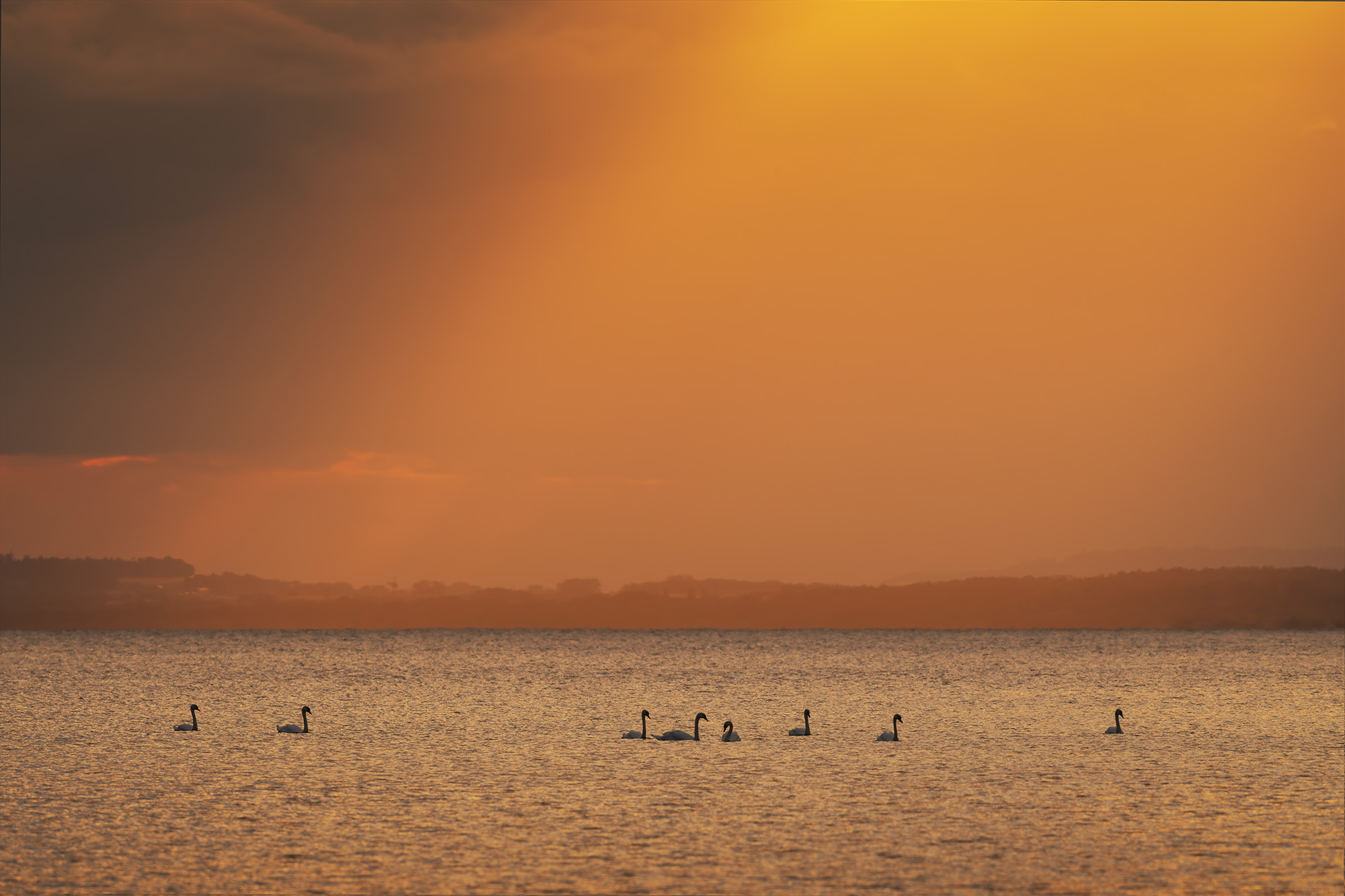
Lake Neuchâtel: swans in the first morning light
Although I mainly use my super-telephoto lens for landscapes, this time wildlife unexpectedly became part of my composition. Just after sunrise at Lake Neuchâtel, I noticed a group of swans swimming through the first rays of sunlight hitting the water.
At 600mm, I could bring the distant swans much closer within the frame while still keeping some of the lake around them. Their dark silhouettes against the golden water created a simple and peaceful scene.
The story behind this image
I had actually come to the lake that morning to photograph sunrise with a completely different composition in mind. But as the sun appeared, I noticed several swans swimming directly through a narrow band of golden light.
I quickly changed lenses and reached for the 180–600mm. The swans were quite far from the shore, but at 600mm I could follow them as they moved through the light and wait for a moment when their silhouettes were nicely separated.
Why a super-telephoto lens worked so well here
✅ Brought the distant swans much closer within the frame
✅ Made the viewer feel closer to the scene
✅ Focused the composition on the small area where the sunlight hit the water
Final thoughts
I originally bought my 200–500mm lens for one specific photograph, but it ended up opening a completely new way of looking at landscapes for me. Today, I really enjoy having a super-telephoto lens in my camera bag and discovering compositions that I simply wouldn’t see with my other lenses.
From isolating tiny details and compressing distant landscapes to photographing the moon or finding small scenes hidden within a much larger view, these extreme focal lengths offer so many creative possibilities.
You definitely don’t need a 600mm lens for every landscape photography trip, but when the right scene appears, it can create images that would simply be impossible with a shorter focal length.
And most of all, enjoy the moment. Happy shooting.
Published on August 29, 2026 by Jennifer Esseiva