Wide-angle lenses are often considered the go-to choice for landscape photography. They are perfect for capturing sweeping vistas and emphasizing the scale of a scene.
Yet some of my favourite landscape photographs were taken with a 70–200mm lens. Over the years, I realised that a telephoto lens allows me to see landscapes differently. Instead of trying to include everything in the frame, I can isolate distant details, compress mountain layers, simplify compositions and draw attention to light, atmosphere and emotion.
In this article, I’m sharing six landscape photographs taken with my 70–200mm lens across the Faroe Islands, the Lofoten Islands, Madeira and Switzerland. Each image demonstrates a different way a telephoto lens can transform a landscape and shows why this focal range has become one of my favourite tools for landscape photography.
Whether you’re wondering if a 70–200mm lens is good for landscape photography or looking for fresh composition ideas, I hope these examples inspire you to see beyond the wide-angle perspective.
The lens behind these images
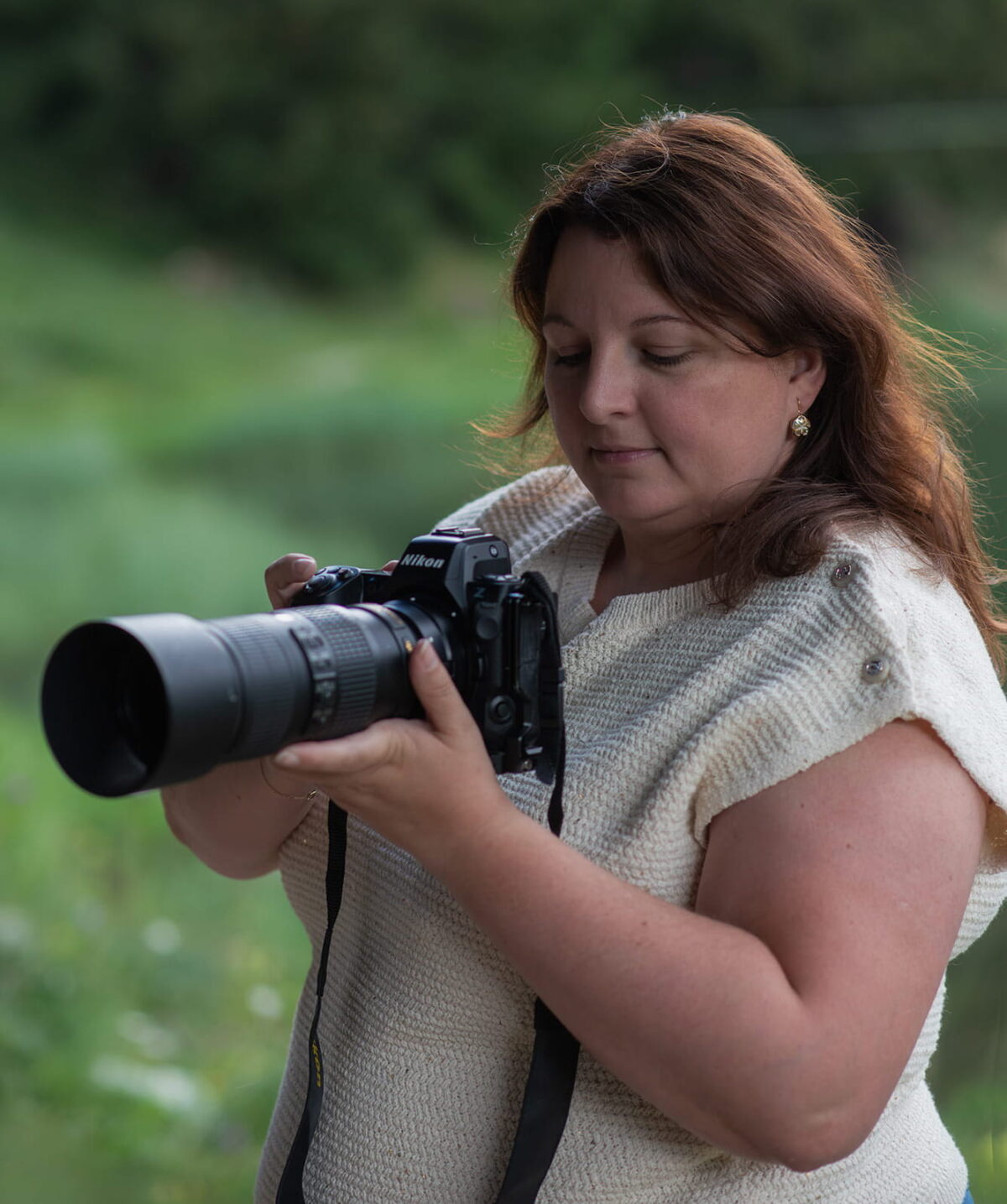
Nikon AF-S NIKKOR 70–200mm f/4G ED VR
Every photograph featured in this article was taken with my Nikon AF-S NIKKOR 70–200mm f/4G ED VR. I first used it on my Nikon D810 and now continue to use it on my Nikon Z8 with Nikon’s FTZ adapter.
What I enjoy most about this lens is that it encourages me to look at landscapes differently. Instead of photographing the entire scene, it allows me to zoom in, isolate a subject or highlight a beautiful detail that might otherwise go unnoticed.
I actually bought this lens second-hand from a local photography store. As photography is a passion rather than my full-time job, I always try to make thoughtful decisions when buying gear. Purchasing used equipment gives me access to high-quality lenses without spending a fortune, while also giving me enough time to discover whether they truly fit my way of photographing.
If a lens doesn’t suit me, I can usually sell it again with very little loss. But if it becomes an essential part of my photography, then I know it’s worth investing in the latest version one day.
For now, this 70–200mm continues to do exactly what I need. Thanks to Nikon’s FTZ adapter, I can still use it seamlessly on my Nikon Z8, making it a great compromise while I gradually transition to the Z system.
Quick guide: Why use a 70–200mm lens for landscape photography?
A 70–200mm lens can completely change the way you photograph landscapes.
Here are some of my favourite reasons for using it:
✅ Emphasize scale and atmosphere
✅ Create minimalist compositions
✅ Compress mountain layers and create depth
✅ Isolate beautiful light
✅ Balance the moon within the landscape
✅ Capture dramatic weather and changing conditions
In the examples below, I’ll show exactly how I used these techniques in different locations across Europe.

Shot with Nikon Z8 · Nikkor 70–200mm · 180mm
Pico do Arieiro: emphasizing scale and atmosphere with a telephoto lens
Pico do Arieiro is one of the most iconic photography spots in Madeira. For this scene, using a telephoto lens allowed me to focus on a small detail within the landscape rather than the entire mountain range.
The compression effect of the 70–200mm helped bring the mountains and clouds visually closer together, creating a much stronger sense of scale between the tiny silhouette and the massive landscape surrounding it. Combined with the sea of clouds and the soft golden light, the telephoto lens also helped create a more dreamlike and almost unreal atmosphere.
The story behind this image
While in Madeira, I really wanted to photograph the sunset at Pico do Arieiro. Before heading there, I spent quite some time checking the webcams and weather forecast, hoping for clouds and dramatic light conditions.
That evening, my friend and I decided to drive up and take the chance. At first, I was planning to create a much wider composition. But when I arrived, I noticed this person standing alone above the sea of clouds, completely surrounded by golden light. The whole scene suddenly felt much more powerful and atmospheric than I had imagined.
What I love most about this image is how unreal the atmosphere felt in that moment. With the sea of clouds behind the silhouette, the scene almost looks like it was captured somewhere outside reality rather than in Madeira itself.
Why a telephoto lens worked so well here
✅ Emphasized the scale between the silhouette and the landscape
✅ Brought the clouds and mountains closer togetherscape
✅ Simplified the composition

Shot with Nikon D810 · Nikkor 70–200mm · 80mm
Sierra Nevada: creating a minimalist landscape with a telephoto lens
While driving through the Sierra Nevada in California, I was fascinated by the contrast between the dry yellow grass and the green trees scattered across the rolling hills. The landscape felt incredibly warm and almost desert-like, yet still full of vegetation at the same time.
For this scene, using a telephoto lens allowed me to simplify the landscape and focus only on the elements that caught my attention most: the two trees, the soft curves of the hills and the contrast between the yellow grass and the deep blue sky. By zooming into only a small section of the landscape, I could create a much cleaner and more minimalist composition while emphasizing the shapes, colors and textures of the scene.
You can discover more photographs from this trip in my Western America photography series.
The story behind this image
My friend and I were driving from Sequoia National Park toward Death Valley when I started noticing how unique the landscape looked. The grass was completely yellow from the heat, while the trees remained intensely green. Combined with the warm temperatures, the whole atmosphere felt very different from anything I was used to photographing.
I kept looking around through the car window, hoping to find an interesting composition and a safe place to stop at the same time. Then, at one point, I spotted these two trees in the distance and, luckily, there was a small parking area right next to the road.
What I love about this image is how reducing the scene to only a few elements completely changed the feeling of the landscape. Instead of looking vast and complex, it suddenly became much more graphic and minimalist, with the curves, colors and textures becoming the main focus of the composition.
Why a telephoto lens worked so well here
✅ Simplified the landscape into a minimalist composition
✅ Focused attention on colors and textures
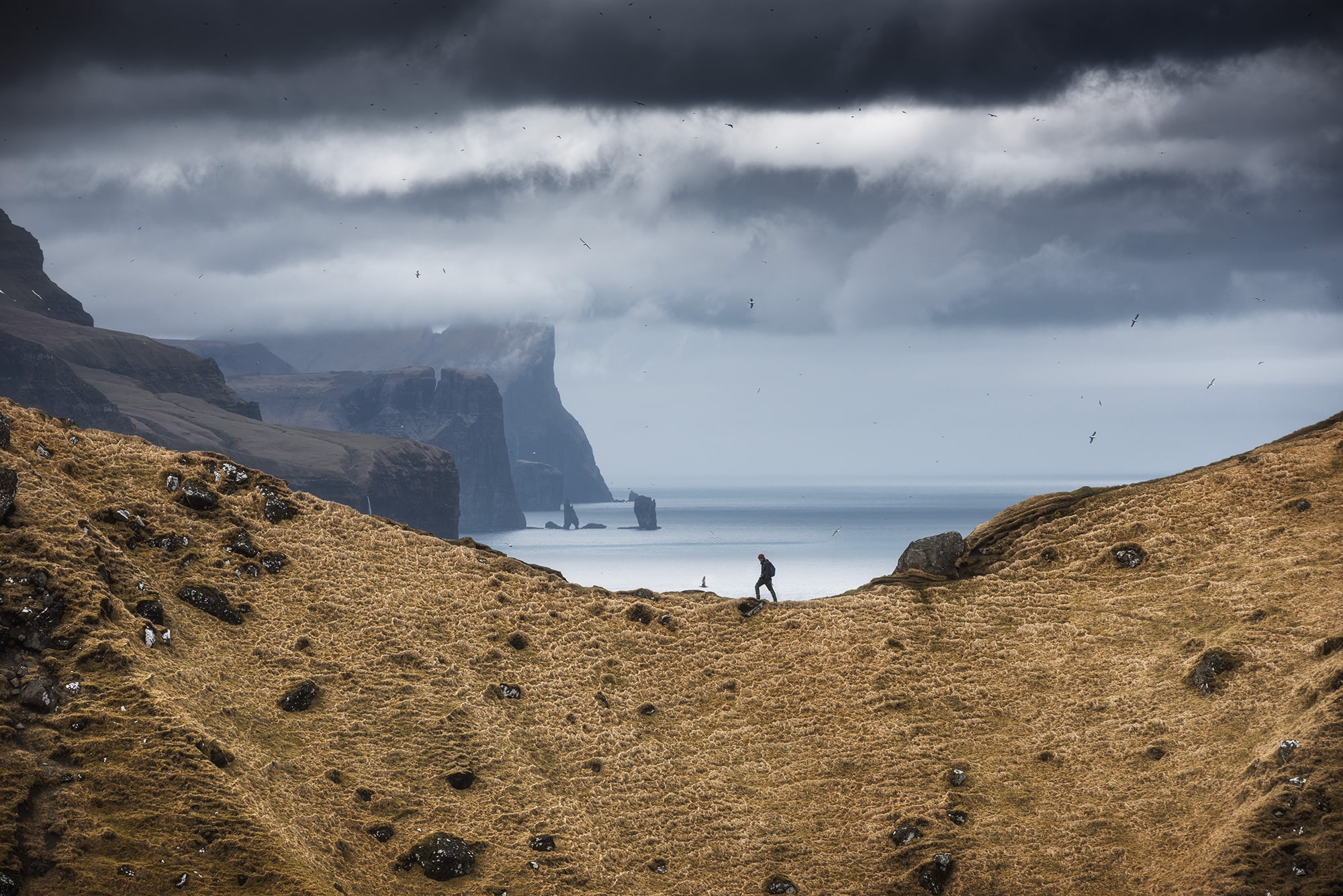
Shot with Nikon D810 · Nikkor 70–200mm · 200mm
Kalsoy Island: creating dramatic depth with a telephoto lens
The Faroe Islands are one of the most spectacular places I have ever photographed. The landscapes feel incredibly raw, dramatic and untouched. On Kalsoy Island, the famous hike leading to Kallur Lighthouse offers breathtaking views over steep cliffs and the surrounding islands.
For this image, using a telephoto lens allowed me to focus on a smaller section of the landscape and create a much stronger sense of depth between the cliffs, the silhouette and the layered islands in the distance.
The compression effect of the 70–200mm also helped make the cliffs feel steeper and more dramatic, creating a much more immersive atmosphere within the scene.
The story behind this image
Hiking to Kallur Lighthouse was high on my list during our trip to the Faroe Islands. Since Kalsoy is only accessible by ferry and space is limited, we decided to take the first ferry of the day to enjoy the hike with fewer people around.
For the little story, I suffer from vertigo, so walking near the cliffs was honestly quite intimidating. But I still wanted to reach this viewpoint overlooking the ridge and the surrounding islands.I had already imagined this composition before arriving there. The only thing missing was a person crossing the ridge. I waited for a while, hoping someone would walk there, but since there were only a few people around, it seemed unlikely. Eventually, I gave up and started putting my camera back into my bag… and of course, at that exact moment, someone suddenly appeared on the path.
A few minutes later, it finally happened again. The silhouette appeared on the ridge while birds were flying around the cliffs. What I love most about this image is how dramatic and immersive the landscape feels, with all the layers of cliffs and islands disappearing into the distance behind the tiny silhouette.
Why a telephoto lens worked so well here
✅ Created a stronger sense of depth
✅ Made the cliffs feel more dramatic
✅ Emphasized the scale of the landscape
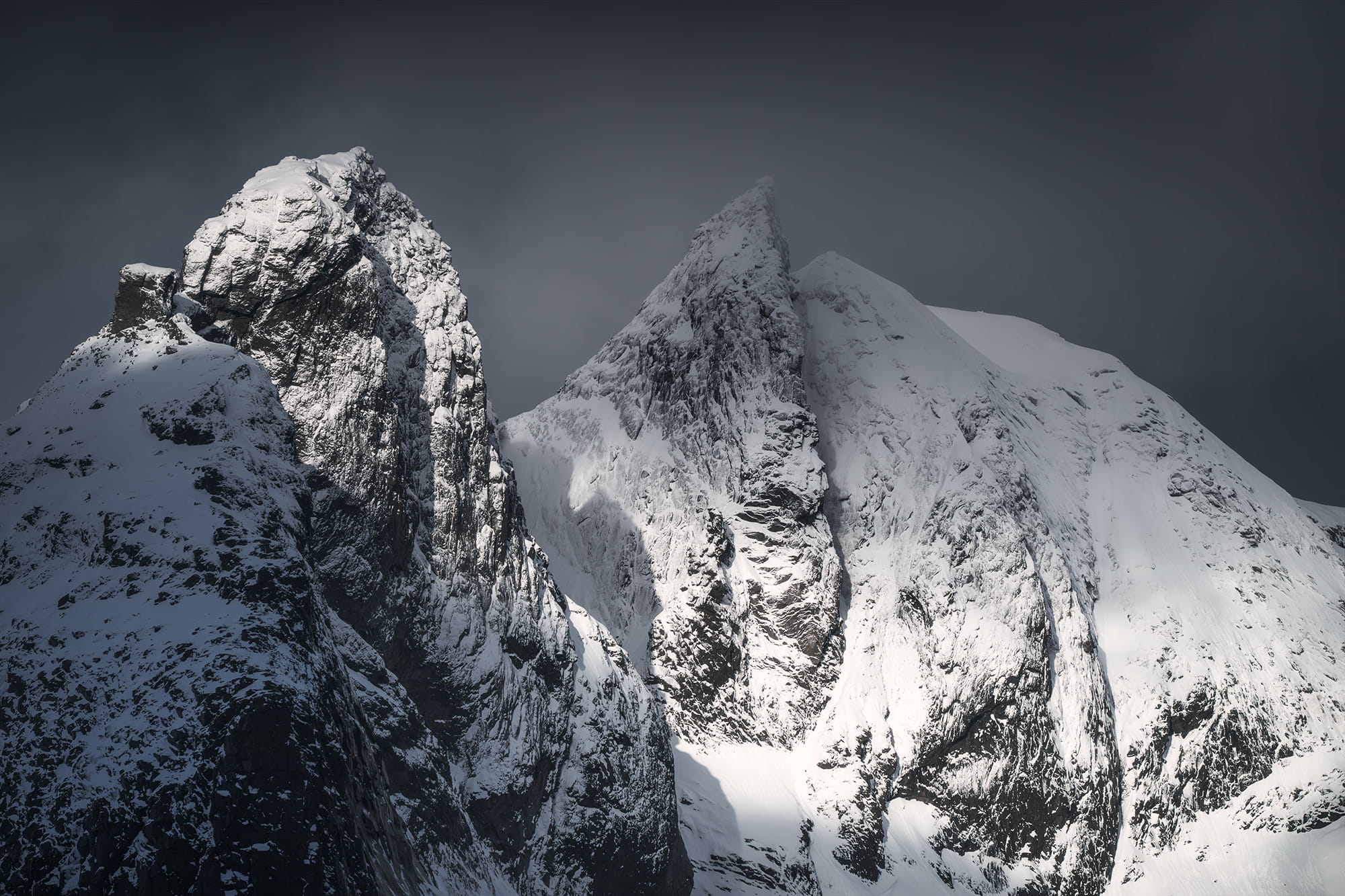
Shot with Nikon Z8 · Nikkor 70–200mm · 150mm
Lofoten Islands: isolating fleeting light with a telephoto lens
The Lofoten Islands in Northern Norway are a true paradise for landscape photographers. From dramatic mountains and fishing villages to beautiful Arctic coastlines, the variety of landscapes is simply incredible.
For this image, I used a telephoto lens to focus only on the illuminated mountain peaks rather than the entire landscape. By compressing the layers together, the 70–200mm helped create a denser and more dramatic composition while drawing attention to the fleeting light hitting the summits.
The contrast between the glowing peaks and the darker surroundings also gave the scene a much more atmospheric and cinematic feeling.
The story behind this image
This was a completely unplanned shot. We were driving from Reine to photograph a waterfall when we suddenly noticed beautiful light reflecting over the sea, so we stopped the car to take a few photos.
Then my friend turned around and said, “Look at the light on the peaks behind you.” Honestly, the scene looked absolutely unreal. Only the mountain summits were illuminated while the rest of the landscape remained much darker. Instead of photographing the entire mountain range, I focused only on these glowing peaks and the layers surrounding them, which made the atmosphere feel much more dramatic.
What I love most about this image is how temporary the light felt. Moments like this can disappear within seconds, and isolating only this small part of the landscape helped preserve the intensity of that atmosphere.
Why a telephoto lens worked so well here
✅ Focused attention on the illuminated peaks
✅ Enhanced the contrast between light and shadow
✅ Brought the mountain layers closer together
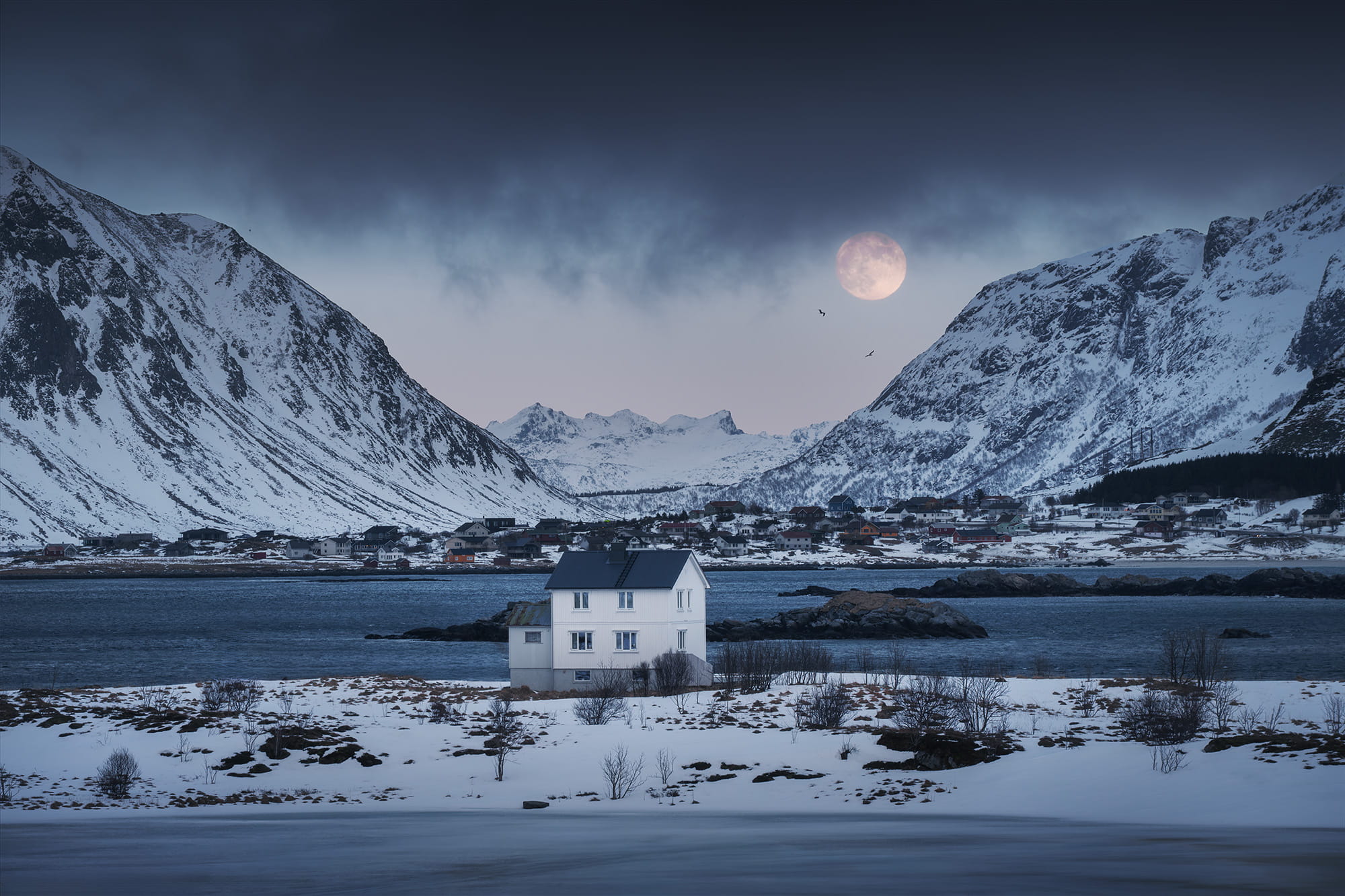
Shot with Nikon Z8 · Nikkor 70–200mm · 185mm
Lofoten Islands: balancing the moon and the landscape with a telephoto lens
Full moon nights are always a great excuse to go out and photograph landscapes. Most of the time, I use my 200–500mm lens for moon photography, but for this scene, my 70–200mm turned out to be the perfect choice.
Using a telephoto lens allowed me to keep both the moon and the surrounding landscape within the frame, while still making the moon appear larger and more visually present in the composition.
The slight compression effect of the 70–200mm also helped create a stronger connection between the moon, the mountains and the village below.
The story behind this image
As you might have guessed by now, this was once again a completely unplanned photo. I had not planned any moon photography during this trip to the Lofoten Islands because the weather is often cloudy and I already had many other ideas in mind.
But while driving, I suddenly noticed the full moon rising above the mountains. I instantly thought, “There is no way I am going to miss this.” I quickly opened Google Maps to look for a nearby viewpoint and found a small parking area on a hill. When we arrived, the scene was even better than I expected, with the moon rising above the mountains and the village of Ramberg perfectly visible below.
What I love most about this image is the balance between the moon and the landscape. The moon feels large and present within the scene, while the mountains, village and small white house still remain an important part of the composition.
Why a telephoto lens worked so well here
✅ Made the moon appear larger within the landscape
✅ Balanced the moon and foreground elements
✅ Brought the mountains and village visually closer together
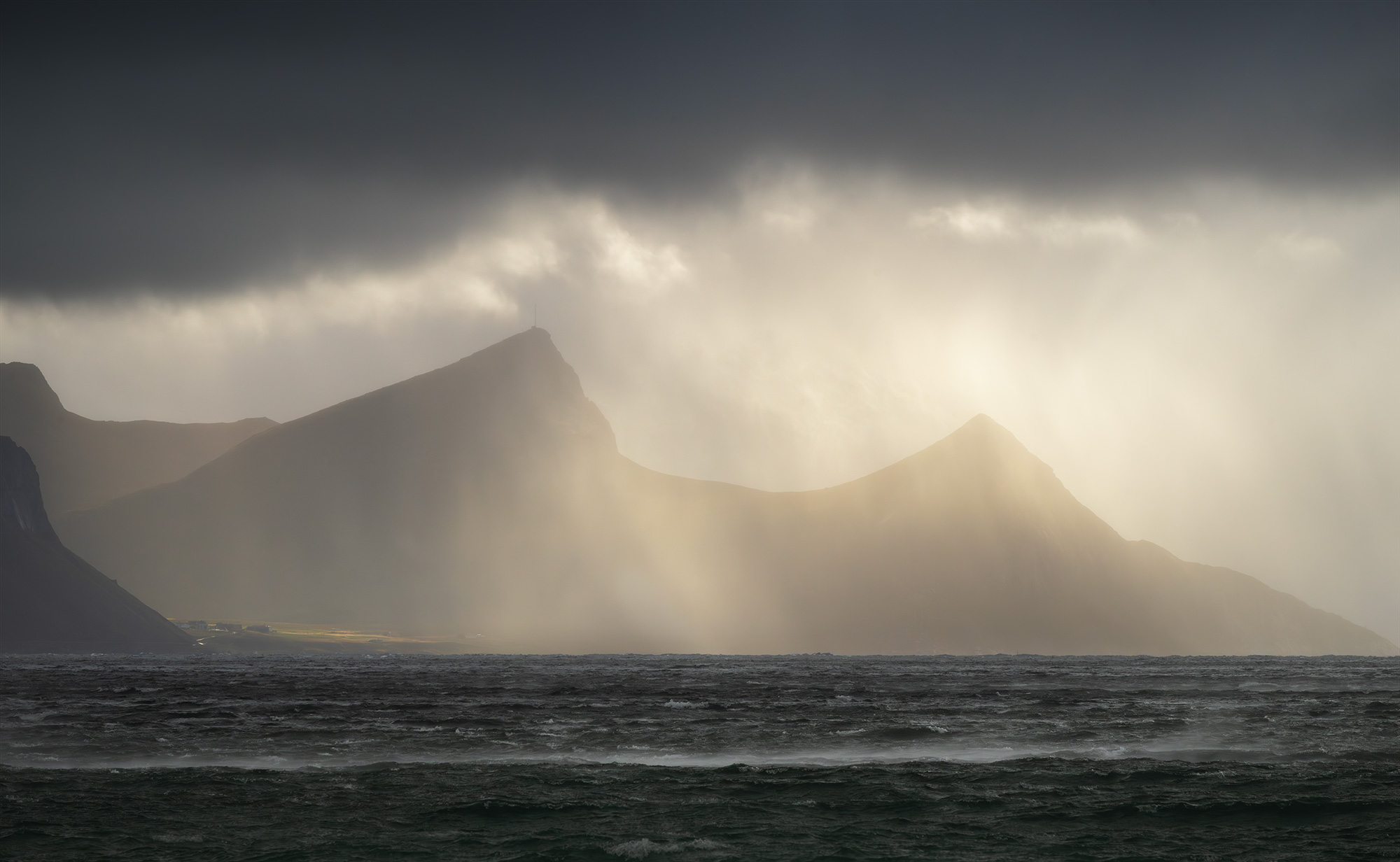
Shot with Nikon Z8 · Nikkor 70–200mm · 175mm
Lofoten Islands: capturing dramatic weather and atmosphere with a telephoto lens
The Lofoten Islands can feel incredibly raw and dramatic, especially when the weather constantly changes. One moment, the landscape is completely dark and stormy, and the next, sunlight suddenly pierces through the clouds and transforms the entire scene.
For this image, using a telephoto lens allowed me to focus on the atmosphere itself: the rays of light, the mountain layers and the rough sea below.
By narrowing the field of view, the 70–200mm also helped make the changing weather feel much more intense and immersive.
The story behind this image
This image was taken at Haukland Beach, one of my favorite beaches in the Lofoten Islands. The first time I saw this place was during a northern lights session, so coming back there during the day already felt special.
That day, the weather was very moody, with strong wind, dark clouds and constantly changing light conditions. At first, I wanted to create a wider composition including the beach, the mountains and the sea together. But suddenly, sunlight started breaking through the clouds behind the mountains and completely transformed the atmosphere of the scene.
Instead of photographing the entire landscape, I focused only on the most dramatic part of the moment: the rays of light, the mountain layers and part of the rough sea below. What I love most about this image is how intense and atmospheric the scene feels. You can almost feel the wind, humidity and constantly changing weather just by looking at it.
Why a telephoto lens worked so well here
✅ Focused attention on the light rays
✅ Captured the moody atmosphere of the weather
Final thoughts
Wide-angle lenses are often the first choice for landscape photography, but over the years, my 70–200mm lens became one of my favorite tools for capturing nature in a different way.
Whether it is for isolating a subject, compressing mountain layers, simplifying a composition or focusing on light and atmosphere, a telephoto lens can completely change the feeling of a landscape.
If you already own a 70–200mm lens and mainly use it for wildlife or portraits, I would definitely recommend trying it more for landscape photography as well. It can open up many creative possibilities and help you see familiar scenes very differently.
And most of all, enjoy the moment. Happy shooting.
Published on May 22, 2026 by Jennifer Esseiva